Residential · Drawing E-109
Electrical troubleshooting and inspections in Calgary
Most electrical faults announce themselves early: a breaker that trips, a light that flickers, a cover plate that feels warm. This is how a fault is found, and how inspections in Calgary work.
Two different things share the word “inspection”. One is the private visit a homeowner, buyer or insurer asks for: an electrician opens the panel, tests circuits and writes up what they found. The other is the City of Calgary inspection attached to a permit, where a safety codes officer checks permitted work before it is covered or energized. This page covers both, along with the troubleshooting visit that usually starts it all.
CCT 01What a troubleshooting visit involves
Good troubleshooting is method: narrow the fault to one circuit, then one run of cable, then one connection.
- The interview. When does it happen, what was running, is it one room or the whole house, did it start after a renovation, a storm or a cold snap?
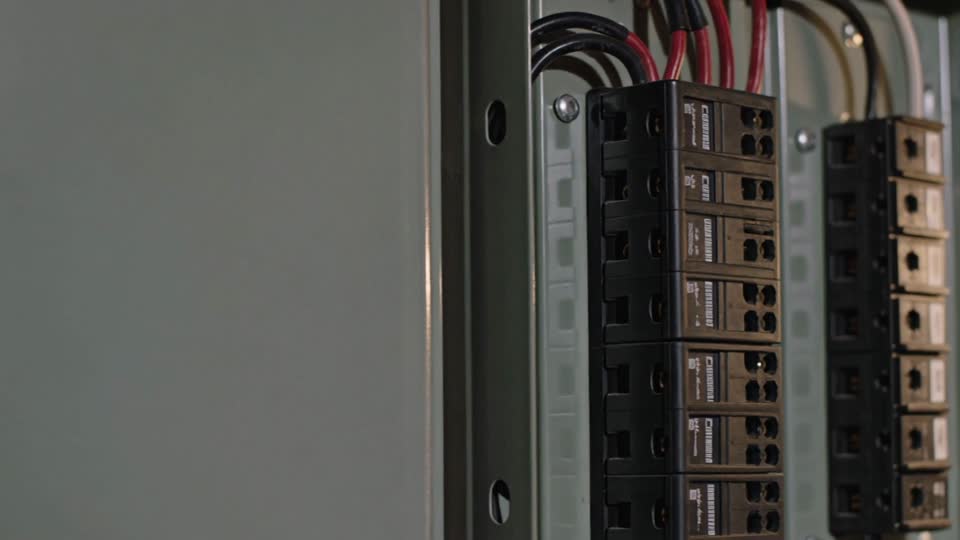
- The panel. With the cover off, the electrician looks for heat discolouration, loose or double-tapped terminals, corrosion, aluminum conductors on devices not rated for them, and breakers that do not seat firmly on the bus.
- Measurements. Voltage at the panel and at the problem outlet, first at rest and then under load, shows whether a connection is failing. A clamp meter shows real current on the circuit. An insulation-resistance test, with the circuit isolated, finds damaged cable that a visual check will never see. A thermal camera shows connections running hotter than their neighbours.
- Isolation. For intermittent faults, the circuit is split: devices are disconnected section by section until the fault stays on one side. In a finished home this is where most of the time goes.
- The repair and the paperwork. A like-for-like device swap is one thing. New cable, a new circuit or an extended circuit is another, and that needs a permit (see below).
The type of trip matters. An overload trips after a delay. A short circuit trips instantly, often with a snap. A ground-fault (GFCI) trip means current is leaking to ground, often through moisture. An arc-fault (AFCI) trip means the breaker detected arcing, which can be a damaged cable, a loose connection or, occasionally, a shared neutral the breaker cannot tolerate. The breaker-tripping guide goes further into each.
Safety
Electrical work in Alberta needs a permit, and most of it must be done by a certified electrician. Calgary homeowner permits have firm limits: they exclude the main service, the panel and several other kinds of work. Never open a panel, remove a device or test a circuit that is energized. If you smell burning, see scorching or hear buzzing from the panel, switch off the main breaker only if you can reach it safely, leave, and call for help. The emergencies guide covers what to do first.
CCT 02Symptoms and what they usually point to
Symptoms are clues, not diagnoses. Here is how an electrician reads the common ones.
| Symptom | Usual suspects | How urgent |
|---|---|---|
| Lights flicker on one circuit | A loose connection at a switch, fixture or backstabbed receptacle; an incompatible dimmer and LED lamp | Book soon |
| Lights across the house brighten and dim together | A loose or failing neutral on the service, on your side or the utility's | Urgent: it can damage appliances |
| Lights dim when the furnace, AC or a large appliance starts | Normal inrush on a small service, or a high-resistance connection in the panel or meter base | Book an assessment |
| Warm outlet or switch cover | A loose terminal, a failing device, aluminum wiring on a non-rated device, or an overloaded circuit | Stop using it; book soon |
| Breaker trips instantly on reset | A short circuit or a ground fault on the circuit | Leave it off; book |
| Outdoor GFCI trips in wet or thawing weather | Moisture in an exterior box, a block-heater cord or a damaged extension | Book; do not bypass |
| Burning smell, scorch marks, buzzing panel | Arcing at a connection or breaker | Emergency |
Flicker is a common complaint and the least specific one. If one fixture flickers, suspect the lamp, the dimmer or the connection at that box. If a whole circuit flickers, the loose connection is upstream, often at the first receptacle on the run. If every circuit flickers together, suspect the service neutral. The meter socket belongs to the customer 1, while the meter and the supply are ENMAX Power's, so an electrician checks the meter base and panel first and involves the utility if the fault is on its side. The ENMAX service guide explains who owns which part.
CCT 03What Calgary houses tend to turn up
Calgary's housing is not all new. At the 2021 Census, 176,890 of 502,305 occupied dwellings in the city, or 35.2%, were built in 1980 or earlier 2. The largest single group, 133,035 homes, was built between 1961 and 1980 2.
The census has no data on panels or service size, so age is a flag, not a finding. Older homes are more likely to still carry original branch wiring, a small service, ungrounded two-wire circuits, aluminum branch wiring, or a panel that insurers ask about, such as the Federal Pioneer Stab-Lok. In homes of every age, the usual findings are ordinary: overloaded kitchen circuits, amateur basement wiring and loose connections.
Winter adds its own faults. Calgary's January design temperature is -30 °C 3, the temperature the building code assumes when heating systems are sized. That is when block heaters, space heaters, heat trace and furnace blowers all run at once. It is also when frost and thaw let moisture into exterior boxes and trip ground-fault protection. See winter electrical in Calgary for the cold-weather loads. If an assessment points to systematic problems rather than one bad connection, rewiring an older home covers the options.
CCT 04Pre-purchase and insurance checks
A general home inspection is broad and mostly visual. An electrician's evaluation goes deeper on one system. A useful one covers:
- Service and panel. The service rating, the panel make and condition, spare spaces, double taps, signs of heat, and whether the main breaker and meter base look original.
- Wiring type. Copper or aluminum branch circuits, any knob-and-tube, grounded or ungrounded circuits, and cable that looks newer than the house, which suggests later work to ask about.
- Protection. GFCI protection where water is present, AFCI protection where the home has it, and whether they actually trip when tested.
- Life safety. Hard-wired smoke alarms and their age. The Calgary Fire Department advises replacing smoke alarms after 10 years and testing them monthly 4.
- Capacity. Whether the service can carry what the buyer plans to add: an EV charger, a heat pump, a hot tub or a suite. That is answered with a load calculation, not a guess. The home load calculator gives a first estimate.
Two points often surprise buyers. First, older wiring is not automatically “non-compliant”. Alberta's code guidance says an existing installation that met the code in force when it was installed generally does not have to be upgraded to a new edition, although modifications can bring the altered part up to the current code 5. Second, work without a permit is a real finding. Ask the seller for permit records for the basement, the garage and any service change. The home-buying electrical check lists the questions to ask.
CCT 05What a City of Calgary electrical inspection checks
A City inspection is not a service anyone can book on its own. It is attached to an electrical permit, and it checks the permitted work against the Canadian Electrical Code as adopted in Alberta. The City's open data records four inspection stages: rough-in, final, service and underground 6.
| Stage | When it happens | What the inspector is looking at |
|---|---|---|
| Rough-in | Wiring run, boxes set, before insulation and drywall | Cable type and support, box fill and mounting, bonding, circuit sizing against breakers, where GFCI and AFCI protection will go, smoke alarm locations and interconnection |
| Underground | Trench open, before backfill | Cable or conduit type, burial depth, protection and warning where required |
| Service | New or changed service equipment | Meter base, service conductors, grounding and bonding, main disconnect |
| Final | Devices, fixtures and covers installed | Polarity, protection devices working, panel directory, covers on, the work matching the permit |
Inspections fail more often than most people expect. In 2025, 15.6% of Calgary electrical inspections with a pass or fail result were marked “Not Acceptable”: 11,111 of 71,416 6. The share was 13.4% in 2023 and 13.6% in 2024 6. These count inspections, not permits or contractors, and many “Not Acceptable” results are small corrections.
A second visit can cost money. The City's 2026 schedule lists a re-inspection fee of $327, including the Safety Codes Council levy and GST 7. A weekend or statutory-holiday inspection costs $189 an hour with a $756 minimum 7. You do not need drywall installed before a final inspection 8.
On new or renovated work, the inspector will check that multiple smoke alarms are interconnected, as the Alberta building code requires 9, and that hard-wired alarms have their normal 120 V connection from a 15 A circuit 9.
CCT 06When a repair needs a permit
The City's rule is plain. An electrical permit is required for all new wiring and whenever existing branch-circuit wiring is extended or altered 8. Replacing fixtures only does not need a permit 8. So swapping a failed light fixture is permit-free, while adding an outlet, moving a switch or running a new circuit to cure an overload is not.
Starting before the permit is issued doubles the fee: the City's schedule charges twice the permit fee 7. A homeowner permit costs $116.50 in 2026 7, but it has limits. Homeowners may not install or alter the main service, including the main panel, the main breaker and the meter base 8. If troubleshooting finds unpermitted wiring already hidden behind drywall, a homeowner permit cannot be issued for it: the owner must hire a licensed electrical contractor, and the City may ask for drywall to be opened 8.
These are City of Calgary rules. Airdrie, Cochrane, Chestermere, Okotoks and Rocky View County have their own permit authorities, so check with the municipality before assuming the same process. The permits guide covers homeowner and contractor permits in detail.
CCT 07What drives the cost of troubleshooting
No public body publishes a price for an electrical service call or a home electrical inspection in Calgary. The charge depends mostly on how long the fault takes to find.
- Intermittent or steady. A fault that is present when the electrician arrives is quick to trace. One that appears once a week may take several visits or a data logger.
- Access. A finished basement ceiling, a vaulted ceiling or a run through an insulated attic turns a short job into a long one.
- What the fix needs. Tightening a connection is minutes. Replacing a length of damaged cable in a finished wall means opening and patching it, and it may need a permit.
- Timing. Evening, weekend and emergency visits cost more almost everywhere.
- Utility involvement. If the fault is on ENMAX's side, the utility handles it. If the meter base or service mast is damaged, the repair usually needs a permit and a disconnect.
The official labour figures that exist are wages, not rates. Job Bank puts the median wage for electricians in the Calgary region at $40 an hour 10. That is what an employee earns. A contractor's billed rate also carries the truck, tools, insurance, permits, supervision and margin. See electrician rates in Calgary for how billing works, and the appliance running cost calculator if a spike in your bill is what started the search.
Questions people ask
Why do my lights flicker?
If one fixture flickers, the cause is usually the lamp, a dimmer that is not compatible with LED lamps, or a loose connection at that box. If a whole circuit flickers, look for a loose connection upstream, often at a receptacle or splice. If lights all over the house brighten and dim together, the service neutral may be failing. That can damage electronics, so call an electrician promptly, and ENMAX Power if the fault is on the utility's side.
Why does my breaker keep tripping with nothing plugged in?
A breaker that trips with no load connected is not overloaded. The usual causes are a short or ground fault in the wiring, a damaged cable (a nail or screw through it is common after renovations), moisture in an outdoor box, a failed device, or a worn breaker. An AFCI or GFCI breaker can also trip on a wiring fault it is designed to detect. Leave it off and have the circuit tested. Resetting it repeatedly is how connections overheat.
How much is an electrical inspection for a house?
There is no official price for a private home electrical inspection in Calgary. It is priced by the contractor, usually by time, and it depends on the size of the house, how accessible the panel and wiring are, and whether you want a written report. City of Calgary inspections are different: they come with an electrical permit, and the City's 2026 schedule lists a re-inspection fee of $327 7.
How do home inspectors check electrical?
A general home inspector looks at the visible parts: the panel, a sample of receptacles and switches, GFCI devices, exposed wiring and smoke alarms. They flag concerns and usually recommend an electrician for anything specific. An electrician's evaluation goes further, with the panel cover off, circuits tested under load, and the wiring type and the capacity of the service assessed.
Do I need an electrical permit to add an outlet?
Yes, in Calgary. Adding an outlet extends a branch circuit, and the City requires a permit for all new wiring and for extending or altering existing branch-circuit wiring 8. Replacing a fixture only does not need one 8. An owner-occupier may be able to take out a homeowner permit for simple branch-circuit work. Other people, and other kinds of work, need a contractor.
Sources
- ENMAX Power Corporation Distribution Tariff Customer Terms and ConditionsENMAX Power Corporation · effective 2026-01-01
- Census Profile, 2021 Census of Population - Calgary, City (CY) [Census subdivision], AlbertaStatistics Canada · 2021 Census (May 11, 2021); profile table released 2023-11-15
- National Building Code - 2023 Alberta Edition, Volume 1, Division B, Appendix C, Table C-2 Climatic Design Data for Selected Locations in AlbertaAlberta Municipal Affairs / National Research Council of Canada · 2023 Alberta Edition, second printing incl. revisions and errata released April 2026
- Smoke alarmsCity of Calgary (Calgary Fire Department) · retrieved 2026-09-25
- STANDATA bulletin 24-ECB-000 Object, scope, and definitionsAlberta Municipal Affairs · April 2025
- Electrical Permits and Inspections (dataset vxgy-id5s)The City of Calgary, Open Government Licence – City of Calgary · queried 2026-09-25
- 2026 Building & Trade Permit Fee Schedule (R2026-02)The City of Calgary · 2026 fee schedule, revision R2026-02; retrieved 2026-09-25
- Homeowner electrical and plumbing permitsCity of Calgary · retrieved 2026-09-25
- STANDATA bulletin 24-ECB-032 Fire alarm systems, smoke alarms, carbon monoxide alarms, and fire pumpsAlberta Municipal Affairs · April 2025
- Electrician in Alberta | Wages - Job Bank (NOC 72200)Employment and Social Development Canada (Job Bank) · Reference period 2023-2024 (Labour Force Survey); wages updated 2025-11-19
Related
-
 E-101
Panel & service upgrades
Replacing an old panel or raising a 60 or 100 A service to 200 A: what it involves, who does which part, and what drives the price.
E-101
Panel & service upgrades
Replacing an old panel or raising a 60 or 100 A service to 200 A: what it involves, who does which part, and what drives the price.
-
 E-102
EV charger installation
Level 2 charging at home: circuit sizing, whether your panel can carry it, load management, permits and winter charging.
E-102
EV charger installation
Level 2 charging at home: circuit sizing, whether your panel can carry it, load management, permits and winter charging.
-
 E-103
Basement & renovation wiring
Wiring a basement development, secondary suite, kitchen or addition: rough-in, inspections and the circuits the code expects.
E-103
Basement & renovation wiring
Wiring a basement development, secondary suite, kitchen or addition: rough-in, inspections and the circuits the code expects.