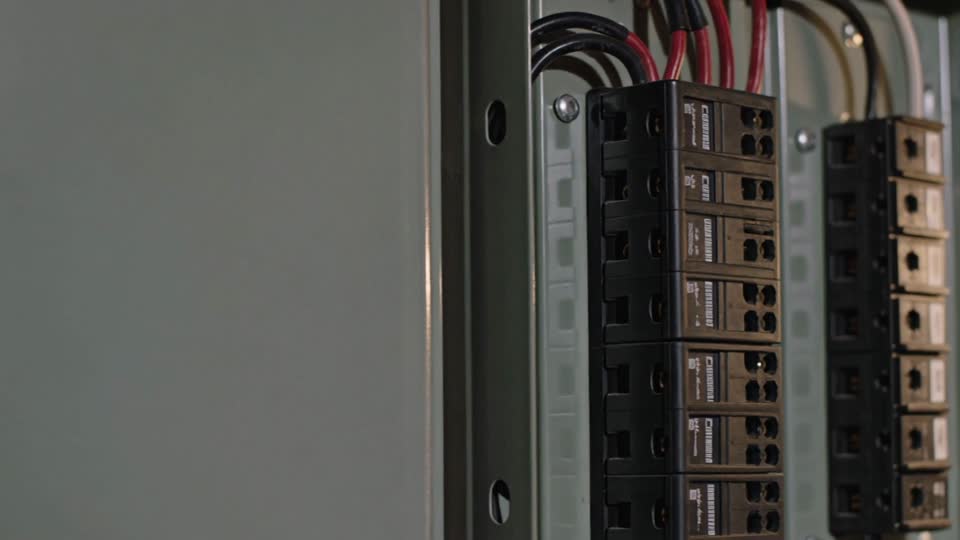
Guide · Drawing E-416
A breaker that keeps tripping
A breaker that trips is doing its job. A breaker that keeps tripping is telling you which of four problems you have, and most of the clues are visible without opening the panel.
A circuit breaker protects the wire in your walls, not the appliance plugged into it. When the current is more than the wire can carry safely, or goes somewhere it should not, the breaker opens. The pattern of the trip, when it happens and what was running, usually points to the cause.
CCT 01What a breaker is actually reacting to
A standard breaker has two trip mechanisms. A thermal element bends as it heats, so a moderate overload takes seconds or minutes to open it. A magnetic element snaps it open almost instantly when current spikes, as it does in a short circuit. A GFCI adds a sensor that compares the current going out on the hot conductor with the current coming back on the neutral. An AFCI adds electronics that watch the current waveform for the signature of arcing.
A tripped breaker usually sits in a middle position, neither fully on nor off. To reset it, push the handle firmly to off first, then back to on. Pushing it straight to on often does nothing, which is why some people think a breaker has failed when it has not.
Timing is the best clue you have. A trip after a few minutes of heavy use points to overload. A trip the instant you reset points to a short or a ground fault. A trip on a circuit with an AFCI breaker, sometimes with nothing obvious running, points to an arcing condition or an appliance the AFCI dislikes.
CCT 02The four causes, side by side
| Cause | What is happening | Typical pattern | What usually trips |
|---|---|---|---|
| Overload | Too many loads on one circuit, drawing more than the wire is rated for | Trips after running a while; holds once a load is removed | Standard breaker, thermal side |
| Short circuit | Hot conductor touching neutral or another hot, often at a damaged cord, device or box | Trips instantly, sometimes with a pop, flash or scorch mark | Standard breaker, magnetic side |
| Ground fault | Current leaking to ground: water in an outdoor box, a failing heating element, damaged insulation | Trips instantly or when wet; worse after rain, melt or washing | GFCI breaker or receptacle |
| Arc fault | Arcing at a loose connection, a crushed cable or a nail through a wire; also some motor loads | Trips intermittently, sometimes with little running | AFCI breaker |
An overload is a usage problem. The other three are wiring or equipment problems until proven otherwise. That distinction decides what you can safely do next.
CCT 03Overloads, heaters and Calgary winters
Most repeat trips in Calgary homes are overloads, and they cluster in winter. A space heater, a kettle and a toaster on one kitchen circuit will do it. So will a garage circuit feeding a block heater, a battery charger and a heater at once. Calgary’s January design temperature is −30 °C,1 and resistive heaters run flat out when it gets there.
The electrical code treats large loads seriously for the same reason. When an electrician sizes a house service under Rule 8-200, every load over 1,500 W counts at its full nameplate rating.2 Check the nameplate on your heater, kettle or hair dryer: these are among the largest plug-in loads in a house, and one of them can use most of an ordinary receptacle circuit on its own.
The fix for an overload is to move loads, not to change the breaker. If a circuit trips every time two appliances run together, that is information for planning a dedicated circuit. The appliance running cost calculator shows how much power common appliances draw, and winter electrical in Calgary covers block heaters, heat trace and cold-snap loads.
If the main breaker trips, the whole house is drawing more than the service is set up for. That is a question for a load calculation, covered in 100 A vs 200 A service.
CCT 04Short circuits and ground faults
A breaker that trips the moment you reset it, with every load unplugged, has a fault on the circuit itself: in a cord still connected, a receptacle, a box, or the cable in the wall. Resetting it again only repeats the fault. Leave it off.
Ground faults show up where water and electricity meet. An outdoor receptacle with a failed cover, a bathroom fan with condensation in the housing, a sump pump, or a hot tub heater near the end of its life can each leak enough current to trip a GFCI. Every hot tub or spa installation must ultimately be protected by a GFCI, whether it is built into the tub or supplied by the installer.3 A tub that trips its GFCI after a fill or a storm is usually telling you where the moisture is; see hot tubs, garages and subpanels.
A GFCI receptacle can also protect other receptacles downstream of it. If a bathroom or garage receptacle is dead and its breaker looks fine, look for a tripped GFCI receptacle elsewhere on the same circuit, often in another bathroom, the garage or outside, and press its reset button.
CCT 05Arc-fault breakers that keep tripping
AFCI breakers watch for the electrical signature of arcing, the kind that starts fires behind walls long before a standard breaker would react. The City of Calgary’s homeowner wiring guide says all dwelling branch circuits supplying 125 V outlets rated 20 A or less need combination-type AFCI protection.4 That guide reflects the 2021 code, so an electrician confirms the exact scope against the 2024 edition.
When an AFCI trips, there are two broad possibilities. The first is a real arc: a loose terminal on a push-in receptacle connection, a cable stapled too tightly, a picture-hanging nail through a cable, or a damaged extension cord. The second is an appliance whose motor or power supply produces noise the breaker reads as arcing. Unplug everything on the circuit and add loads back one at a time. If one appliance trips it every time, the appliance is the suspect. If the breaker trips with nothing plugged in, the wiring is.
Do not replace an AFCI breaker with a standard one to stop the trips. That removes the protection the code requires and the fault is still there. The GFCI and AFCI guide explains where each device is required.
CCT 06What you can safely check, and what you cannot
These steps need no tools and keep you outside the panel:
- Note what was running when it tripped, and whether the trip was instant or delayed.
- Switch off and unplug everything on that circuit you can find.
- Reset the breaker once: firmly to off, then on.
- If it holds, plug loads back in one at a time, waiting a few minutes between each.
- If it trips again with nothing plugged in, leave it off and call an electrician.
Stop and leave it alone if the breaker or panel is warm, buzzing, discoloured or smells of burning; if the breaker will not stay on; or if water is anywhere near the panel.
Do not go further
Resetting a breaker once is the limit of safe homeowner troubleshooting. Do not hold or tape a breaker on, reset it repeatedly, remove the panel cover, or install a larger breaker. Electrical work in Alberta needs a permit, most of it needs a certified electrician, and a homeowner permit never covers the main panel. Never work on energized equipment.
CCT 07Chargers, e-bikes and lithium-ion batteries
Battery chargers deserve their own warning. Calgary saw an estimated $32 million or more in fire-related property losses from lithium-ion battery fires in 2025.5 The City’s advice is plain: charge with the cord that came with the product or a charger the manufacturer approves, unplug or remove the battery once it is full, and look for a safety certification mark such as CSA, UL or ETL when buying.5
A charger that trips a GFCI or AFCI is not a nuisance to route around with an extension cord to another circuit. It may be a failing charger. Stop using it until it is replaced. An electric vehicle is different again: a Level 2 charger is a large, long-running load that belongs on its own circuit sized by an electrician, with a permit. See EV charger installation.
CCT 08When to call an electrician, and what they do
Call when a breaker trips with nothing plugged in, trips instantly on reset, will not reset, trips the main, or comes with heat, smell, sparks or flickering lights. Those are wiring or equipment faults. If there is smoke, fire, water in the panel or a downed line, it is an emergency first: see electrical emergencies and outages.
An electrician works the circuit methodically: isolating it, testing insulation resistance to find a damaged cable, checking terminations and device connections, and sometimes scanning the panel with a thermal camera under load. If the fix means new or altered wiring, a City of Calgary permit is required.6 In an older panel, such as a Federal Pioneer Stab-Lok, the electrician will also look at the breaker itself; older panels explains what is and is not documented about them.
For diagnostic work in Calgary, see inspections and troubleshooting, or request a quote and a person reads it and replies.
Questions people ask
Why does my breaker keep tripping with nothing plugged in?
Because the fault is in the circuit itself: a damaged cable, a failed receptacle or switch, a loose connection or moisture in a box. It is not an overload. Leave the breaker off and have an electrician test the circuit.
Why does the breaker keep tripping in one room?
Usually one circuit is carrying too much, such as a space heater and other appliances together, or one device on that circuit is faulty. Unplug everything, reset once, then add loads back one at a time to find the one that trips it.
Why does my arc fault breaker keep tripping?
Either there is real arcing, at a loose connection, a damaged cord or a nail through a cable, or an appliance’s motor or power supply is producing electrical noise the AFCI reads as arcing. If it trips with nothing plugged in, the wiring is the suspect.
Why does my hot tub GFCI keep tripping?
A GFCI trips when current leaks to ground. On hot tubs the usual suspects are moisture in the disconnect or junction box, a failing heater element or pump, or damaged wiring. Every hot tub must be GFCI-protected, so the fix is finding the leak, not removing the protection.
Can I just put in a bigger breaker?
No. The breaker is sized to protect the wire. A larger breaker lets the wire overheat before anything trips, which is how wiring fires start. Swapping breakers is panel work, which a Calgary homeowner permit does not cover.
Sources
- National Building Code - 2023 Alberta Edition, Volume 1, Division B, Appendix C, Table C-2 Climatic Design Data for Selected Locations in AlbertaAlberta Municipal Affairs / National Research Council of Canada · 2023 Alberta Edition, second printing incl. revisions and errata released April 2026
- STANDATA bulletin 24-ECB-008 Circuit loading and demand factorsAlberta Municipal Affairs · April 2025
- STANDATA bulletin 24-ECB-068 Pools, tubs, and spasAlberta Municipal Affairs · April 2025
- Homeowners electrical wiring guideCity of Calgary · copyright 2024; includes 2021 CE Code amendments
- Fire Prevention WeekCity of Calgary (Calgary Fire Department) · retrieved 2026-09-25
- Homeowner electrical and plumbing permitsCity of Calgary · retrieved 2026-09-25
Related
-
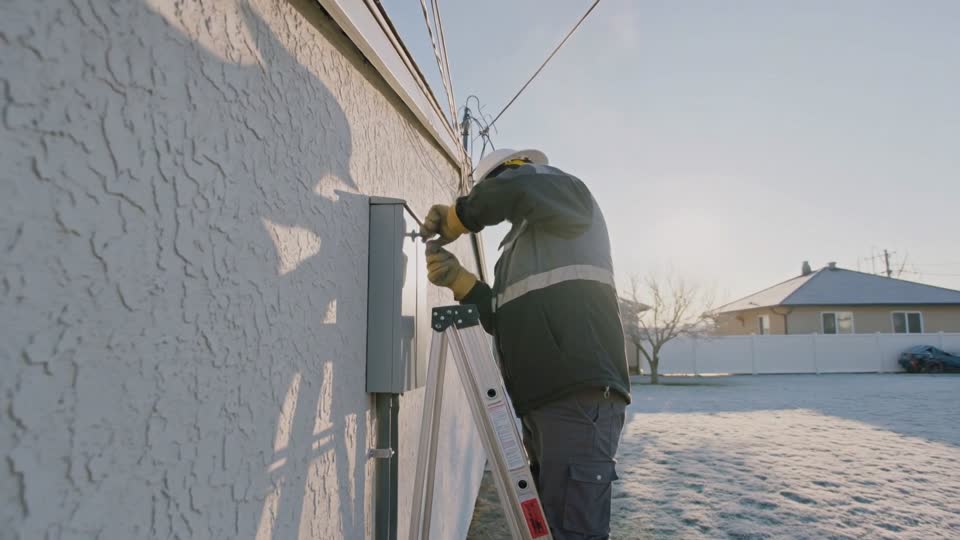 E-401
Electrical permits in Calgary
When you need an electrical permit in Calgary, homeowner versus contractor permits, inspections and what happens without one.
E-401
Electrical permits in Calgary
When you need an electrical permit in Calgary, homeowner versus contractor permits, inspections and what happens without one.
-
E-402
Hiring an electrician
Certification, master electricians, permits, insurance, quotes and contracts: what to check before anyone opens your panel.
-
E-403
The electrical code in Alberta
Which edition of the Canadian Electrical Code applies in Alberta, how Alberta amends it, and where STANDATA bulletins fit.