Residential · Drawing E-104
Pot lights and lighting in Calgary homes
A good lighting job is planned on paper before anyone cuts a hole. The fixture type, the dimmers, the permit and most of the price follow from what is above the ceiling.
Pot lights (recessed lights) are the usual choice for renovated ceilings in Calgary, and they are easy to get wrong. A grid of cans laid out without a plan lights the floor and leaves the counters and faces in shadow. A fixture that leaks air under a cold attic causes problems every winter. Poorly matched dimmers make the whole room flicker. None of this is expensive to get right at the planning stage.
CCT 01Plan the layout before anyone cuts drywall
Good residential lighting works in layers, and each layer has its own job:
- Ambient: the general light, usually pot lights, sometimes a ceiling fixture or cove.
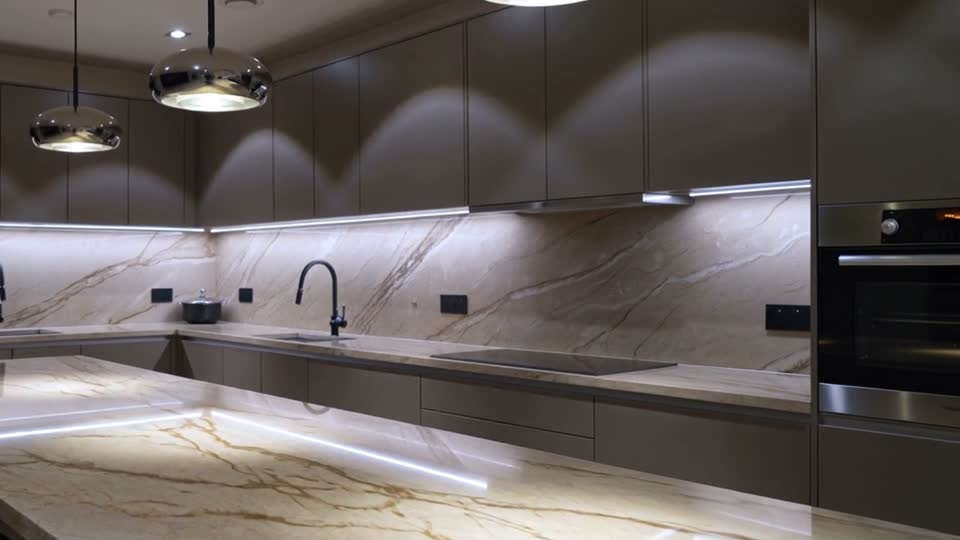
- Task: light where hands work, such as under-cabinet strips, island pendants, vanity lights and a light over the stove.
- Accent: wall washing, art lights, stair lights and cabinet interiors.
Spacing is not a fixed number. It depends on the ceiling height, the fixture's light output and beam spread, and what sits under it. Manufacturers publish photometric data for their fixtures. Use it to set the spacing rather than copying another room. In kitchens, line the pots up with the front edge of the counters, not the middle of the room, so you are not standing in your own shadow. Keep one colour temperature in each room, so the light does not look mismatched.
The layout also has to work with the framing. Joist direction, ducts, plumbing and beams decide where a fixture can actually go. An electrician checks this from the attic, from an unfinished basement ceiling or with a small inspection hole before promising a layout. Put the switch and dimmer locations on the same drawing, with three-way switching at each end of stairs and halls.
CCT 02Canless wafers, housings and retrofits
Most new work in Calgary uses one of three fixture types:
| Type | What it is | Where it suits |
|---|---|---|
| Canless (wafer or slim) LED | A thin LED fixture with a small driver box. It needs very little depth | Existing ceilings, basements under joists and ducts, shallow vaults |
| New-construction housing | A can fixed to the framing before drywall, with a separate LED trim or module | Open framing, when you want trims you can change later |
| LED retrofit module | An LED trim that screws into an existing can | Upgrading old incandescent cans without opening the ceiling |
Whatever the type, the fixture has to be approved for where it goes: rated for contact with insulation where insulation will touch it, air-tight under an unheated attic, and rated for damp or wet locations in showers, soffits and covered exterior ceilings. It should carry a certification mark accepted in Canada. Online marketplaces sell fixtures without one, and an inspector can reject those. The glossary explains the ratings on the box.
CCT 03Top-floor ceilings and Calgary winters
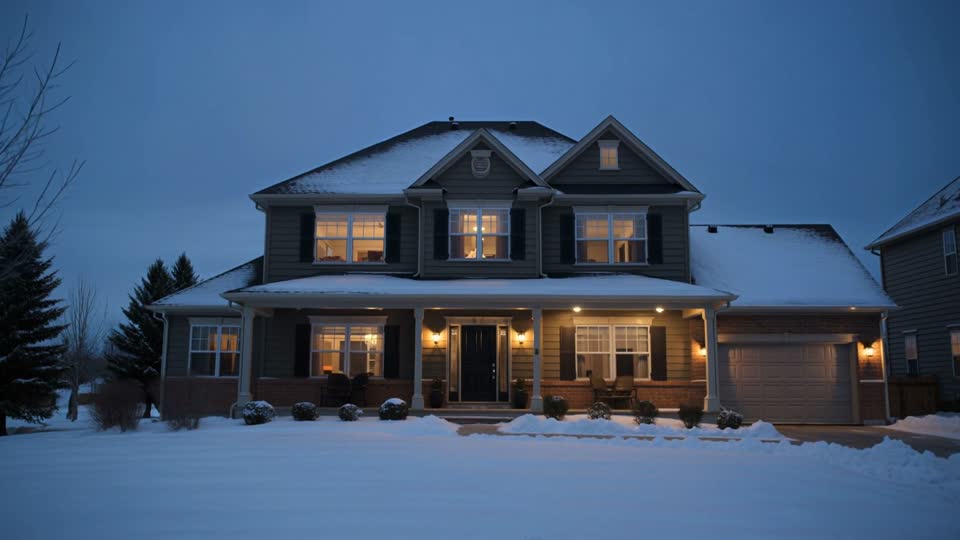
A pot light in a ceiling with an attic above is a hole in the home's air barrier. Calgary has 5,000 heating degree-days a year1 and a January heating design temperature of -30 °C,1 so warm, moist house air leaking through that hole meets a very cold roof deck. It condenses and freezes in the attic. On a warm day or during a chinook it thaws and drips, leaving stains around the trim that look like a roof leak.
The fixes are simple if they are planned:
- Use fixtures rated air-tight and for insulation contact on top-floor ceilings, or canless wafers sealed to the drywall.
- Keep the vapour barrier continuous and seal it to each fixture or box. Do not cut it and leave it open.
- Do not pull insulation back to "let the light breathe". Choose a fixture rated to be covered.
- Consider fewer pots on the top floor and more on ceilings with heated space above.
The winter electrical guide covers other ways the cold affects wiring.
CCT 04Dimmers, switches and smart controls
Most LED flicker and buzz comes from a mismatch between the dimmer and the fixture's driver, not from bad wiring. Before buying, check each fixture maker's list of compatible dimmers. Many dimmers let the installer set the low end so the lights do not drop out or shimmer at the bottom of the range. Do not mix fixture brands or models on one dimmer.
- Smart switches often need a neutral conductor in the switch box. Older homes wired with switch loops may not have one there, and adding one is new wiring.
- Zoning: in a kitchen, put the pot lights, the island pendants and the under-cabinet lights on separate controls, so each layer can be set on its own.
- Occupancy and vacancy sensors suit closets, laundry rooms and garages.
- Flicker that is not the dimmer, such as lights across several rooms dimming when a large appliance starts, points to a connection or service problem. Have it diagnosed (see inspections and troubleshooting).
CCT 05When lighting work needs a permit
The line in Calgary is clear. Replacing a fixture needs no electrical permit.2 All new wiring, and extending or altering existing branch-circuit wiring, does.2 Adding pot lights to a ceiling that had one fixture extends the circuit, so it needs a permit.
Lighting is work a homeowner can do on a homeowner permit, unlike EV, solar or main-service work. It costs $112 plus a $4.50 Safety Codes Council fee, $116.50 in total.3 You must live in the home, or intend to, and it cannot be a rental.2 Owners in apartment-style condos cannot get homeowner permits at all.2 A contractor permit is $112 plus $9.79 per $1,000 of construction value, plus the levy.3 See the homeowner permit guide for the rest of the conditions.
When a circuit is extended, the City's homeowner guide calls for combination-type AFCI protection on dwelling branch circuits supplying 125 V outlets rated 20 A or less.4 That can mean a new breaker as well as new fixtures (see GFCI and AFCI protection). Fixtures on aluminum branch wiring need connectors and devices rated for aluminum (see aluminum wiring).
Most of this work is done under contractor permits. From 2023 to 2025, contractors pulled 47,119 electrical permits for alterations to existing buildings in Calgary.5 The City's data has no scope field, so it cannot show how many of those were lighting.
Safety
Electrical work in Alberta needs a permit, and most of it needs a certified electrician. A Calgary homeowner permit covers only an owner-occupier's own work, with limits on what it includes. Turn off the breaker and test that the circuit is dead before touching a fixture. Never work on energized wiring. If a ceiling box is hot, scorched or loose, stop and have it inspected.
CCT 06How a pot light job runs
- Walkthrough and layout. Fixture positions, switch and dimmer locations, and zones, drawn on a plan and checked against the framing.
- Circuit check. Which circuit feeds the room, what else is on it, and whether the panel has space if a new circuit is needed.
- Permit, if wiring is added or extended.
- Wiring. In open framing, a rough-in inspected before insulation and drywall. In finished ceilings, the fixture holes are cut and cable is fished between them, with small access holes where joists block the path.
- Fixtures and controls. Wafers or trims installed, dimmers set up, and the panel directory updated.
- Patching and final inspection. Drywall repair and paint are often not in an electrical quote. Ask.
For lighting in a basement being finished, the circuits and rough-in are part of the larger job described in basement and renovation wiring. Offices, shops and warehouses are a different scope. See LED lighting retrofits.
CCT 07Soffits, exterior and landscape lighting
Soffit pot lights, porch fixtures and landscape lighting work in freeze-thaw cycles, snow and chinook melt. Use fixtures rated for damp or wet locations as the position requires, weatherproof boxes, and photocells or timers so nothing depends on someone remembering a switch. Low-voltage landscape systems run from a transformer plugged into or wired to an exterior outlet, and the outlet needs ground-fault protection. Before you bury cable or trench for a line-voltage post light, request locates. Homeowners are asked to do this at least three full working days before digging.6 See click before you dig.
CCT 08What changes the price
No public body publishes a per-light price for Calgary, and online per-pot figures come from individual companies without a stated method. What a contractor prices:
- Fixture count and type, and who supplies them. Fixtures you buy still count toward the permit's construction value.3
- Access. An attic or open basement ceiling is quick. A finished ceiling with a floor above means fishing cable across joists.
- Ceiling height and shape, including vaults and bulkheads.
- Air sealing and insulation on top-floor ceilings.
- Controls: standard dimmers, smart switches, or a new neutral run.
- Circuit and panel work, including AFCI breakers and space for a new circuit.
- Drywall repair and painting, if they are included.
The pot light and lighting cost guide takes each driver in turn, and electrician rates explains how a billed hour is built. When you request a quote, include the room size, the ceiling type, what is above it and how many fixtures you have in mind.
Questions people ask
Do I need a permit to install pot lights in Calgary?
Can I install pot lights myself?
In Calgary, an owner who lives in a house (not a rental and not an apartment-style condo) can apply for a homeowner permit for $116.50 and do the work.3 It still has to pass inspection. If you are not confident fishing cable, making connections and setting up AFCI protection, hire a contractor.
How much does it cost to install pot lights in Calgary?
There is no official per-light figure. The price depends mostly on ceiling access, the fixture type, controls, any new circuit and drywall repair. The permit, if a contractor pulls it, is $112 plus $9.79 per $1,000 of job value, plus the levy.3
Do I need an electrical permit to change a light fixture?
No. The City says a permit is not required when you only replace fixtures.2 Turn the breaker off and test the wires first. If the box is damaged, the wiring is aluminum, or you want to add a fixture or switch, that is different work.
Why do my LED pot lights flicker when dimmed?
Usually the dimmer and the LED driver are not compatible, or the dimmer's low-end trim is set too low. Check the fixture maker's compatibility list and have the dimmer adjusted or replaced. If lights flicker across several rooms, or when a large appliance starts, have the circuit and connections checked.
Sources
- National Building Code - 2023 Alberta Edition, Volume 1, Division B, Appendix C, Table C-2 Climatic Design Data for Selected Locations in AlbertaAlberta Municipal Affairs / National Research Council of Canada · 2023 Alberta Edition, second printing incl. revisions and errata released April 2026
- Homeowner electrical and plumbing permitsCity of Calgary · retrieved 2026-09-25
- 2026 Building & Trade Permit Fee Schedule (R2026-02)The City of Calgary · 2026 fee schedule, revision R2026-02; retrieved 2026-09-25
- Homeowners electrical wiring guideCity of Calgary · copyright 2024; includes 2021 CE Code amendments
- Electrical Permits and Inspections (dataset vxgy-id5s)The City of Calgary, Open Government Licence – City of Calgary · queried 2026-09-25
- Homeowner OverviewUtility Safety Partners · retrieved 2026-09-25
Related
-
 E-101
Panel & service upgrades
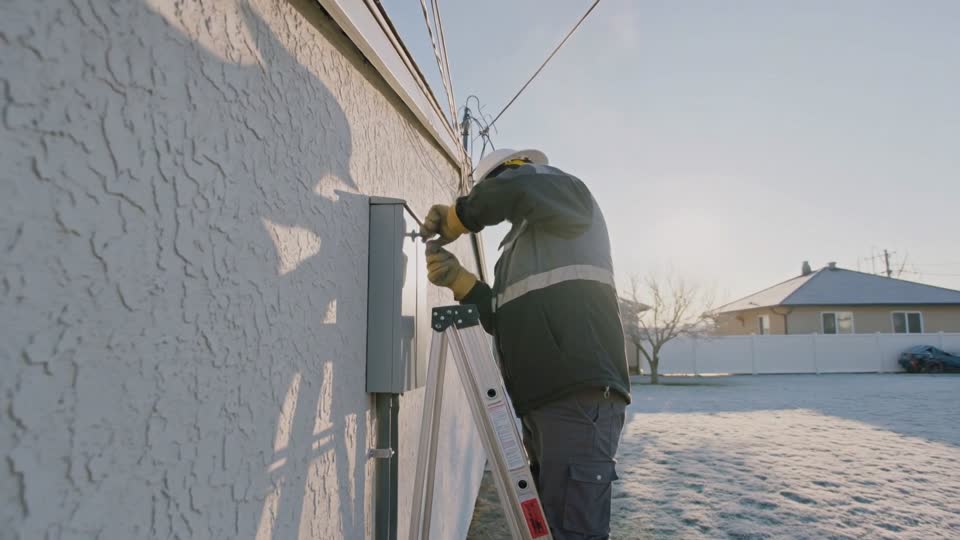
Replacing an old panel or raising a 60 or 100 A service to 200 A: what it involves, who does which part, and what drives the price.
E-101
Panel & service upgrades
Replacing an old panel or raising a 60 or 100 A service to 200 A: what it involves, who does which part, and what drives the price.
-
 E-102
EV charger installation
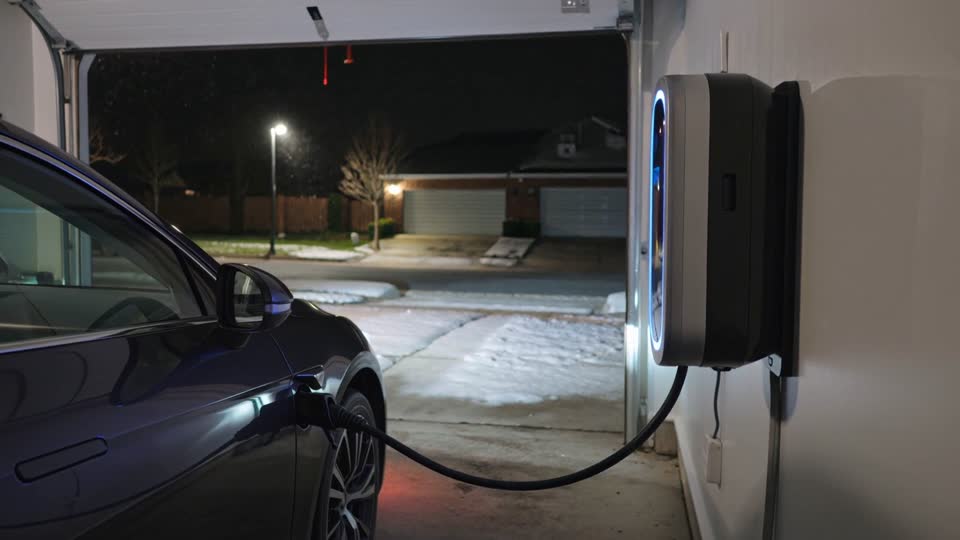
Level 2 charging at home: circuit sizing, whether your panel can carry it, load management, permits and winter charging.
E-102
EV charger installation
Level 2 charging at home: circuit sizing, whether your panel can carry it, load management, permits and winter charging.
-
E-103
Basement & renovation wiring
Wiring a basement development, secondary suite, kitchen or addition: rough-in, inspections and the circuits the code expects.