Guide · Drawing E-412
Winter electrical in Calgary
Calgary’s electrical systems are designed for minus thirty, and a cold snap is when every weak connection, overloaded circuit and improvised extension cord shows itself. This guide covers the winter loads a house carries and how to keep them safe.
Winter changes what a Calgary house asks of its wiring. Loads run longer, outdoor equipment works in snow and meltwater, and the gas furnace that keeps the pipes from freezing cannot run without electricity. Each section below takes one of those loads in turn.
CCT 01A city designed for minus thirty
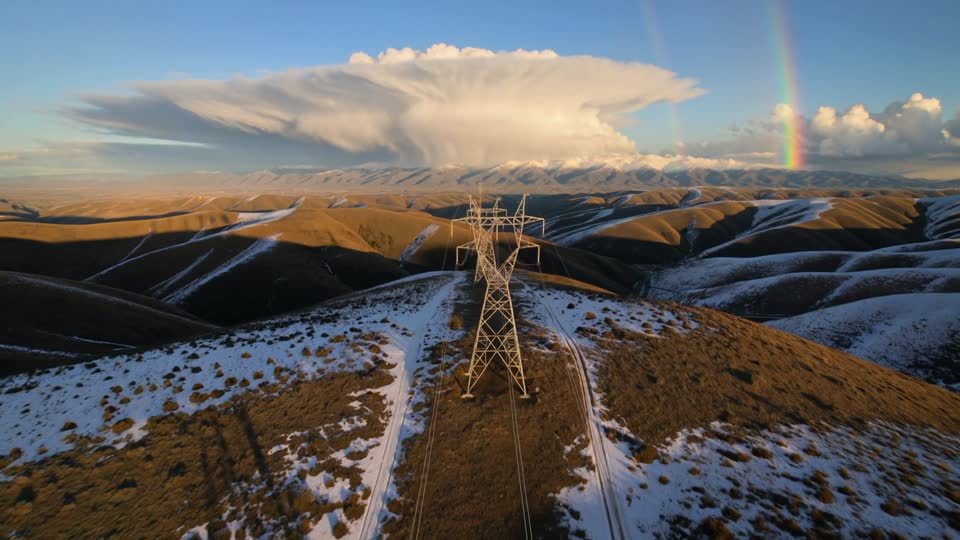
The Alberta Building Code gives Calgary a January 2.5% design temperature of −30 °C and a 1% value of −32 °C 1. The 2.5% figure means the outdoor temperature is colder than −30 °C for only 2.5% of January hours, so heating equipment is sized to hold the house at that temperature. Calgary also carries 5,000 heating degree-days below 18 °C 1, a measure of how long and how hard the heating season runs.
For the electrical system, those numbers translate into long running hours. A furnace blower, a heat-trace cable, a block heater and a space heater in a cold basement bedroom can all run for most of a night, at the same time, for days. Wiring that copes with a short peak can overheat at a loose connection under a long one. Warm cover plates, a burning smell or lights that dim when the furnace starts are worth a call before the next cold snap, not after.
CCT 02The grid in a cold snap
Cold drives Alberta's demand records. The province's all-time peak load of 12,785 MW was set on December 11, 2025, 3.2% above the previous record from January 2024 2. Calgary's own load is growing: average load in the Calgary region reached a record 1,239 MW in 2025 2, and has grown an average of 1.4% a year over five years 2.
At the scale of one house, the same thing happens on a smaller stage. A home that added an EV charger, a hot tub or electric heat since it was built may be closer to its service limit on a January evening than anyone realizes. The home load calculator shows how much headroom is left. If an EV is part of the picture, see EV charging at home.
CCT 03Block heaters and driveway receptacles
Natural Resources Canada recommends putting a block heater on a timer set to turn on no more than 2 hours before you start the engine 3. Plugging in all night adds hours of running cost that a timer avoids. An outdoor-rated, heavy-duty timer on the receptacle is the simplest efficiency step in this guide.
To estimate what yours costs, take the wattage from the heater's label, the hours it runs and your all-in price per kWh, and use the appliance running cost calculator. For context, the Rate of Last Resort energy rate in the ENMAX Power area is 12.06¢ per kWh through 2026, before delivery charges 4.
The receptacle itself matters as much as the cord. The City's homeowner wiring guide says 5:
- Outdoor outlets need covers approved for wet locations and marked extra duty.
- Exterior outlets within 2.5 m of finished grade must be GFCI protected, but automotive heater and charging outlets are exempt.
- Outdoor outlets should be on a separate circuit.
The guide is labelled as including 2021 code amendments, so an electrician confirms current rules. A receptacle on a post at the end of a driveway means trenching, and trenching means a locate first; see click before you dig.
CCT 04Heat trace for roofs, gutters and pipes
Heat-trace cable keeps ice dams off eaves and gutters and keeps exposed water lines from freezing. It is fixed electric heating equipment, and the electrical code treats it that way, with its own rules for circuit sizing and ground-fault protection. The City guide's advice is to put electric heat on a dedicated circuit 5.
- Know the type. Self-regulating cable reduces its output as it warms. Constant-wattage cable does not, and needs a thermostat or controller to avoid overheating.
- Plugged or hard-wired. A cord-and-plug kit on an existing outdoor receptacle is common for gutters. A long roof run or pipe tracing in a crawlspace is usually a hard-wired circuit with a controller. A new circuit is new wiring and needs a permit 6.
- Never on an extension cord. Heat trace runs for weeks. A light-duty cord coiled in snow is a fire and shock hazard.
- Check it in the fall. Damaged jacket, a cable crushed under a downspout bracket or a tripping GFCI all mean replacement, not repair tape.
A heat-trace circuit that trips is usually reporting a real fault, not misbehaving; the GFCI and AFCI guide explains why.
CCT 05The furnace circuit and its disconnect
A natural gas furnace depends on electricity for its igniter, controls and blower. Lose the circuit and the house cools, whatever the gas supply is doing.
The City guide requires the furnace disconnect switch to be accessible, and reachable without passing the front of the furnace, because it is an emergency shut-off 5. Basement developments often have to relocate it, typically near the utility room entrance. The guide also calls for at least one receptacle on its own breaker in utility rooms.
Three winter habits help:
- Label the furnace breaker and the disconnect so anyone in the house can find them.
- Keep furnace, dryer and water heater vents clear of snow. The Calgary Fire Department names the furnace as the most common source of carbon monoxide in a home 7.
- Plan how the furnace will run in an outage, which is the subject of the next two sections.
CCT 06Preparing for a winter outage
ENMAX Power owns the wires in Calgary and restores outages on its system. What happens inside your house until then is up to you.
- Know your priority loads. Furnace, sump pump, refrigerator, a few lights and a phone charger. That list sets the size of any backup.
- Keep CO alarms working. The CFD says never to use a stove or oven to heat the home, and to run portable fuel-burning generators outdoors only, in well-ventilated areas away from windows, doors and vents 7. See smoke and CO alarms.
- Protect against the restart. Turn off large loads and electronics when the power fails, then bring them back gradually after it returns.
- Know when it is an emergency. A downed line, arcing at the mast or a burning smell is not an outage to wait out. See electrical emergencies and outages.
CCT 07Generators and transfer equipment
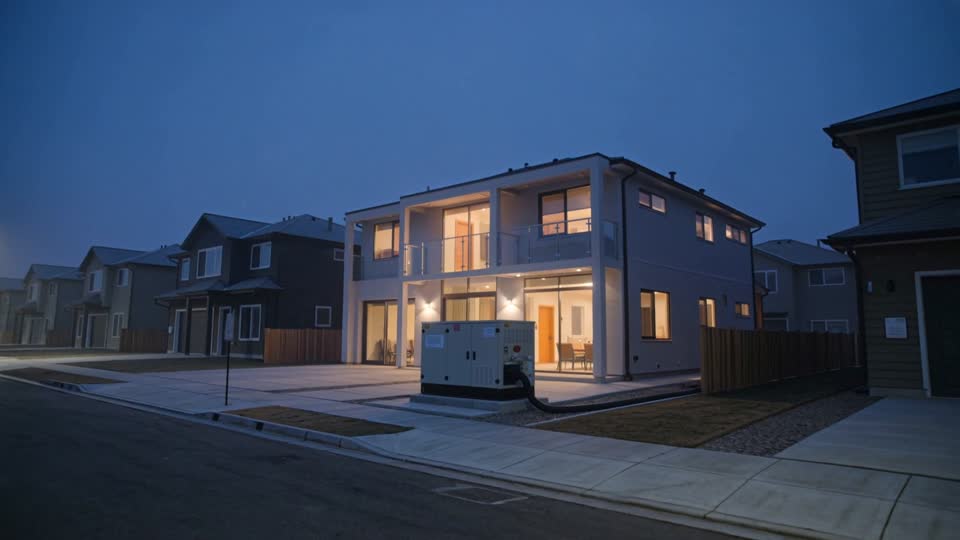
A generator connected to house wiring must be isolated from ENMAX's system. Otherwise it can backfeed through the service and energize lines that crews believe are dead. A "suicide cord" into a dryer receptacle does exactly that, and also bypasses every protective device in the panel.
The legal routes all use approved transfer equipment, installed under a permit:
- Inlet and interlock. An exterior inlet feeds the panel through a breaker, and a mechanical interlock prevents the main and generator breakers from being on together.
- Transfer switch. A manual or automatic switch moves selected circuits, or the whole house, between utility and generator.
- Meter-mounted transfer equipment. Alberta's variance for these devices will be archived effective January 1, 2027, after which new units must be certified to ANSI/CAN/UL 1008M:2025 8. Check certification before buying one.
Sizing starts from the priority loads above, not the generator's brochure. The furnace, sump pump and refrigerator drive the answer, and electronic furnace controls may need a generator with clean output. See generators and backup power, and generator installation cost for what drives the price. No public body publishes a Calgary price range for generator installations.
Safety
Electrical work in Alberta needs a permit, most of it needs a certified electrician, and homeowner permits have limits. Never connect a generator to house wiring without approved transfer equipment, never work on energized equipment, and never run a fuel-burning generator in a garage, even with the door open. To have a generator connection or winter circuits priced, request a quote and a person replies.
Questions people ask
How long should I plug in my block heater?
Natural Resources Canada recommends a timer set to turn the block heater on no more than 2 hours before you start the engine 3. Leaving it plugged in all night adds running hours, and cost, that the timer avoids.
How much does a block heater cost to run in Calgary?
Multiply the heater's wattage (on its label) by the hours it runs, convert to kWh and multiply by your all-in price per kWh. In the ENMAX Power area the Rate of Last Resort energy charge is 12.06¢ per kWh through 2026 4, before delivery charges. The appliance running cost calculator does the arithmetic.
Do outdoor outlets need to be GFCI in Alberta?
Under the City of Calgary's homeowner guide, exterior outlets within 2.5 m of finished grade must be GFCI protected, with automotive heater and charging outlets exempt 5. The guide reflects 2021 code amendments, so confirm with an electrician.
Can I plug a generator into my dryer outlet?
No. Backfeeding through a receptacle can energize ENMAX lines and injure crews, and it bypasses the panel's protection. Use an inlet with an interlock or a transfer switch, installed by an electrician under a permit.
Why does my outdoor outlet keep tripping in winter?
Usually water: snowmelt, a chinook thaw or frost inside a cover that does not seal. A damaged block heater cord or heat-trace cable is the next suspect. The GFCI is doing its job; find the wet or damaged part rather than bypassing it.
Sources
- National Building Code - 2023 Alberta Edition, Volume 1, Division B, Appendix C, Table C-2 Climatic Design Data for Selected Locations in AlbertaAlberta Municipal Affairs / National Research Council of Canada · 2023 Alberta Edition, second printing incl. revisions and errata released April 2026
- AESO 2025 Annual Market Statistics (March 2026)Alberta Electric System Operator (AESO) · Calendar 2025; winter peak through Feb 2026; published March 2026
- Factors that affect fuel efficiencyNatural Resources Canada · modified 2025-01-15
- Utilities Consumer Advocate: Default ratesGovernment of Alberta (Utilities Consumer Advocate) · Fixed 2025-01-01 to 2026-12-31; page read 2026-09-25
- Homeowners electrical wiring guide (labelled as including 2021 CE Code amendments)The City of Calgary · copyright 2024
- Homeowner electrical and plumbing permitsCity of Calgary · retrieved 2026-09-25
- Carbon monoxide alarmsThe City of Calgary (Calgary Fire Department) · retrieved 2026-09-25
- Notice to archive 24-ECV-002-024-MMTE: Meter mounted transfer equipmentAlberta Municipal Affairs · July 2026
Related
-
 E-401
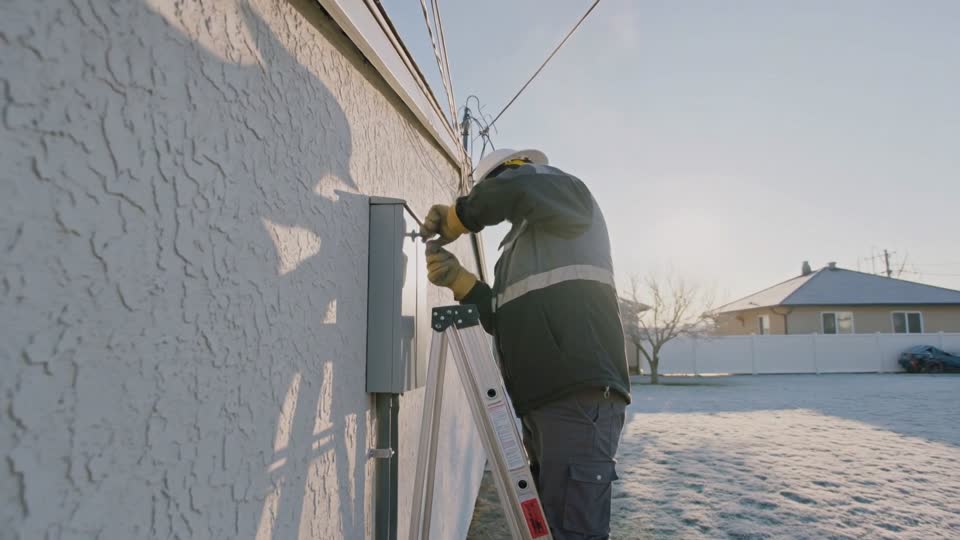
Electrical permits in Calgary
When you need an electrical permit in Calgary, homeowner versus contractor permits, inspections and what happens without one.
E-401
Electrical permits in Calgary
When you need an electrical permit in Calgary, homeowner versus contractor permits, inspections and what happens without one.
-
E-402
Hiring an electrician
Certification, master electricians, permits, insurance, quotes and contracts: what to check before anyone opens your panel.
-
 E-403
The electrical code in Alberta
Which edition of the Canadian Electrical Code applies in Alberta, how Alberta amends it, and where STANDATA bulletins fit.
E-403
The electrical code in Alberta
Which edition of the Canadian Electrical Code applies in Alberta, how Alberta amends it, and where STANDATA bulletins fit.