Residential · Drawing E-106
Generators and backup power in Calgary
In a Calgary winter an outage is a heating problem first. Here is how each kind of backup power connects to a house, what the permit covers and what an electrician needs to know to price it.
Backup power for a house is two decisions: the source (a portable generator, a standby generator or a battery) and the connection (how that source reaches your circuits without feeding back into the utility’s lines). The connection is the electrical job, and it is the part that needs a permit.
CCT 01Why backup power is a winter question here
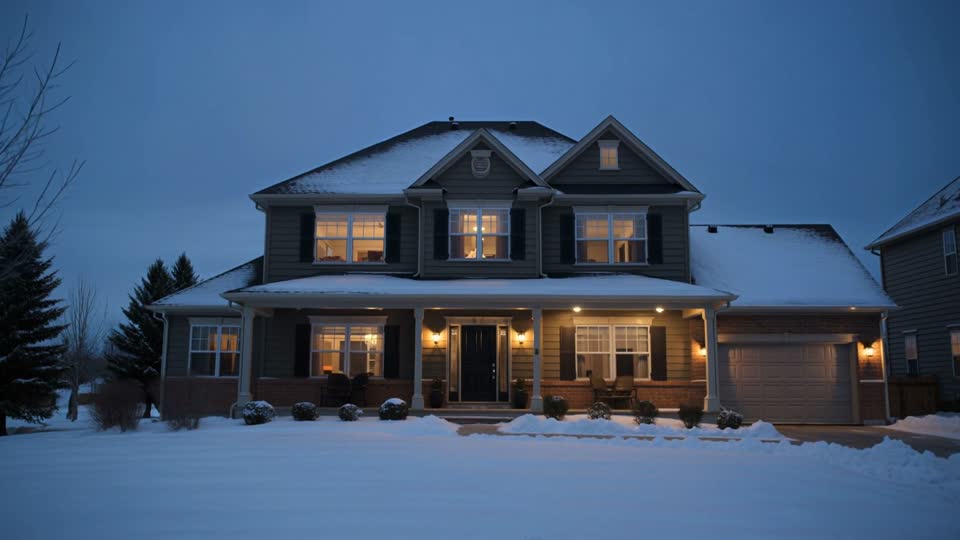
Calgary’s January 2.5% design temperature is −30 °C, the figure heating systems are sized against,1 and the 1% value is −32 °C.1 The building code’s heating value for Calgary is 5,000 degree-days.1 A gas furnace still needs electricity: the blower, igniter, controls and draft inducer all stop when the power does. So do sump pumps, well pumps on acreages outside the city, heat trace and freezers.
Winter is also when the grid works hardest. Alberta’s all-time electricity demand record, 12,785 MW, was set on December 11, 2025.2 That is not a forecast of outages, but it is a reminder that the loads you most need to keep running are winter loads. Plan backup around the furnace first. See winter electrical in Calgary and, for what to do when the lights go out, electrical emergencies and outages.
CCT 02The four setups, compared
| Setup | What it powers | How it starts | Electrical work |
|---|---|---|---|
| Portable generator and extension cords | A few plug-in appliances | Manual | None. Cords only, never into house wiring |
| Portable generator, inlet and interlock or manual transfer switch | Selected circuits, often including the furnace | Manual | Outdoor inlet, cable to the panel, transfer device, permit |
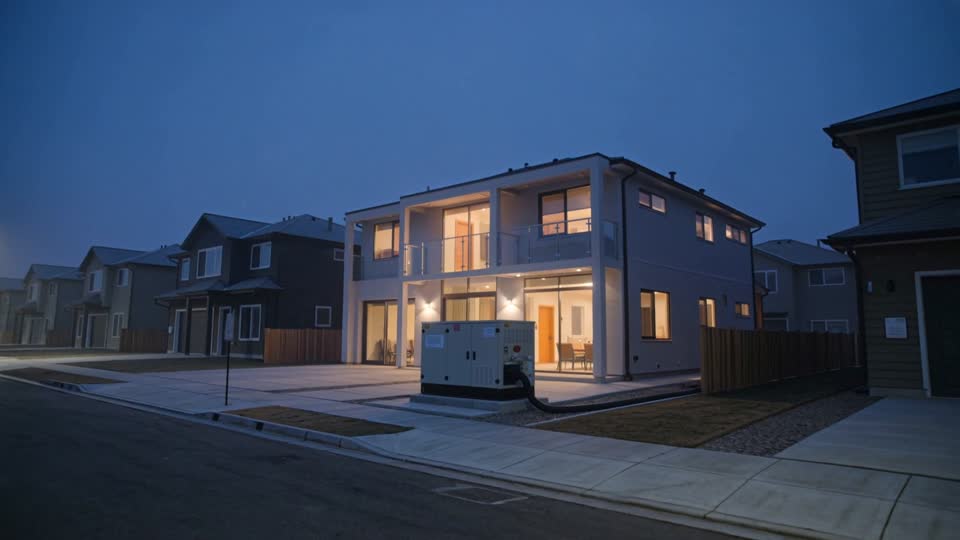
| Standby generator and automatic transfer switch | Selected circuits or the whole house | Automatic | Transfer switch, feeder, controls, pad, gas connection by the gas trade, permits |
| Battery storage (with or without solar) | Backed-up circuits for a limited time | Automatic if configured for backup | Battery, inverter, backup subpanel, contractor permit |
The inlet-and-interlock setup is a common choice because it keeps the furnace and fridge running with a generator many people already own. A standby unit makes sense when someone in the house depends on power, when the house is often empty in winter, or when you want the change-over to happen without anyone going outside.
CCT 03Transfer equipment: the part that matters
Any generator connected to house wiring must be isolated from the utility first. Without that, a generator can push power back out through the service onto ENMAX’s lines, where line workers expect them to be dead. Transfer equipment makes it physically impossible for both sources to be connected at once. There are three common forms:
- Interlock. A mechanical plate on the main panel that stops the main breaker and a generator breaker from being on at the same time. It must be a device approved for that panel’s make and model.
- Manual transfer switch. A separate switch, usually beside the panel, that moves a set of circuits from utility to generator.
- Automatic transfer switch. Senses the outage, starts a standby generator and transfers the load, then transfers back when utility power returns. A service-rated version can sit between the meter and the main panel and handle the whole house.
A fourth category mounts at the meter. Alberta has allowed meter-mounted transfer equipment under a code variance, and the province has given notice that the variance will be archived on January 1, 2027; new units must be certified to ANSI/CAN/UL 1008M:2025.3 ENMAX also restricts electrical contractors from handling meters,4 so ask how any meter-mounted option would be coordinated with the utility before you choose one.
CCT 04Sizing: essential circuits or the whole house
Generator size follows from a list, not a rule of thumb. An electrician will start by deciding which circuits must run in an outage, then add up their running load and the extra current motors draw for a moment when they start.
- Essentials. Furnace, fridge and freezer, sump pump, a few lighting circuits, internet and phone charging, and the garage door opener.
- Comfort. Kitchen receptacles, a microwave, the well or water system on an acreage, and more lighting.
- Whole house. Everything, including electric ranges, dryers, hot tubs, air conditioning and EV chargers. This is where standby units get large and where load management starts to earn its keep.
The same method that sizes your service is a good starting point. For a single dwelling, the code’s Rule 8-200 calculation uses the nameplate rating of every load over 1,500 W.5 The home load calculator walks through it, and the appliance running cost calculator helps you see which loads matter. If the list is long and the panel is full, the job may start with a panel upgrade.
CCT 05Permits and who does what
Connecting a generator to house wiring is new wiring, and Calgary requires an electrical permit for all new wiring and for extending or altering branch circuits.6 The transfer device goes on or beside the main panel. A Calgary homeowner permit does not allow anyone to install, alter or modify the main electrical service, which includes the main panel and main breaker,6 so for most owners an interlock or service-entrance transfer switch is contractor work. Battery-based energy storage is also excluded from homeowner permits.6
In Alberta, master electricians are the only contractors who can obtain electrical permits.7 The 2026 contractor permit fee is $112 plus $9.79 per $1,000 of construction value, plus the Safety Codes Council levy.8 A standby generator on natural gas or propane also needs the gas trade for the fuel line, under its own permit, and the pad and location must suit the manufacturer’s clearances. Outside city limits, towns such as Airdrie, Cochrane and Okotoks and Rocky View County have their own permit authorities. See electrical permits in Calgary.
Safety
Never connect a generator to a dryer or range receptacle with a double-ended cord. It energizes the house wiring and can feed back onto utility lines. Run portable generators outdoors, well away from windows, doors and vents, never in a garage, because the exhaust contains carbon monoxide. Electrical work in Alberta needs a permit and most of it needs a certified electrician. Homeowner permits cannot cover the main panel, and no one should work on energized equipment.
CCT 06Siting and cold-weather details
Details that separate a standby installation that starts at −30 °C from one that does not:
- Cold-weather package. Battery and block heaters on the generator, powered from a circuit that stays live on utility power.
- Fuel. Natural gas avoids refuelling, but the gas trade has to confirm the meter and piping can carry the generator on top of the furnace and water heater. Propane needs tank sizing for a long cold outage.
- Exhaust and snow. Keep the unit clear of windows, doors and air intakes, and out of the path of snow sliding off the roof or drifting against the enclosure.
- Exercise and service. Standby units run a short self-test on a schedule. Choose a time that will not annoy neighbours, and budget for annual maintenance.
- Portable units. Store fuel safely, start the generator monthly, and keep the inlet cover and cord where you can reach them in a snowstorm.
CCT 07Home batteries as backup
A battery backs up a house only if it is set up to. Many batteries are installed alongside solar to shift energy, and they switch to backup only with the right inverter and a transfer arrangement that isolates the house from the grid. Backed-up circuits are usually moved to a separate subpanel so the battery is not asked to carry the whole house.
How long a battery lasts depends on its usable capacity and what it is carrying. A furnace blower and a fridge are modest; an electric range, dryer or EV charger will drain it quickly. In a multi-day winter outage without sun, a battery on its own may not be enough, which is why some owners pair one with a small generator.
Battery storage in Calgary needs a contractor permit.6 Lithium-ion batteries of all kinds are a fire concern for the City: it estimates fire-related property losses of over $32 million from lithium-ion battery fires in 2025.9 That figure covers every kind of device, not home storage systems specifically, but it is why installation to the manufacturer’s instructions and the code matters. For batteries paired with panels, see solar PV and batteries.
CCT 08What drives the price
No federal, Alberta or City of Calgary source publishes a cost for generator or transfer switch installation, so this page does not quote one. What moves the price:
- The setup. An inlet and interlock is a small job; a standby generator with an automatic transfer switch involves more equipment and more trades.
- Panel condition. Whether an approved interlock exists for your panel, whether there is space for a generator breaker, and whether the panel should be replaced first.
- Distance. The run from the generator or inlet location to the panel, and whether it goes through finished space.
- Load. Whole-house coverage means a bigger generator and transfer switch than essential circuits.
- Other trades. Gas piping, a concrete or composite pad, and any landscaping or fence work.
- Permits. The electrical permit scales with job value, and gas work has its own permit.
The generator installation cost guide covers these in more depth. Commercial buildings and critical loads are a different design problem; see standby power and generators.
Questions people ask
Is a generator interlock kit legal in Canada?
An interlock is an accepted way to isolate a generator from the utility when it is a device approved for that specific panel and is installed under a permit. In Calgary it goes on the main panel, which a homeowner permit cannot cover,6 so in most cases a contractor installs it and the City inspects it. Homemade plates and devices not approved for your panel will not pass.
What size generator do I need for my house?
It depends on the circuits you choose to run and the starting current of any motors. List the essentials (furnace, fridge, sump pump, some lights), add their loads, then allow for starting surges. For whole-house coverage, start from a load calculation like the one in the home load calculator, which counts every load over 1,500 W at its nameplate rating.5
How much does it cost to install a generator transfer switch?
No public body publishes a price. It depends on the type of switch, your panel, the distance to the generator or inlet, and the permit, which in 2026 is $112 plus $9.79 per $1,000 of construction value, plus the provincial levy.8 Get quotes on the same written scope.
Do I need a permit to install a generator in Calgary?
Yes, if it connects to your house wiring. Calgary requires an electrical permit for all new wiring.6 A portable generator used only with extension cords to individual appliances involves no wiring. A standby unit also needs the gas trade and its permit for the fuel line.
Can a home battery replace a generator?
For short outages and modest loads, often yes, if it is configured for backup. For multi-day winter outages, a battery alone may run out without sun to recharge it. Battery storage needs a contractor permit in Calgary.6
Sources
- National Building Code - 2023 Alberta Edition, Volume 1, Division B, Appendix C, Table C-2 Climatic Design Data for Selected Locations in AlbertaAlberta Municipal Affairs / National Research Council of Canada · 2023 Alberta Edition, second printing incl. revisions and errata released April 2026
- AESO 2025 Annual Market Statistics (March 2026)Alberta Electric System Operator (AESO) · Calendar 2025; winter peak through Feb 2026; published March 2026
- Notice to archive 24-ECV-002-024-MMTE: Meter mounted transfer equipmentAlberta Municipal Affairs · July 2026
- Electrical permits for contractorsCity of Calgary · retrieved 2026-09-25
- STANDATA bulletin 24-ECB-008 Circuit loading and demand factorsAlberta Municipal Affairs · April 2025
- Homeowner electrical and plumbing permitsCity of Calgary · retrieved 2026-09-25
- About Master ElectriciansSafety Codes Council · retrieved 2026-09-25
- 2026 Building & Trade Permit Fee Schedule (R2026-02)City of Calgary · 2026 schedule R2026-02
- Fire Prevention WeekCity of Calgary (Calgary Fire Department) · retrieved 2026-09-25
Related
-
 E-101
Panel & service upgrades
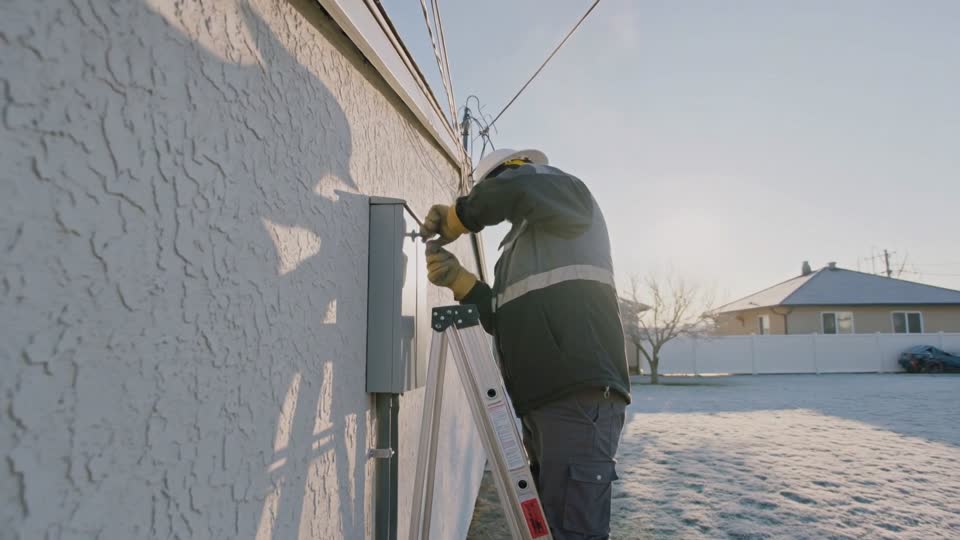
Replacing an old panel or raising a 60 or 100 A service to 200 A: what it involves, who does which part, and what drives the price.
E-101
Panel & service upgrades
Replacing an old panel or raising a 60 or 100 A service to 200 A: what it involves, who does which part, and what drives the price.
-
 E-102
EV charger installation
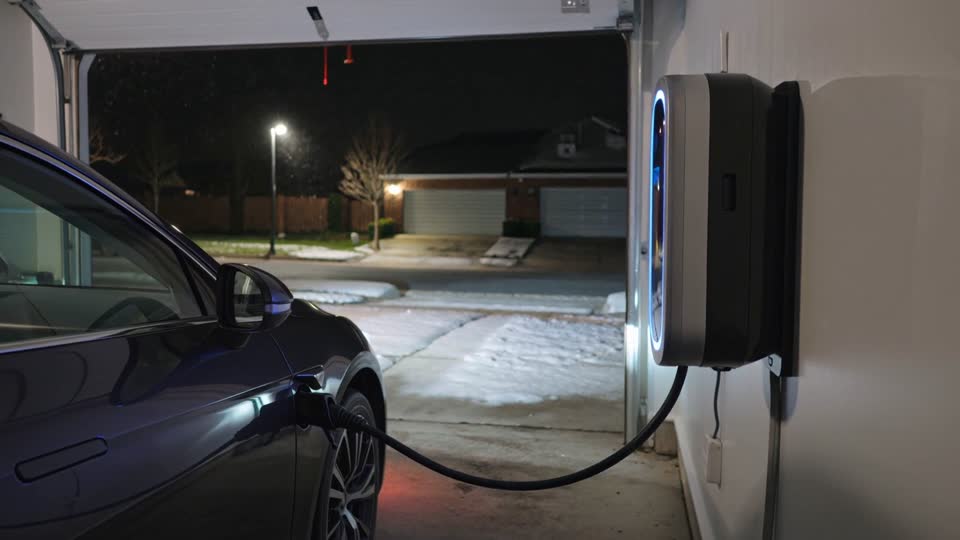
Level 2 charging at home: circuit sizing, whether your panel can carry it, load management, permits and winter charging.
E-102
EV charger installation
Level 2 charging at home: circuit sizing, whether your panel can carry it, load management, permits and winter charging.
-
 E-103
Basement & renovation wiring
Wiring a basement development, secondary suite, kitchen or addition: rough-in, inspections and the circuits the code expects.
E-103
Basement & renovation wiring
Wiring a basement development, secondary suite, kitchen or addition: rough-in, inspections and the circuits the code expects.