Commercial · Drawing E-210
Standby power and generators for Calgary buildings
How commercial generators and transfer switches are specified, permitted, connected to life-safety systems and proven, in a city whose design winter day is −30 °C.
A generator is the easy part. The hard parts are deciding which loads it must carry and in what order, how quickly it must pick them up, how the transfer equipment keeps it from ever backfeeding the ENMAX system, and how the fire alarm knows what it is doing. This page covers those decisions for offices, condos, care homes, warehouses and critical sites. The residential version is on generators and backup power.
CCT 01Emergency power versus standby power
The first question is whether the generator is required by the building code or chosen by the owner. The answer changes the design, the permits and the testing.
| Type | Why it exists | Typical loads | What governs it |
|---|---|---|---|
| Emergency power | Required by the building code for life safety | Egress lighting, exit signs, fire alarm, fire pumps, elevators for firefighters, smoke control | Building code, CSA C282, the electrical code's emergency-system rules |
| Required standby | Required for a specific occupancy or process | Care-home systems, sewage lift pumps, refrigeration where a rule requires it | The rule that requires it, plus the electrical code |
| Optional standby | Business continuity chosen by the owner | Servers, freezers, heating, tenant floors, production lines | The electrical code and the owner's specification |
The current edition of CSA C282, the standard for emergency generator sets, is C282:24. It covers the design, installation, operation, maintenance and testing of generator sets that supply emergency power to buildings where the National Building Code requires it.1 The code in force references a particular edition, so the design engineer confirms which one applies to your permit.
One generator can serve both emergency and optional loads, but they must be kept apart. Emergency loads get their own transfer switch and wiring, and they get first call on the generator. Optional loads are shed if capacity runs short.
CCT 02Automatic transfer switches and paralleling gear
The transfer switch (ATS) watches the utility supply, starts the generator when the supply fails, moves the load across once the generator is stable, and moves it back after the utility returns. The type decides how the load sees each transfer:
- Open transition (break-before-make). The load sees a short outage on each transfer. This is standard for most emergency and standby systems.
- Delayed transition. The switch pauses in a centre-off position so that large motors and transformers can decay before reconnection. This avoids nuisance trips and torque shocks.
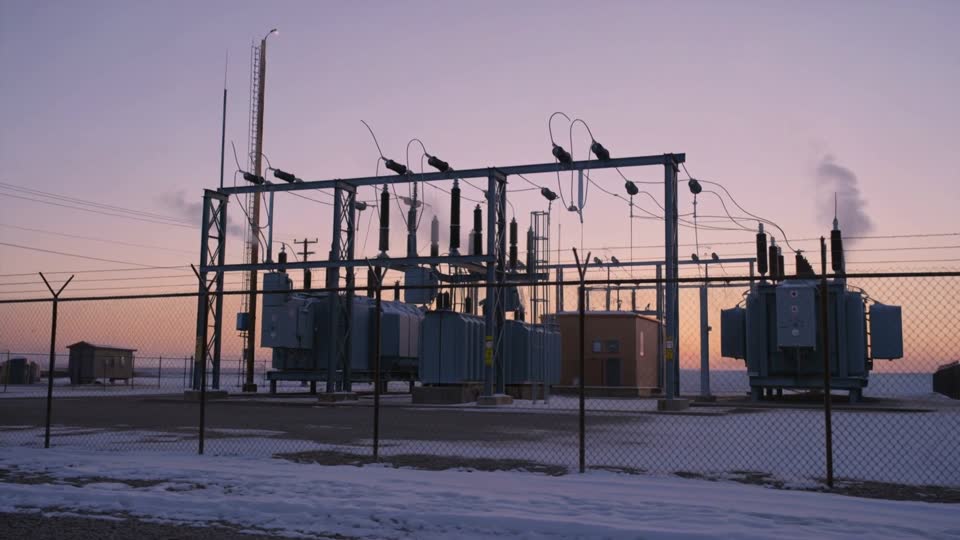
- Closed transition (make-before-break). The generator and utility are briefly paralleled, so the retransfer is seamless. Because the generator connects to the ENMAX system for that moment, the protection scheme must be agreed with ENMAX Power before it is built.
- Bypass-isolation. A second switching path lets the ATS be withdrawn for maintenance without dropping the load. It is worth it wherever the load cannot be shut down.
- Service-entrance rated. The ATS also serves as the service disconnect, which saves a separate main on smaller services.
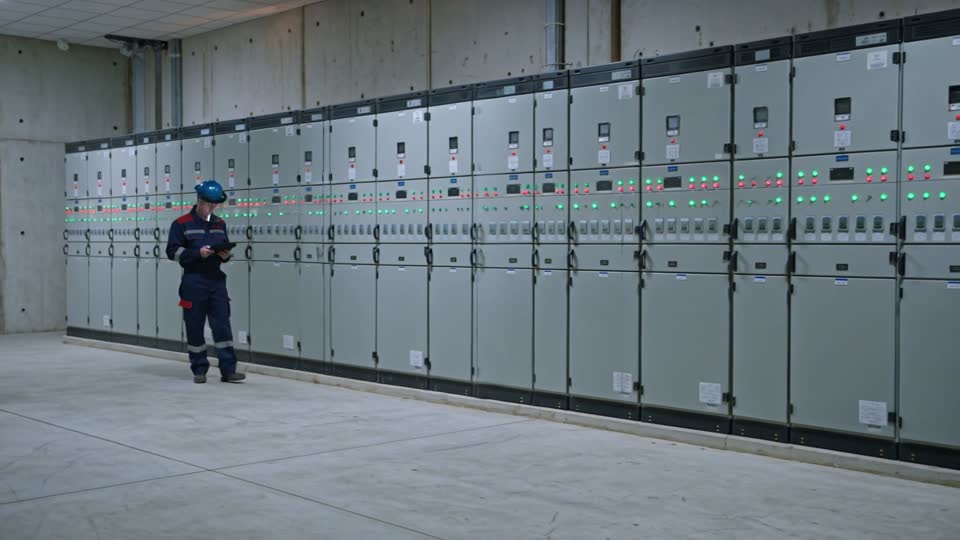
Larger sites use paralleling switchgear, where several generators synchronize onto a common bus and add or shed load in priority blocks. That gives redundancy (N+1 generators) and lets one unit be serviced while the others stand by. The switchgear side is covered on power distribution and switchgear, and critical-site designs on data centres and critical power.
Homes are different. Alberta's variance for meter-mounted transfer equipment will be archived on January 1, 2027, and new units must then be certified to ANSI/CAN/UL 1008M:2025.2
CCT 03Sizing: it is the starting load, not the running load
Sizing a generator from the total connected load wastes money, and sizing it from the average load fails on the first cold start. A proper load study uses:
- Measured demand. A full year of ENMAX interval or demand data shows what the building really draws, including winter peaks.
- Motor starting. Elevators, fire pumps, chillers and air handlers draw several times their running current when they start. The engineer staggers them in steps with time delays, so the generator is sized for the worst step, not for everything at once.
- Non-linear loads. UPS rectifiers and variable-frequency drives distort the generator's voltage. The alternator and voltage regulator must suit them.
- Elevator regeneration. A descending traction elevator can push power back into a small generator, so a resistive load is needed to absorb it.
- Derating. Engine output falls with altitude and high intake temperatures. The manufacturer's derating curves apply at Calgary's elevation.
Long runs from a generator pad to the transfer switch also need a voltage-drop check. The voltage drop calculator gives a first estimate.
CCT 04Calgary conditions: cold starts and demand peaks
Calgary's January design temperatures are −30 °C at 2.5% and −32 °C at 1%.3 Demand peaks in both winter and summer. Alberta's all-time peak demand of 12,785 MW was set on December 11, 2025,4 and its summer record of 12,221 MW on July 22, 2024.4 A generator may be called on in either.
For a winter-ready installation, specify:
- jacket-water block heaters and battery heaters, with an alarm at the fire alarm or building automation panel if they lose power
- winter-blend diesel, with tank heating or a turnover plan, or a natural gas supply confirmed at full flow during a cold spell
- enclosures, louvres and exhaust placed so that drifting snow cannot block them. Rooftop enclosures and dunnage must also account for Calgary's ground snow load of 1.1 kPa, which the structural engineer uses to design the roof.3
- a monitored battery charger. Weak starting batteries are a frequent cause of failed starts.
More on cold-weather electrical is in winter electrical in Calgary.
CCT 05Permits and the life-safety connection
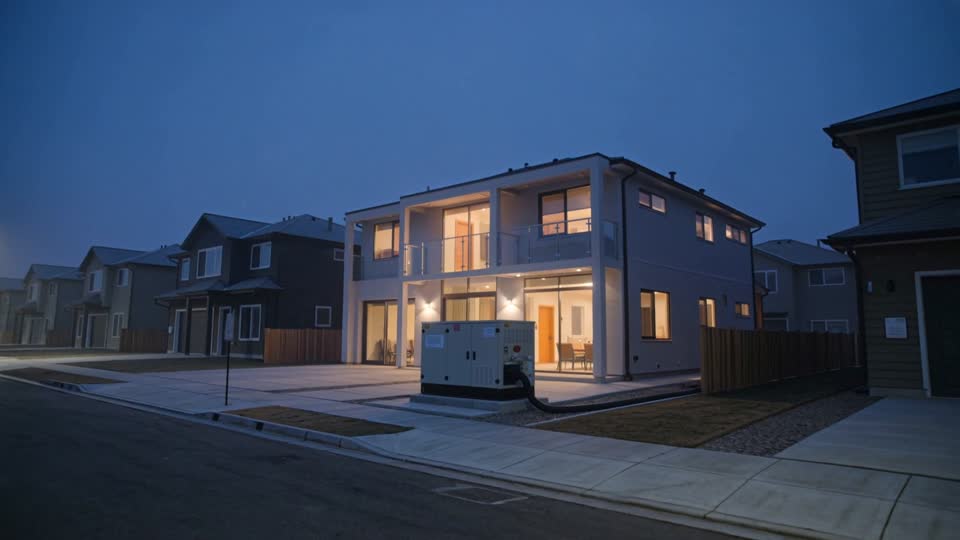
A commercial generator installation in Calgary needs an electrical permit, obtained by a master electrician's contractor.5 Where the service or the generator switchgear is 600 A or more, the City requires plans and drawings.6 The pad, enclosure or fuel storage may need a building permit or fire review as well, so check with the City before ordering equipment. Airdrie, Cochrane, Okotoks and Rocky View County sites apply to their own permit authorities.
Emergency generators usually connect to the fire alarm system, which reports generator running, generator trouble and low fuel. In Calgary, altering or installing a fire alarm needs both an electrical permit and a building permit.6 Where the building needs professional involvement, the fire alarm submission needs an Alberta professional engineer's stamp, including a final verification.7 The system must be verified to CAN/ULC-S537,8 so any new generator supervisory points are tested and recorded.
Emergency lighting supplied from unit equipment has its own rule: the receptacles must be at least 2.5 m above the floor where practicable and within 1.5 m of the unit.9 Multi-family towers bring all of this together. See multi-family and high-rise.
CCT 06Commissioning, exercising and load banks
A generator that only idles on its weekly exercise is not proven. Commissioning should include:
- A load-bank test at rated load for the duration in the specification, so that the engine, cooling and alternator are proven at full output.
- A building load test. The utility main is opened and every transfer switch transfers, sheds and restores in its programmed sequence.
- Fire alarm verification of the generator's supervisory signals.
- Documentation: settings, test records and the switching sequence, left in the generator room.
After handover, emergency generators follow the testing schedule in CSA C282 and the fire code. Diesel sets that spend their life lightly loaded also benefit from periodic load-bank runs, which burn off the unburned fuel and carbon that build up in the exhaust ("wet stacking"). Standby sets should be exercised under real building load whenever the owner can accept a transfer. Generator and ATS testing fits naturally into the wider program on maintenance and thermography.
CCT 07What drives the price
No federal, Alberta or City of Calgary source publishes installed prices for commercial generators, and the spread between a small office standby set and a tower's emergency plant is too wide for one range to mean anything. A contractor prices:
- Generator rating and fuel: diesel with an integral tank, or natural gas with a new gas service
- Transfer equipment: the number of ATSs, bypass-isolation, closed transition or paralleling switchgear
- Location: pad at grade versus rooftop (crane, structure, dunnage), and the distance to the electrical room
- Enclosure: sound attenuation and winter packages
- Life-safety interfaces: fire alarm points and verification, and engineering stamps
- Commissioning: load-bank rental and after-hours building transfer tests
- Permits: priced on construction value at $112 plus $9.79 per $1,000, plus the Safety Codes Council fee10
The residential side is broken down in generator installation cost, and the utility side in the ENMAX service connection guide. When the loads and site are known, request a quote and a person replies.
Safety
Electrical work in Alberta needs a permit, and generator and transfer work must be done by a certified electrician working for a contractor. Homeowner permits do not cover commercial buildings. A generator can energize circuits that the utility has shut off. A wrongly connected set can backfeed the ENMAX system and kill a line worker. Never work on energized equipment, and never connect a generator to a building without approved transfer equipment.
Questions people ask
What is the difference between emergency and standby power?
Emergency power is required by the building code to keep life-safety systems running, such as exit lighting, fire alarm and fire pumps, and it follows CSA C282. Standby power is chosen by the owner to keep the business running. It may share a generator with emergency loads, but it uses separate transfer switches and is shed first.
What does an automatic transfer switch do?
It senses a utility failure, starts the generator, transfers the load once the generator's voltage and frequency are stable, and transfers back when the utility returns. It also keeps the generator from ever connecting to the ENMAX system, except in closed-transition designs that ENMAX has accepted.
How much does it cost to install a generator transfer switch?
There is no official Calgary figure. The price depends on the switch rating and type (open, delayed or closed transition, and whether it has bypass-isolation), how many switches the building needs, the distance to the generator, the fire alarm interface and the permit, which is priced on construction value.
Do I need a permit to install a commercial generator in Calgary?
Yes. It needs an electrical permit from a master electrician's contractor, plans where the service is 600 A or more,6 and building and electrical permits for any fire alarm connection. The pad, enclosure or fuel storage may need further City review.
How often should a standby generator be tested?
Emergency generators follow the inspection and testing schedule in CSA C282 and the fire code. Owners set the schedule for optional standby sets, usually from the manufacturer's recommendations. Both benefit from periodic runs under real or load-bank load, not just idling.
Sources
- CSA C282:24, Emergency electrical power supply for buildingsCSA Group · retrieved 2026-09-25
- Notice to archive 24-ECV-002-024-MMTE: Meter mounted transfer equipmentAlberta Municipal Affairs · July 2026
- National Building Code - 2023 Alberta Edition, Volume 1, Division B, Appendix C, Table C-2 Climatic Design Data for Selected Locations in AlbertaAlberta Municipal Affairs / National Research Council of Canada · 2023 Alberta Edition, second printing incl. revisions and errata released April 2026
- AESO 2025 Annual Market Statistics (March 2026)Alberta Electric System Operator (AESO) · Calendar 2025; winter peak through Feb 2026; published March 2026
- About Master ElectriciansSafety Codes Council · retrieved 2026-09-25
- Electrical permits for contractorsCity of Calgary · retrieved 2026-09-25
- Complete Building Permit Application Requirement List - Commercial: Fire Alarm (repair/upgrading)City of Calgary · retrieved 2026-09-25
- STANDATA interpretation 23-BCI-011/24-ECI-009/23-FCI-006 Existing fire alarm systemsAlberta Municipal Affairs · March 2025
- STANDATA interpretation 24-ECI-046 Emergency power supply, unit equipment, exit signs, and life safety systemsAlberta Municipal Affairs · April 2025
- 2026 Building & Trade Permit Fee Schedule (R2026-02)City of Calgary · 2026 schedule R2026-02
Related
-
 E-201
Tenant improvements
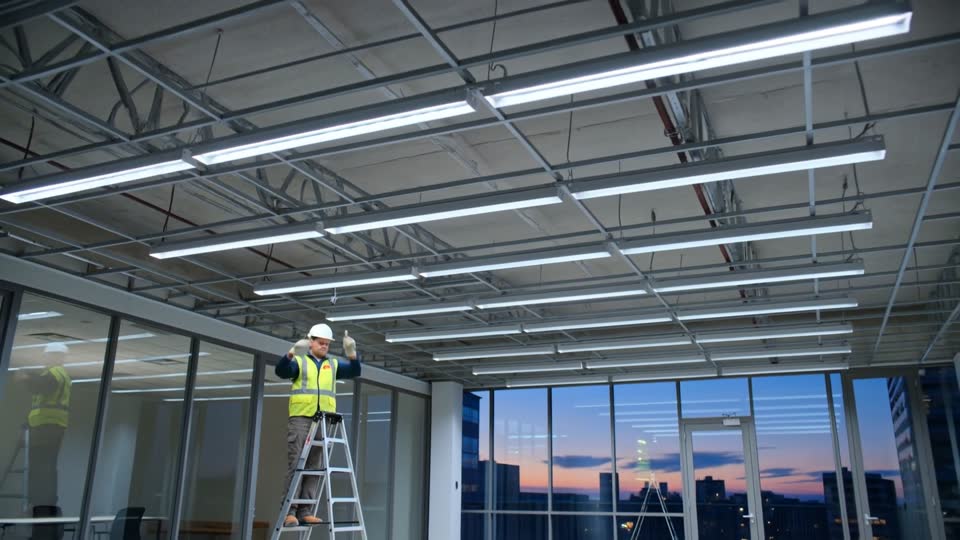
Office, retail and restaurant fit-outs: the drawings, permits, lighting, power and data an electrical contractor prices.
E-201
Tenant improvements
Office, retail and restaurant fit-outs: the drawings, permits, lighting, power and data an electrical contractor prices.
-
 E-202
LED lighting retrofits
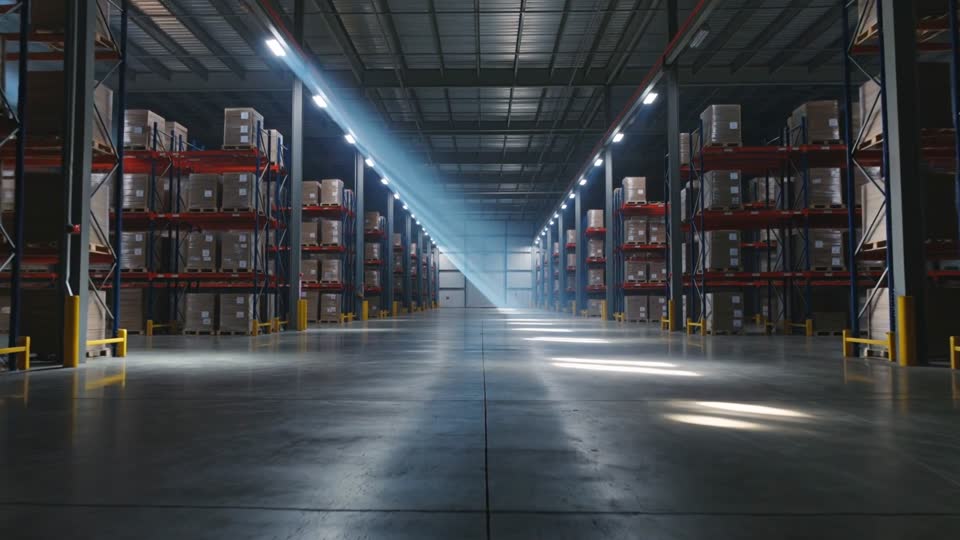
Replacing fluorescent, metal halide and HID lighting with LED and controls in warehouses, offices and parking structures.
E-202
LED lighting retrofits
Replacing fluorescent, metal halide and HID lighting with LED and controls in warehouses, offices and parking structures.
-
 E-203
Power distribution & switchgear
Services, switchgear, transformers and distribution for commercial buildings: capacity, coordination and shutdown planning.
E-203
Power distribution & switchgear
Services, switchgear, transformers and distribution for commercial buildings: capacity, coordination and shutdown planning.