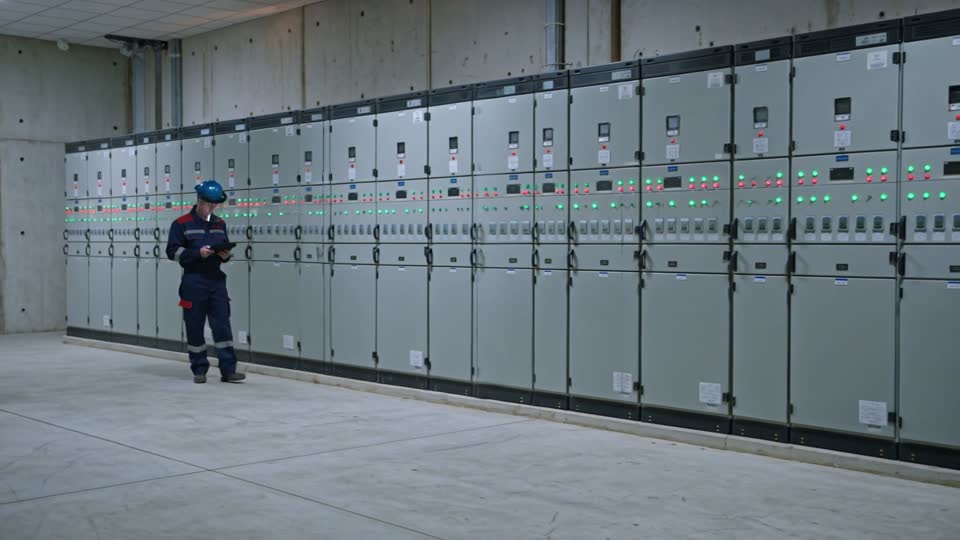
Commercial · Drawing E-209
Electrical maintenance and thermography in Calgary
What a commercial or industrial electrical maintenance program actually does, what infrared scans and arc flash studies can and cannot tell you, and how Calgary facilities plan the shutdowns that follow.
Electrical equipment rarely fails without warning. A connection that loosens heats up, a breaker that has not operated in years sticks, and dust and moisture track across insulation. A maintenance program looks for those signs while they are still cheap to fix. It also produces the records a facility needs to work on its equipment safely.
CCT 01What an electrical maintenance program covers
The Canadian reference is CSA Z463, Maintenance of electrical systems. CSA Group describes it as a voluntary guideline written for commercial and industrial buildings, not household systems.1 It sits alongside Z462 (workplace electrical safety) and Z460 (lockout). A program built on it usually includes:
- An equipment register and single-line diagram that match what is actually installed. Most programs stall here, because the drawings in the electrical room are years out of date.
- Condition-based inspection: visual checks, infrared scans, and ultrasound or partial-discharge testing on medium-voltage gear.
- De-energized maintenance during planned shutdowns: cleaning, torque checks, insulation-resistance testing, breaker trip testing and protective relay testing.
- Standby systems: generator runs, transfer switch operation, UPS and battery testing, and emergency lighting.
- Records and trending, so that each result is compared with the last one, not only with a pass mark.
How often each task is done should come from the equipment's condition, how critical it is and its environment, not a fixed calendar. A dusty woodshop panel and a clean office switchboard do not need the same interval. The manufacturer's instructions and the facility's own history set the starting point.
CCT 02Infrared thermography: what a scan finds
An infrared camera shows surface temperature. In electrical gear, heat is the sign of resistance where there should be none: a loose lug, a corroded bus joint, an overloaded conductor, a failing breaker contact or a badly unbalanced phase. A good scan finds these before they fail.
A scan is only as good as its conditions:
- The equipment must be loaded. A connection carrying almost no current will not show a fault. Scans are scheduled for normal operating hours, and the thermographer records the load at the time.
- The camera must see the part. Infrared does not pass through steel covers or ordinary glass. The thermographer either opens covers, which is energized work, or looks through infrared windows installed for the purpose.
- Surfaces can mislead. Shiny copper and aluminum reflect heat from elsewhere, so a trained thermographer compares like with like: phase A against phases B and C, and the same breaker type side by side.
The report should list each finding with an image, the temperature rise, the load at the time and a recommended action. Severity ratings come from recognized industry criteria, and the contractor should say which criteria were used. A scan does not fix anything. Each finding becomes a repair, usually in a shutdown. Buildings with a lot of gear often install infrared windows on main switchboards, so that future scans never need covers off.
CCT 03Arc flash studies and labels
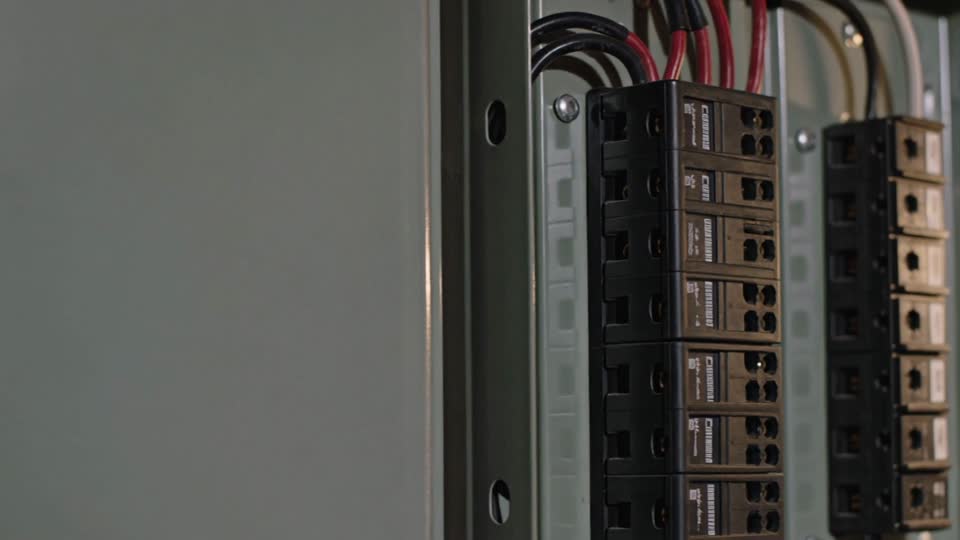
An arc flash is the explosive release of energy when current jumps through air between conductors. An arc flash study works out how much energy a worker could be exposed to at each piece of equipment. The engineer:
- collects data on the utility supply, transformers, cable lengths and sizes, and every protective device and its settings
- runs a short-circuit study to find the fault current available at each bus
- runs a coordination study to confirm that the closest device trips first and how fast it clears
- calculates the incident energy and arc-flash boundary at each location
- issues labels and a report, often with setting changes that lower the energy.
CSA Z462:24 is the current edition of the standard that uses these results.2 It decides the boundaries, the PPE and whether energized work can be justified at all. A study is only valid for the system it modelled. A new transformer, a changed breaker setting, a new generator, or a utility change in available fault current can all make the labels wrong. Ask ENMAX Power for current fault-current data when the study is updated.
The study often pays for itself by showing where a faster trip setting or a maintenance switch would bring the energy down enough to make routine work safer. It is part of the design of power distribution and switchgear, not just a sticker exercise.
CCT 04Overhead lines: the OHS Code approach limits
Maintenance is not only inside the electrical room. Yard lighting, rooftop units, signage and lift work often bring crews near overhead lines, and Alberta's Occupational Health and Safety Code sets hard limits.
Before any work or equipment operates within 7 m of an overhead power line, the employer must find out the line's voltage and set the safe limit of approach from Schedule 4 of the OHS Code.3 For bare, uninsulated lines of 0 to 750 V the limit is 1.0 m,4 and for lines of 750 V to 40 kV it is 3.0 m.4 Higher voltages have larger distances.
Scissor lifts, boom lifts and even long ladders reach these distances faster than crews expect. A maintenance plan for a site with overhead service drops or distribution on the property should mark them, and should call ENMAX Power when work must come closer than the limit allows.
CCT 05Planning a shutdown
Most real maintenance happens de-energized, which means a shutdown. A well-run shutdown follows a written sequence:
- Scope and switching order. List every task and the exact order of switching, isolation, lockout and test-for-dead. Include how and in what order the system comes back.
- Utility coordination. If the main service must be dead, ENMAX has to de-energize it. ENMAX does not charge for a customer-requested temporary de-energization,5 charges $166.00 per hour to re-energize,5 and charges $352.00 per hour for work the customer needs outside 7:00 a.m. to 4:00 p.m. on weekdays.5
- Inspections. If the work needs a City inspection outside normal hours, weekend and statutory holiday inspections are $189 per hour with a $756 minimum.6
- Critical loads. Decide what rides through on a generator or temporary supply: fire alarm, freezers, servers, sump pumps and elevators.
- Restart checks. Confirm phase rotation before motors run, restart loads in stages, and do a post-shutdown thermal scan once the load is back.
Grouping infrared findings, breaker testing and any lighting retrofit or switchgear work into one window saves repeated utility and overtime costs.
CCT 06Permits for maintenance work, and the annual permit
Maintenance that only inspects, tests and re-tightens existing equipment is not new wiring. Once a repair installs, alters or adds to the electrical system, however, section 8(1) of the Permit Regulation requires a permit.7 Replacing a failed breaker with a different rating, adding circuits or changing a feeder all count.
Facilities with a steady flow of small changes can use the City of Calgary's Annual Electrical Permit. It is meant for facilities with a full-time journeyman electrician or contractor maintenance work, and it costs $156 plus a $6.24 Safety Codes Council fee, for $162.24 in 2026.6 One permit then covers ongoing work at the facility for the year. The City's inspection data shows 232 contractor annual electrical permits issued in 2025.8
Larger alterations, such as a new service, new switchgear or a fire alarm change, still need their own permits. See electrical permit fees in Calgary and electrical permits in Calgary. Facilities outside city limits, in Rocky View County, Airdrie or elsewhere, apply to their own permit authority.
CCT 07Emergency lighting, exit signs and standby systems
Life-safety equipment is the part of a maintenance program that inspectors and insurers ask about first. Emergency lighting units and exit signs need regular functional and duration testing, recorded in the building's fire safety records. The testing frequency is set by the fire code and the building's fire safety plan, so confirm it there. Receptacles that serve emergency lighting unit equipment must be at least 2.5 m above the floor where practicable and within 1.5 m of the unit.9
Generators and transfer switches need exercise runs, and they should periodically carry real or load-bank load. The details are on standby power and generators. UPS systems and battery strings in server rooms are covered on data centres and critical power. Plants with motors, drives and hazardous locations add their own tasks, set out on industrial electrical.
CCT 08What drives the price
No public body publishes prices for infrared surveys, arc flash studies or maintenance contracts in Calgary. What a contractor or engineer prices:
- Equipment count. The number of switchboards, panels, transformers, MCCs and disconnects to scan, test or model.
- Data quality. An accurate single-line diagram and equipment list saves days of field survey. Without them, the study starts with a walk-down.
- Access and hours. Off-hours work, utility charges, lift rental and the shutdown window.
- Test depth. Visual and infrared only, or full de-energized testing of breakers and relays.
- Follow-up. Repairs found by the scan, relabelling and setting changes.
Ask every bidder the same questions: which standards they test to, who is qualified to do the energized parts, and what the report contains. The hiring an electrician guide lists the certification checks. When the scope is ready, request a quote and a person replies.
Safety
Electrical work in Alberta needs a permit, and most of it must be done by a certified electrician working for a contractor. Homeowner permits do not cover commercial or industrial facilities. Opening a panel cover to scan it is energized work, and it belongs to a qualified person with a risk assessment and the right PPE. Never work on or near energized equipment yourself. Isolate, lock out and test before touching.
Questions people ask
Is an arc flash study required in Alberta?
Employers must protect workers from electrical hazards, and an arc flash study is how most facilities work out what that protection must be. CSA Z462:24 is the current edition of the standard that uses the study's results.2 We could not verify that Alberta's OHS Code adopts Z462 by reference, so treat the study as a hazard-assessment tool your safety program depends on, and ask your safety advisor how your program applies it.
How much does an arc flash study cost?
There is no official price. It depends mainly on how many buses and protective devices must be modelled, whether an accurate single-line diagram exists, and whether field data collection needs covers off or a shutdown. A small building with current drawings is a different job from a plant with decades of undocumented changes.
What is infrared thermography for electrical systems?
It is a scan with a thermal camera of loaded electrical equipment, looking for connections and components hotter than similar parts nearby. It finds loose, corroded or overloaded connections before they fail, but it only works when the equipment is carrying load and the camera can see the part.
How often should commercial electrical equipment be maintained?
There is no single legal interval for all equipment. CSA Z463 guidance, the manufacturer's instructions and the equipment's condition, criticality and environment set the interval. Life-safety systems such as fire alarm and emergency lighting have their own required testing under the fire code and the building's fire safety plan.
What is the City of Calgary annual electrical permit?
It is a yearly permit for facilities with a full-time journeyman electrician or contractor maintenance work. It covers ongoing work at one facility and costs $162.24 in 2026, including the Safety Codes Council fee.6
Sources
- Z463 – Maintenance of Electrical Systems (white paper)CSA Group · 2013
- CSA Z462:24 Workplace Electrical Safety - Online TrainingCSA Group · retrieved 2026-09-25
- Occupational Health and Safety Code, Part 17 Overhead Power LinesGovernment of Alberta · retrieved 2026-09-25
- Occupational Health and Safety Code, Schedule 4 Safe Limit of Approach DistancesGovernment of Alberta · retrieved 2026-09-25
- ENMAX Power Corporation Distribution Tariff, Terms and Conditions Fee ScheduleENMAX Power Corporation · Effective January 1, 2026
- 2026 Building & Trade Permit Fee Schedule (R2026-02)The City of Calgary · 2026 fee schedule, revision R2026-02; retrieved 2026-09-25
- Permit Regulation, Alta Reg 204/2007 (office consolidation)Alberta King's Printer · consolidation current as of 2024-11-20
- Electrical Permits and Inspections (dataset vxgy-id5s)The City of Calgary, Open Government Licence – City of Calgary · queried 2026-09-25
- STANDATA interpretation 24-ECI-046 Emergency power supply, unit equipment, exit signs, and life safety systemsAlberta Municipal Affairs · April 2025
Related
-
 E-201
Tenant improvements
Office, retail and restaurant fit-outs: the drawings, permits, lighting, power and data an electrical contractor prices.
E-201
Tenant improvements
Office, retail and restaurant fit-outs: the drawings, permits, lighting, power and data an electrical contractor prices.
-
 E-202
LED lighting retrofits
Replacing fluorescent, metal halide and HID lighting with LED and controls in warehouses, offices and parking structures.
E-202
LED lighting retrofits
Replacing fluorescent, metal halide and HID lighting with LED and controls in warehouses, offices and parking structures.
-
E-203
Power distribution & switchgear
Services, switchgear, transformers and distribution for commercial buildings: capacity, coordination and shutdown planning.