Guide · Drawing E-411
GFCI and AFCI protection
A GFCI protects people from shock. An AFCI protects the house from fire. Both trip more often than an ordinary breaker, and both are usually right when they do. This guide explains where Alberta’s code calls for each, and how an electrician finds the cause of a trip.
The rules below come from the Canadian Electrical Code as adopted in Alberta and from the City of Calgary's homeowner wiring guide. One caution runs through the whole page: the City guide is labelled as including the 2021 code amendments, one edition behind the code now in force 1. Where the guide is the only source, this page says so.
CCT 01What each device does
A ground-fault circuit interrupter (GFCI) compares the current going out on the hot conductor with the current coming back on the neutral. If some is missing, it is leaking to ground, possibly through a person, and the device opens the circuit in a fraction of a second. A GFCI does nothing about overloads; the breaker still does that. Class A GFCIs are the type the code calls for where people are at risk.
An arc-fault circuit interrupter (AFCI) watches the shape of the current for the signature of arcing: a loose connection sparking at a terminal, a cable crushed by a staple, a nail through a wire. Those arcs can be too small to trip a normal breaker but hot enough to start a fire in a wall. A combination-type AFCI detects arcing both along one conductor and between conductors.
Both come in several forms:
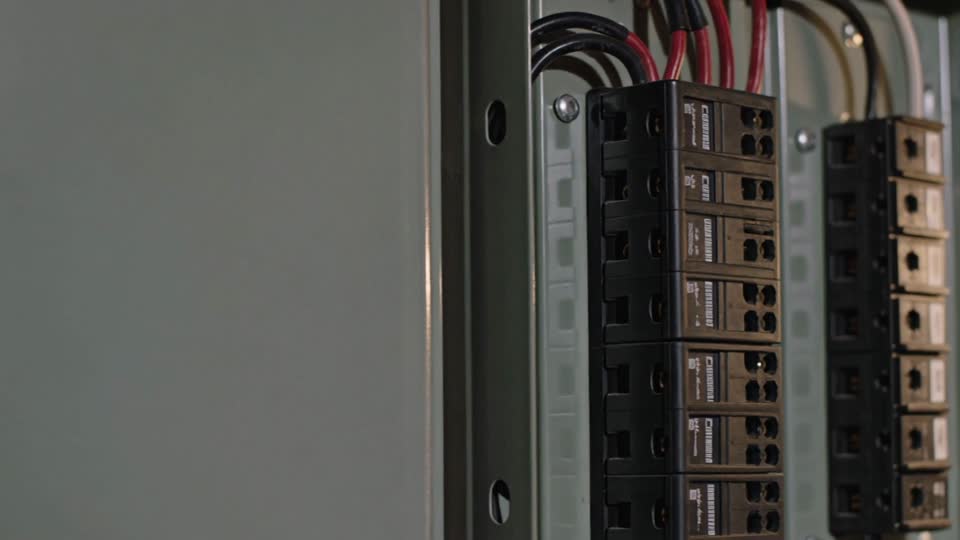
- Breakers in the panel, protecting the whole circuit.
- Receptacles with test and reset buttons, protecting that outlet and, if wired to do so, everything downstream.
- Blank-face devices that sit in a box at the start of a circuit and protect everything after them.
Some breakers combine both functions. Terms such as "Class A" and "combination-type" are explained in the glossary.
CCT 02Where GFCI protection is required
The City's homeowner wiring guide lists these GFCI locations for dwellings 1:
- 15 A and 20 A outlets within 1.5 m of a sink, bathtub or shower.
- One outlet protected by a Class A GFCI within 1 m of a bathroom wash basin.
- Exterior outlets within 2.5 m of finished grade. Automotive heater (block heater) and charging outlets are exempt.
- Switches between 500 mm and 1 m horizontally from a sink or shower stall, and heaters close to a tub or shower.
- Hydro-massage tubs and hot tubs, which must be Class A protected. The GFCI must be placed where it can be tested, and not closer than 3 m to a hot tub or 1.5 m to a hydro-massage bathtub.
Alberta's STANDATA bulletin on pools, tubs and spas puts the hot tub rule simply: a GFCI must ultimately protect the equipment of every spa or hot tub, whether the manufacturer builds it in or the installer supplies it 2. In Calgary a hot tub needs both a building permit and an electrical permit 3. See hot tubs, garages and subpanels.
Because the guide reflects 2021 amendments, treat its distances as a starting point. The electrician designs to the 2024 edition, and the City inspector enforces it.
CCT 03Where AFCI protection is required
The City guide states the arc-fault rule broadly: all branch circuits in a dwelling that supply 125 V outlets rated 20 A or less are to be protected by a combination-type AFCI 1. It lists only a few exclusions 1:
- Kitchen counter, island and peninsula outlets.
- The kitchen refrigerator outlet.
- A cord-connected sump pump on its own breaker, plugged into a single receptacle labelled for sump pump use only.
- The bathroom outlet located within 1 m of the wash basin.
Treat those details with care. They come from a guide reflecting the 2021 code, and the rule in force is the 2024 edition's Rule 26-658, which an electrician checks before relying on any exclusion. The code edition in force in Alberta is CSA C22.1-24, the 26th edition, since April 1, 2025 4. Work permitted before that date may follow the 2021 code 5. See the electrical code in Alberta.
Older panels. Breakers must be approved for the panel they go in, and the City guide notes combination AFCI breakers are not available for many older panelboards. The fallback is a blank-face AFCI device or AFCI receptacle at the first outlet, with the wiring from the panel to that point in armoured cable or approved conduit. If your home has an older panel, read Federal Pioneer and older panels.
CCT 04DC arc-fault protection for solar
Arc-fault protection is not only a receptacle issue. Under the 2024 Canadian Electrical Code, solar photovoltaic systems with a dc source or output circuit voltage of 80 V or more need dc arc-fault protection (Rule 64-216) 6.
A dc arc is harder to stop than an ac one, because dc current never passes through zero. An arc at a loose connector on a roof can sustain itself while the sun shines. That is why the protection is built into the inverter or module-level electronics rather than added at the house panel.
For homeowners the practical point is at the design stage: confirm that the inverter or optimizers in a solar quote provide the required dc arc-fault protection for the system's voltage. The solar micro-generation guide covers the rest of the connection process.
CCT 05Why GFCIs and AFCIs trip
A trip is information. The pattern usually points to the cause:
| Pattern | Device | Usual causes |
|---|---|---|
| Trips in rain, snowmelt or a chinook thaw | GFCI | Water in an outdoor receptacle, box or cord connection |
| Hot tub trips when the heater starts | GFCI | A failing heater element or moisture in the equipment bay |
| Trips the moment it is reset | Either | A fault that is still present; stop resetting and call an electrician |
| Trips when one appliance runs | Either | A damaged cord or appliance, or a motor load the device reads as a fault |
| Trips at random on a renovated circuit | AFCI | A neutral shared with another circuit, a loose or back-stabbed connection, or cable damaged during the renovation |
What you can safely do: unplug everything on the circuit, reset once, then plug things back in one at a time and note what brings the trip back. If nothing is plugged in and it still trips, the fault is in the fixed wiring. See a breaker that keeps tripping.
What you should not do is replace an AFCI or GFCI breaker with a standard one to stop the trips. That removes the protection the code requires and leaves the fault in place.
CCT 06Adding protection to an older home
An installation that met the code when it was installed generally does not have to be upgraded to a new edition, but modifications may bring the altered part under current rules 7. Extending a bedroom circuit in a 1970s house, for example, can mean that circuit needs AFCI protection.
Adding protection voluntarily is often worthwhile: GFCIs at a garage, outdoor or bathroom receptacle that predates the rule, or AFCI protection on bedroom circuits. Whether a GFCI receptacle can be used where no ground wire exists, and how it must then be labelled, is a code question for the electrician on the job.
In Calgary, new wiring and altered or extended branch circuits need an electrical permit 8. Replacing a fixture only does not 8. A homeowner permit costs $116.50 9 but is limited to owner-occupied homes where the owner does the work.
Safety
Electrical work in Alberta needs a permit, most of it needs a certified electrician, and homeowner permits have limits. Changing a breaker means working inside the panel, where the main lugs stay live even with the main breaker off. Never work on energized equipment. Test GFCIs and AFCIs with their test buttons as the manufacturer directs, and call an electrician if one will not reset.
For outdoor receptacles and block heater outlets through a Calgary winter, see winter electrical in Calgary. Smoke alarm circuits have their own rule about AFCI and GFCI protection, covered in smoke and CO alarms. To have a tripping circuit diagnosed or protection added, request a quote and a person replies.
Questions people ask
Are AFCI breakers required in Alberta?
Yes, for most dwelling branch circuits supplying 125 V outlets rated 20 A or less, according to the City of Calgary's homeowner guide 1. The guide lists exclusions such as kitchen counter and refrigerator outlets. It reflects the 2021 code, so confirm the details against the 2024 edition in force since April 1, 2025 4.
Where are GFCI outlets required in Calgary homes?
The City guide lists outlets within 1.5 m of a sink, tub or shower, a Class A GFCI outlet near the bathroom basin, exterior outlets within 2.5 m of grade (block heater and charging outlets exempt), and hot tubs and hydro-massage tubs 1. Current requirements come from the 2024 code.
Why does my arc fault breaker keep tripping?
The usual causes are a shared or crossed neutral with another circuit, a loose or back-stabbed connection, damaged cable, or a particular appliance. Unplug everything and reset once. If it trips with nothing connected, the fault is in the wiring and needs an electrician. Replacing the AFCI with a standard breaker is not a fix.
Why does my hot tub GFCI keep tripping?
Moisture in the equipment bay or disconnect, a failing heater element, a damaged pump or a wiring fault are common causes. The GFCI is required protection for the hot tub, so the fix is finding the fault. A hot tub trip that follows heavy rain or snowmelt points to water ingress.
Can a GFCI outlet protect other outlets?
Yes. A GFCI receptacle wired through its load terminals protects the outlets downstream of it on the same circuit, which is how one device can cover several bathroom or outdoor receptacles. Those downstream outlets should be labelled so the next person knows where to reset.
Sources
- Homeowners electrical wiring guide (labelled as including 2021 CE Code amendments)The City of Calgary · copyright 2024
- STANDATA bulletin 24-ECB-068 Pools, tubs, and spasAlberta Municipal Affairs · April 2025
- Electrical permits for contractorsCity of Calgary · retrieved 2026-09-25
- Electrical codes and standardsGovernment of Alberta · retrieved 2026-09-25
- Notice: New Canadian Electrical Code, Part 1 (April 2025)Alberta Municipal Affairs · April 2025
- STANDATA variance 24-ECV-064-216 Arc-fault protection for ground-mounted solar PVAlberta Municipal Affairs · April 2025
- STANDATA bulletin 24-ECB-000 Object, scope, and definitionsAlberta Municipal Affairs · April 2025
- Homeowner electrical and plumbing permitsCity of Calgary · retrieved 2026-09-25
- 2026 Building & Trade Permit Fee Schedule (R2026-02)The City of Calgary · 2026 fee schedule, revision R2026-02; retrieved 2026-09-25
Related
-
 E-401
Electrical permits in Calgary
When you need an electrical permit in Calgary, homeowner versus contractor permits, inspections and what happens without one.
E-401
Electrical permits in Calgary
When you need an electrical permit in Calgary, homeowner versus contractor permits, inspections and what happens without one.
-
E-402
Hiring an electrician
Certification, master electricians, permits, insurance, quotes and contracts: what to check before anyone opens your panel.
-
E-403
The electrical code in Alberta
Which edition of the Canadian Electrical Code applies in Alberta, how Alberta amends it, and where STANDATA bulletins fit.