Guide · Drawing E-409
Solar micro-generation in Alberta
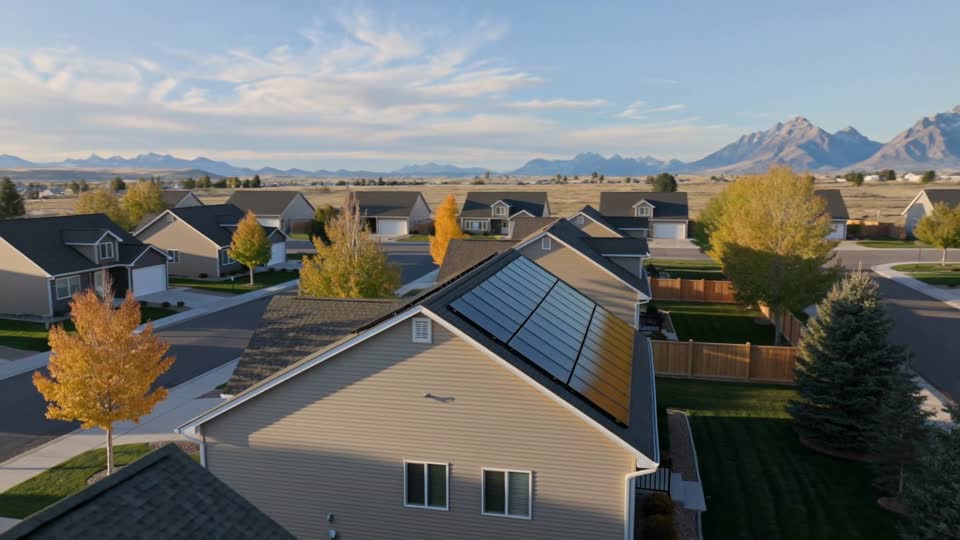
Rooftop solar in Calgary is a small power plant connected to ENMAX Power’s grid. This guide explains the provincial rules that govern it, what the electrical contractor and ENMAX each do, and how exported energy shows up on your bill.
Alberta does not have "net metering" in the old sense. It has micro-generation: a provincial regulation, an Alberta Utilities Commission rule and a utility process that together let a home generate its own electricity, export the surplus and be credited for it. The electrical side is where most projects slow down, so it is covered in detail here.
CCT 01The rules that govern a home solar system
Three layers apply to a Calgary system:
- The Micro-Generation Regulation (Alta Reg 27/2008) defines who qualifies and how credits work.
- AUC Rule 024, Rules Respecting Micro-Generation, sets the forms and process. The current version took effect on April 1, 2026, with a notice submission guideline issued in February 2026 1. Forms and blog posts from before April 2026 may describe the old process.
- ENMAX Power's connection requirements, because ENMAX owns the wires in Calgary and connects the system.
The regulation sets two classes. Small micro-generation is a unit with a total nameplate capacity under 150 kW 2. Large micro-generation runs from 150 kW up to and including 5 MW 2. The Utilities Consumer Advocate notes that most residential, farm and small business systems are small-scale 3. Everything below assumes a small system.
CCT 02How big a system can be
Two limits apply, and the tighter one wins.
- The regulation's cap. A unit's total nameplate capacity may not exceed the lesser of 5 MW or the rating of the customer's service, and the unit must be intended to meet all or part of the site's own annual consumption 2. A system is sized to what you use, not to your roof area.
- ENMAX's consumption test. For sizing, ENMAX uses 12 months of the site's consumption history to set the target annual production in kWh 4. A new home without a year of bills, or a household about to add an EV or heat pump, should raise this early.
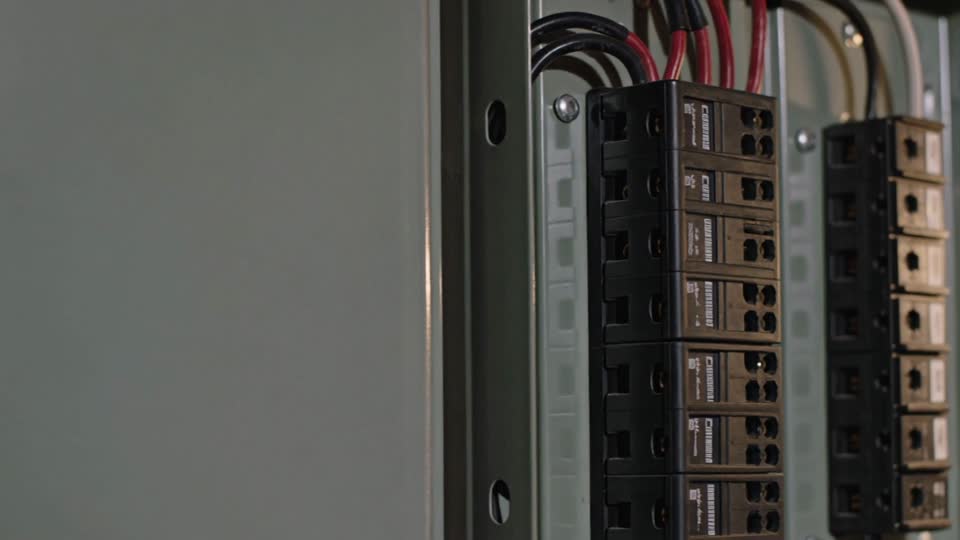
The "service rating" link is why solar and panel questions travel together. A 100 A service caps what can connect, and the inverter's output breaker needs room in the panel. Some designs need a line-side connection or a panel upgrade to make room. Run the home load calculator and read panel and service upgrades before signing a solar contract that assumes the panel is fine.
CCT 03The notice to ENMAX and the 14-day window
Before exporting, the customer gives the wire owner, in Calgary ENMAX Power, notice in the AUC's form. The regulation's wording is specific: the owner may, within 14 days of receiving the notice and on notice to the customer, file a notice of dispute with the Commission 2. It is a dispute window for the wire owner, not a 14-day approval that the customer waits out, and it is not the whole timeline. Permits, inspection and the meter change follow their own schedules.
In practice the solar contractor prepares the notice with the system details, the inverter certification and the site's consumption history. The AUC's February 2026 guideline describes the submission 5.
A typical Calgary sequence looks like this, although contractors order some steps differently:
- Size the system against the last 12 months of consumption and the service rating.
- Talk to your retailer about how exports will be credited, and whether your plan needs to change.
- File the notice with ENMAX Power in the AUC's form, and allow for the dispute window.
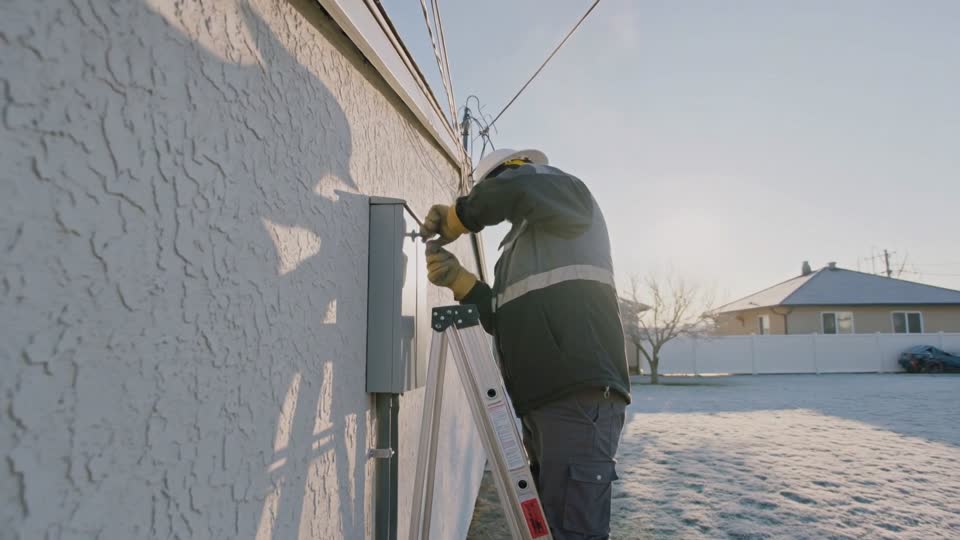
- Get the City electrical permit, pulled by the licensed electrical contractor.
- Install the array, inverter, disconnects and any line-side or panel work.
- Pass the final inspection before the system operates.
- Meter exchange and energization by ENMAX.
The step most likely to change the plan is the service: a panel with no room for the inverter breaker, or a design that needs a service upgrade and its own ENMAX work. Settling that question at the design stage avoids reworking the notice later.
CCT 04Inverters, arc-fault protection and the meter
Three pieces of equipment carry specific requirements:
- Inverter certification. Since January 1, 2025, every new inverter connecting to ENMAX Power's system, micro-generators included, needs UL 1741 SB Category II certification 4. Older stock without that listing cannot be connected, so check the datasheet before buying equipment.
- DC arc-fault protection. Under the 2024 Canadian Electrical Code, PV systems whose dc circuits reach 80 V or more need dc arc-fault protection (Rule 64-216) 6. String-inverter arrays typically run well above that line, while module-level microinverter designs may keep dc circuits below it, so the design decides where the protection sits. The GFCI and AFCI guide explains arc-fault detection.
- The meter. Small micro-generators get a bi-directional cumulative meter, which records energy in both directions 2. ENMAX changes it, and ENMAX restricts electrical contractors from handling meters 7.
Batteries add another layer. The City lists battery storage among the work homeowners may not do 8, and the Alberta variance that once set a residential battery size allowance has been archived, so an electrician should confirm the current storage rules for your design. See solar PV and batteries.
CCT 05Permit, contractor and final inspection in Calgary
The City of Calgary says photovoltaic collectors require an electrical permit and must be installed by a licensed and registered electrical contractor 9. Solar PV is on the list of work a homeowner permit cannot cover 8. The City has no separate solar fee: it is an ordinary contractor permit at $112 plus $9.79 per $1,000 of construction value 10, and construction value includes labour and material 10.
After installation, a final electrical inspection by the municipal inspector is required before the unit operates 5. ENMAX energizes a new or changed connection only after the inspection authority has approved it 11. In the City's permit data, PV permits carry a "Service" inspection, which is the utility-interconnection check 12.
Safety
Electrical work in Alberta needs a permit, solar PV in Calgary needs a licensed contractor, and homeowner permits have limits. A PV array produces dc voltage whenever light hits it, even with the main breaker off, so never open combiner boxes, disconnects or inverter wiring. Never work on energized equipment.
Airdrie, Cochrane, Chestermere, Okotoks and Rocky View County issue their own permits. ENMAX Power is the wire owner inside Calgary; outside the city, confirm who owns the wires before the notice is filed.
CCT 06Credits, the annual payout and what is not credited
A small micro-generator is credited for exported energy at the rate its retailer charges it for energy, unless the two agree in writing to a different rate 2. The UCA notes that consumer and retailer agree on the rate and that most micro-generators use the credits monthly to offset their bill 3. Ask your retailer how exports are credited before you sign a solar contract; you may need to amend your plan.
Unused credits do not vanish. The retailer must pay you for unused credits once a year 3.
What solar cannot reduce is delivery. The UCA says delivery costs are largely fixed, so micro-generators still pay distribution, transmission, local access fees, delivery charges and the balancing pool allocation 3. A system sized to cover all of your annual energy will still leave a bill. For cost figures from official program data, see the solar installation cost guide.
CCT 07Calgary solar by the numbers
Three official data sources count solar in and around Calgary. They measure different things, so they should not be added together.
- City electrical permits. The City issued 4,905 contractor PV permits in 2024, the highest year in its dataset 12, and 3,750 in 2025 12. Across 2023 to 2025 there were 12,710 PV permits, and 62.8% of them were for existing buildings rather than new construction 12.
- ENMAX-area interconnections. AESO data show 4,021 solar micro-generation sites commissioned in the ENMAX wire-owner zone in 2025 13. Summing each year's additions from 2009 to May 31, 2026 gives 17,783 sites, a figure that does not net out removals 13.
- Alberta overall. The province had 49,311 solar micro-generation sites as of August 31, 2026 14.
Permits count approvals, not operating systems, and the dataset contains information licensed under the Open Government Licence – City of Calgary. More on what the permit data can and cannot show is on the Calgary electrical data page. To have the electrical side of a solar project priced, request a quote and a person replies.
Questions people ask
Do you need a permit for solar panels in Calgary?
Yes. The City requires an electrical permit for photovoltaic collectors, and they must be installed by a licensed and registered electrical contractor 9. A final electrical inspection is required before the system operates 5. Racking on the roof may raise building questions too, so ask the contractor what else the City needs.
How are micro-generation rates set in Alberta?
How big a solar system can I install on my house?
Is solar worth it in Calgary?
It depends on your consumption, roof, retail plan and financing, and no official body publishes a current Calgary payback figure. The City runs a Residential Solar Calculator for a first estimate. Calgary's Clean Energy Improvement Program, which financed solar, is closed to residential applications until winter 2026/2027 15.
Will my solar panels keep the power on in an outage?
Not on their own. A grid-tied inverter is designed to stop exporting when the grid goes down so it cannot energize lines crews are working on. Backup power needs a battery system or generator with approved transfer equipment, which is contractor work in Calgary.
Sources
- Rule 024: Rules Respecting Micro-GenerationAlberta Utilities Commission · retrieved 2026-09-25
- Micro-Generation Regulation, Alta Reg 27/2008 (office consolidation)Alberta King's Printer · consolidation current as of 2024-09-27
- Micro-generationUtilities Consumer Advocate, Government of Alberta · retrieved 2026-09-25
- Connect a micro-generatorENMAX Power Corporation · retrieved 2026-09-25
- Micro-generation notice submission guideline (2026)Alberta Utilities Commission · issued February 2026
- STANDATA variance 24-ECV-064-216 Arc-fault protection for ground-mounted solar PVAlberta Municipal Affairs · April 2025
- Electrical permits for contractorsCity of Calgary · retrieved 2026-09-25
- Homeowner electrical and plumbing permitsCity of Calgary · retrieved 2026-09-25
- Residential solar collectorsCity of Calgary · retrieved 2026-09-25
- 2026 Building & Trade Permit Fee Schedule (R2026-02)The City of Calgary · 2026 fee schedule, revision R2026-02; retrieved 2026-09-25
- Get the power flowingENMAX Power Corporation · retrieved 2026-09-25
- Electrical Permits and Inspections (dataset vxgy-id5s)The City of Calgary, Open Government Licence – City of Calgary · queried 2026-09-25
- Wind and Solar Microgen Capacity by Wire Owner (datafile Wind-and-Solar-Microgen-by-Wire-Owner-by-Year.xlsx)Alberta Electric System Operator (AESO) · Calendar 2025; datafile updated 2026-06-24
- Small Distribution-Connected Generation Resources in Alberta (Micro- and Small Distributed Generation Report, September 2026)Alberta Electric System Operator (AESO) · Data as of 2026-08-31; report dated September 2026
- Residential Clean Energy Improvement Program (CEIP)City of Calgary · Page read 2026-09-25
Related
-
 E-401
Electrical permits in Calgary
When you need an electrical permit in Calgary, homeowner versus contractor permits, inspections and what happens without one.
E-401
Electrical permits in Calgary
When you need an electrical permit in Calgary, homeowner versus contractor permits, inspections and what happens without one.
-
E-402
Hiring an electrician
Certification, master electricians, permits, insurance, quotes and contracts: what to check before anyone opens your panel.
-
 E-403
The electrical code in Alberta
Which edition of the Canadian Electrical Code applies in Alberta, how Alberta amends it, and where STANDATA bulletins fit.
E-403
The electrical code in Alberta
Which edition of the Canadian Electrical Code applies in Alberta, how Alberta amends it, and where STANDATA bulletins fit.