Guide · Drawing E-407
Aluminum wiring in older Calgary homes
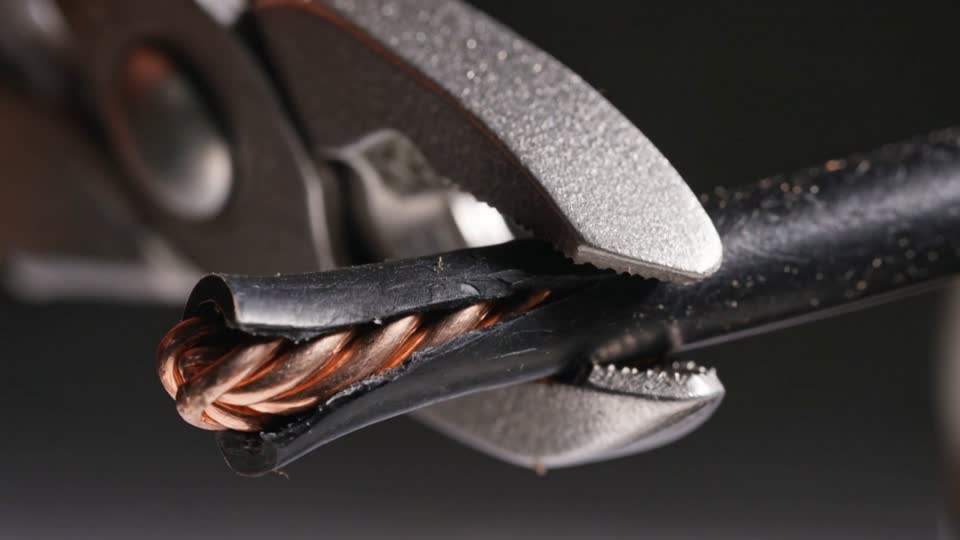
Aluminum branch wiring is not a defect by itself. The connections are. This guide explains how to recognize it, what goes wrong at the terminals, and the repair routes an electrician can take under a City of Calgary permit.
Aluminum branch-circuit wiring is the 15 A and 20 A cabling that feeds ordinary receptacles, switches and lights. It turns up in homes of a particular era, and it raises questions from buyers, insurers and home inspectors. Every figure below comes from a named public source. Where no official number exists, this page says so.
CCT 01Why some homes have aluminum branch wiring
The U.S. Consumer Product Safety Commission traces it to a copper shortage in the mid-1960s. Builders moved aluminum from the few large circuits, such as ranges and dryers, onto general 15 A and 20 A circuits, and cable installed between 1965 and the mid-1970s may contain it 1. Ontario's Electrical Safety Authority gives a similar window: a home built between the mid-1960s and late 1970s may have aluminum wiring 2.
That era matters in Calgary. The 2021 Census counted 133,035 occupied dwellings in the city built from 1961 to 1980, the largest construction-period group 3. In all, 35.2% of occupied dwellings were built in 1980 or earlier 3. Those numbers describe housing age only. No public body counts how many Calgary homes have aluminum branch wiring, and a house from that period may have copper throughout, aluminum throughout, or a mix after later renovations.
Keep the scope straight, too. Aluminum is normal and current for larger conductors: ESA notes it is widely used for commercial feeders and by utilities, including the service cable to most homes 4. An aluminum service entrance or range feeder is a different conversation from aluminum on the bedroom receptacles. See the Calgary electrical data page for more on the city's housing stock.
CCT 02How to tell if you have it
Aluminum branch wiring was almost always installed as ordinary plastic-sheathed cable that looks like copper cable from the outside. The CPSC's method is to read the printing on the cable jacket where it is exposed in an unfinished basement, furnace room, attic or garage. A flashlight held at a low angle helps with embossed lettering. Aluminum cable is marked "AL" or "ALUMINUM" at intervals along its length 1.
- Read the whole marking. Cable marked "CU-clad" or "copper-clad" as well as "AL" is copper-coated aluminum, which the CPSC treats separately from solid aluminum.
- Notice the size. The CPSC notes that aluminum branch circuits were run one gauge size larger than copper for the same breaker: No. 12 aluminum on a 15 A circuit where copper would be No. 14.
- Look for mixed wiring. ESA points out that some homes have both metals. A basement or addition wired later is a common place to find copper beside original aluminum.
Warning signs worth a call include cover plates that feel warm, flickering lights, dead circuits and a hot-plastic smell at a receptacle or switch. Both regulators warn that failing aluminum connections often give no sign at all before they overheat, so the absence of symptoms proves nothing.
Safety
Reading cable jackets in an open basement is safe. Pulling receptacles out of the wall, opening the panel or touching conductors is not. Electrical work in Alberta needs a permit, most of it needs a certified electrician, and homeowner permits have limits. Never work on energized equipment. If a device is hot, discoloured or smells of burning, switch off that breaker and have an electrician open it.
CCT 03Why the terminations are the problem
The wire in the wall rarely fails. The joint at the end of it does. ESA attributes the reported problems to overheating at aluminum terminations, caused by aluminum's tendency to oxidize and by devices designed only for copper 4. The CPSC describes the same mechanism: deterioration at the connection raises its resistance, the extra resistance makes heat whenever current flows, and the damage accumulates 1.
Several details make aluminum less forgiving than copper at a screw terminal:
- Oxide film. Aluminum oxide forms quickly and resists current, which is why ESA's guidance calls for a joint compound on stranded aluminum connections.
- Softness. ESA notes aluminum is softer than copper. A nick or crush mark made while stripping becomes a weak spot or a hot spot.
- Wrong device. A copper-only receptacle, often a later "upgrade" to a decorator style, is not rated for aluminum. ESA says such replacements must themselves be replaced with properly marked devices.
- Wrong technique. ESA's guidance bans push-in (back-stab) terminals with aluminum and calls for the conductor to be wrapped clockwise about three-quarters of the way around the screw, one conductor per screw.
The practical lesson: a room of original, correctly rated devices can be in better shape than a room someone "modernized" with copper-only hardware.
CCT 04Remediation options compared
Regulators agree on the goal, a permanent low-resistance joint at every aluminum termination, but not on every method. The table sets out what each source says.
| Method | What it is | U.S. CPSC (2011) | ESA Ontario (2019) |
|---|---|---|---|
| Rewire with copper | New copper branch circuits; the aluminum is abandoned in place | The best method, but often impractical or expensive | An option; some insurers may ask for it |
| Pigtail with a crimp connector (COPALUM) | A short copper tail crimped to the aluminum with a dedicated tool at every connection | Recommended as permanent | Pigtailing accepted with approved AL-CU connectors |
| Pigtail with a set-screw connector (AlumiConn) | A copper tail joined in a connector rated for both metals | Acceptable alternative where COPALUM is unavailable | Accepted if marked AL-CU |
| CO/ALR switches and receptacles | Devices rated for direct connection to aluminum | "At best, an incomplete repair" | Required marking for 15 A and 20 A devices on aluminum |
| Twist-on connector pigtails | Common wire nuts joining copper to aluminum | Emergency or temporary only | Connector must be marked AL-CU |
Sources: CPSC Publication 516 1 and ESA Flash 19-30-FL 4. Neither is an Alberta rule. In Calgary the Canadian Electrical Code as adopted in Alberta governs, and CSA C22.1-24 has been the edition in force since April 1, 2025 5. The electrician and the City inspector decide which products and methods are acceptable on your job.
Whatever the method, the CPSC stresses that it has to reach every aluminum connection: receptacles, switches, light fixtures, junction boxes, and hard-wired appliances such as baseboard heaters and fans. Fixing only the receptacles you can see leaves the rest. For whole-house replacement, see rewiring older homes.
CCT 05What a proper assessment looks like
ESA's guidance is that each home must be assessed on its own. Because the problems sit at terminations, the assessment means opening every outlet: receptacles, switches, fixtures, appliance connections and the panel. The electrician then looks for darkened or discoloured connections and melted insulation without disturbing the devices 4.
Expect the report to cover:
- Which circuits are aluminum, and whether any are mixed with copper.
- Device ratings found (CO/ALR, AL-CU, or copper-only) and any back-stabbed terminals.
- Heat damage found. ESA calls for the damaged length of conductor to be cut back before repair.
- Box fill. A pigtail adds a conductor and a connector to each box, and ESA notes that a small original box may need a surface extension to hold them safely.
- The recommended method and the reasoning for it: pigtail, device replacement, partial rewire or full rewire.
The box-fill point drives cost more than most people expect. A house with shallow boxes and finished ceilings can take far longer per device than one with an open basement. The rewiring cost guide explains what moves the price. No official source publishes a per-device or per-house price for aluminum remediation in Calgary. For troubleshooting a specific symptom, see inspections and troubleshooting.
CCT 06Permits and who can do the work in Calgary
In Calgary an electrical permit is required for all new wiring and for extending or altering existing branch-circuit wiring 6. Replacing a fixture only does not need one 6. Remediation that adds pigtails, relocates boxes or runs new copper circuits is alteration work, so ask the electrician to confirm the permit before work starts. A permit also gives you an inspection record, which is useful when an insurer or buyer asks what was done.
A contractor permit costs a $112 processing fee plus $9.79 for every $1,000 of construction value 7, and construction value means labour plus material 7. Only master electricians, certified by the Safety Codes Council, can obtain electrical permits as contractors in Alberta 8. The hiring guide covers how to check certification.
A homeowner permit exists, but it comes with limits: you must live in the home, it cannot be a rental, and you do the work yourself 6. If unpermitted wiring is already hidden behind drywall, the City will not issue a homeowner permit, and a licensed contractor has to take it on 6. Aluminum terminations are unforgiving work, and the regulators quoted above both recommend a qualified electrician. The permits guide covers the process. Airdrie, Cochrane, Chestermere, Okotoks and Rocky View County issue their own permits.
CCT 07Insurance, home purchases and the "grandfathered" question
An installation that met the code in force when it went in generally does not have to be upgraded to a newer edition, although modifications can bring the altered part under current rules 9. So original aluminum wiring is not automatically non-compliant. The question is its condition, and whether later changes were done correctly.
Insurers are a separate matter. ESA reports that in Ontario some insurers will not provide or renew coverage without an inspection, and some may require replacement with copper 4. No Alberta regulator publishes insurer rules, so ask your insurer directly what documentation it accepts before you choose a repair method.
If you are buying, ask the seller for permits and any remediation records, and read the electrical checklist for buyers. Homes of this era often have original panels too; see Federal Pioneer and older panels. To have the wiring assessed and priced, request a quote and a person replies.
Questions people ask
Is aluminum wiring safe in a house?
It can be, if every connection is made with rated devices or connectors and correct technique. ESA states that aluminum wiring is safe when terminations are made properly with devices approved for aluminum. The risk is at the terminals, and failures can happen with no warning, so an assessment by an electrician is the only way to know the condition of a particular house.
When was aluminum wiring used in Alberta?
No Alberta regulator publishes a date range. The closest official guidance is ESA in Ontario, which cites homes built from the mid-1960s to the late 1970s, and the U.S. CPSC, which cites cable installed from 1965 to the mid-1970s. Renovations from that period in older homes can contain it too.
Is aluminum wiring illegal in Canada?
No. ESA notes that Ontario's code permits aluminum wiring, and aluminum conductors are still standard for services and feeders. What the code controls is how aluminum is terminated: rated devices and connectors, correct installation and joint compound where required.
Can I pigtail aluminum wiring myself?
Both regulators recommend a qualified electrician, and the CPSC says only manufacturer-trained electricians may install COPALUM crimps. In Calgary, altering branch circuits needs a permit. A homeowner permit is limited to owner-occupied homes where the owner does the work, and hidden unpermitted wiring needs a contractor. Remediation is detailed work in live boxes, so it is a poor first project.
Does aluminum wiring affect home insurance in Alberta?
It can. Insurers set their own rules, and no Alberta regulator publishes them. In Ontario, ESA reports that some insurers require an inspection, repairs or replacement before they will cover a home. Ask your insurer what it needs, and keep the permit and inspection record from any remediation.
Sources
- Repairing Aluminum Wiring (Publication 516)U.S. Consumer Product Safety Commission · June 2011
- Aluminum WiringElectrical Safety Authority (Ontario) · retrieved 2026-09-25
- Census Profile, 2021 Census of Population - Calgary, City (CY) [Census subdivision], AlbertaStatistics Canada · 2021 Census (May 11, 2021); profile table released 2023-11-15
- Flash 19-30-FL: Aluminum wiring in residential installationsElectrical Safety Authority (Ontario) · June 2019
- Electrical codes and standardsGovernment of Alberta · retrieved 2026-09-25
- Homeowner electrical and plumbing permitsCity of Calgary · retrieved 2026-09-25
- 2026 Building & Trade Permit Fee Schedule (R2026-02)The City of Calgary · 2026 fee schedule, revision R2026-02; retrieved 2026-09-25
- About Master ElectriciansSafety Codes Council · retrieved 2026-09-25
- STANDATA bulletin 24-ECB-000 Object, scope, and definitionsAlberta Municipal Affairs · April 2025
Related
-
 E-401
Electrical permits in Calgary
When you need an electrical permit in Calgary, homeowner versus contractor permits, inspections and what happens without one.
E-401
Electrical permits in Calgary
When you need an electrical permit in Calgary, homeowner versus contractor permits, inspections and what happens without one.
-
E-402
Hiring an electrician
Certification, master electricians, permits, insurance, quotes and contracts: what to check before anyone opens your panel.
-
 E-403
The electrical code in Alberta
Which edition of the Canadian Electrical Code applies in Alberta, how Alberta amends it, and where STANDATA bulletins fit.
E-403
The electrical code in Alberta
Which edition of the Canadian Electrical Code applies in Alberta, how Alberta amends it, and where STANDATA bulletins fit.