Guide · Drawing E-413
Buying a home: the electrical check
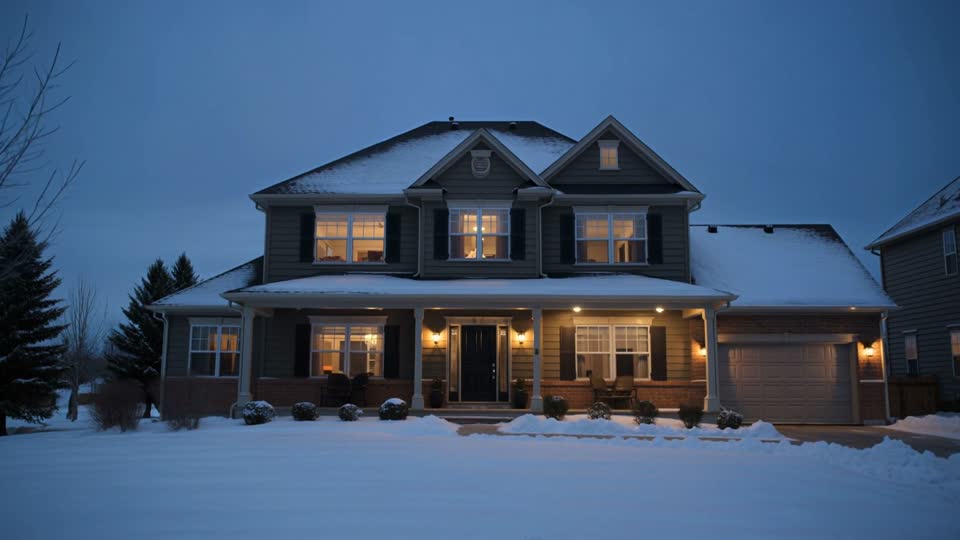
A home inspection tells you what an inspector could see in a few hours. The electrical questions that cost real money, service size, panel, wiring type and unpermitted work, are worth asking separately and before your conditions come off.
Most electrical surprises after a purchase fall into four groups: a service too small for what the buyer plans to add, a panel an insurer asks about, wiring from an era that needs attention, and a finished basement with no permit behind it. All four can be checked, at least partly, before you close.
CCT 01Why the age of Calgary’s housing matters
Calgary has a large stock of older homes. The 2021 Census counted 43,855 occupied dwellings built in 1960 or earlier1 and 133,035 built between 1961 and 1980.1 Together that is 35.2% of the city’s occupied dwellings.1
The census does not record service size, panel brand or wiring type, so no one can tell you how many Calgary homes still have a 60 A service or aluminum branch wiring. What age tells you is probability. A house built in 1965 is more likely to have its original service, fewer circuits, ungrounded receptacles in places, and decades of additions by previous owners. A newer house is more likely to have a modern panel, but its service was often sized for a gas-heated home, and the question becomes whether it can take an EV charger or a heat pump.
Census figures describe the whole stock. The house you are buying has its own history, and the rest of this checklist is about finding it.
CCT 02The checklist
| Item | What to look for | Why it matters |
|---|---|---|
| Service size | The rating on the main breaker or main fuses; the mast and meter base outside | Decides whether you can add an EV charger, heat pump, A/C, hot tub or suite without an upgrade |
| Panel | Brand and age on the door label; spare spaces; fuses; any sign of heat or scorching | Insurers ask; a full panel limits additions |
| Wiring type | Aluminum branch wiring, knob-and-tube, two-prong receptacles, old cloth-sheathed cable in the basement | Insurers ask; connections and grounding may need work |
| Shock and fire protection | GFCI receptacles near sinks, bathrooms, outdoors and the garage; AFCI breakers on newer circuits | Shows whether earlier work was done to a modern standard |
| Smoke alarms | At least one on every level, including the basement, and in or outside every sleeping area2 | The Calgary Fire Department also advises replacing alarms after 10 years2 |
| Basement, garage, suite | New-looking wiring, pot lights, a subpanel, a garage feed, a kitchen in the basement | Ask for the permits behind it |
| Exterior | Condition of the mast and meter base, outdoor receptacles and covers, buried feeds to a garage or tub | The meter socket is customer-owned equipment3; buried private feeds are not located by the utility |
Do not open the panel to answer these questions. Read the door label and the main breaker handle, photograph what you can see, and leave the rest to an electrician. The older panels guide and aluminum wiring explain two items insurers commonly ask about, and smoke and CO alarms covers what current code requires.
CCT 03An older house does not have to be brought up to code
Buyers are often told a house must be “brought up to code” before sale. In Alberta, that is not how the electrical code works. An existing installation that complied with the code in force when it was installed generally does not have to be upgraded when a new edition arrives.4 No Alberta rule we found requires an electrical inspection when a house is sold.
Two things change the picture. First, when work is done, the new or altered part is inspected against the code in force when the permit is issued: the 2024 edition for permits issued on or after April 1, 2025.5 Second, insurers and lenders are not bound by the code. They can set their own conditions on a panel, a wiring type or a missing permit, and those conditions can arrive before closing.
The practical rule: an older installation is not illegal because it is old. An installation that was never permitted or inspected is a different matter.
CCT 04Checking the permit history
Ask the seller for the permits behind any renovation, and for proof each one closed with a final inspection. Then check what the City holds.
- myProperty. For single family residential properties, the City’s myProperty map shows the last 10 years of permit activity; for commercial and multi-residential properties, the last 3.6
- Property research request. For older records, a 311 property research request draws on building permits, trade permits, real property reports and other files. The City charges a base fee of $65 for one residential record, and copies of historical permit documents need the registered owner’s authorization.7 As a buyer, ask the seller to request them or authorize you.
- Open data. The City’s electrical permits and inspections dataset lists electrical permits from May 2018 onward, with inspection outcomes, updated daily.8
One common misunderstanding: a City Certificate of Compliance on a real property report is about the Land Use Bylaw, such as where structures sit relative to property lines. The City says it does not check that permits for improvements were obtained and inspected.6 A clean certificate says nothing about the basement wiring.
CCT 05Unpermitted basements and hidden wiring
The expensive surprise in Calgary resale is a finished basement, or a suite, with no electrical permit. Here the rules are firm. If wiring was installed without a permit and is now concealed behind drywall, the City will not issue a homeowner permit for it. The owner must hire a licensed electrical contractor, and the inspector may ask for drywall to be removed so the work can be seen.9
The cost is not the permit. It is opening walls, correcting what the inspector finds and finishing again, and nobody can price that until the walls are open. That is what to negotiate on, or ask the seller to resolve before closing.
Suites raise a second question: capacity. For a secondary suite, the City asks for an electrical load calculation sheet, and if the service must be increased from 60, 100 or 200 A, the contractor contacts ENMAX.9 A basement kitchen on a small service can be the first thing a future permit exposes. See basement and renovation wiring and the homeowner permit guide for what the owner can and cannot fix personally.
CCT 06Home inspector or electrician?
A general home inspection is visual and broad. Many inspectors remove the panel cover and note obvious defects, and a good report flags items for “further evaluation by a qualified electrician”. That phrase is the signal to book one before conditions come off, not after possession.
An electrician’s pre-purchase visit goes further: confirming the service size and panel condition, testing receptacles for grounding and polarity, looking for aluminum terminations, checking for signs of heat, and giving a view on whether the service can carry what you plan to add. It does not certify the house; no private visit can. No public body publishes a standard price for it. What drives the cost is the size and age of the house, access, and whether you want a written report. See inspections and troubleshooting and electrician rates in Calgary.
Viewing is not testing
Do not remove panel covers or test circuits in a house you are viewing. Electrical work in Alberta needs a permit, most of it needs a certified electrician, and a homeowner permit never covers the panel or service. Never work on energized equipment.
CCT 07If you plan an EV charger, heat pump or hot tub
Buyers increasingly buy for what they will add. A Level 2 charger, a heat pump, air conditioning or a hot tub each adds large load, and the service decides whether it fits. Natural Resources Canada says a 200 A service is normally required for an all-electric heat pump.10 A load calculation, not a rule of thumb, answers the question for a specific house; try the home load calculation, then read 100 A vs 200 A service.
If an upgrade is needed, ENMAX Power prices each service change individually. For 2026 it invests $3,168 per residential service toward new load, and the customer pays the actual connection cost above that.11 That is a credit toward the utility’s side, not the price of an upgrade, and the electrical contractor’s work is separate.
Townhouses and condos add a governance step. Homeowner permits are not available in apartment-style condominium buildings,9 and adding load to a rowhouse on a shared gang meter needs an authorization form signed by the condo board or homeowner association.12 Read the bylaws before you assume you can install a charger.
Questions people ask
Should I get an electrical inspection before buying a house in Calgary?
If the house is older, has a finished basement or suite, or you plan to add an EV charger, heat pump or hot tub, an electrician’s visit before conditions come off is inexpensive insurance. A home inspection is broader but less deep.
Does an old house have to be brought up to code when it is sold?
No. In Alberta, an existing installation that met the code when it was installed generally does not have to be upgraded to a new edition, and no rule we found requires an electrical inspection at sale. Insurers and lenders can still set their own conditions.
How do I find out if the electrical work in a house had a permit?
Ask the seller for permits and final inspections, check the City’s myProperty map for recent permit activity, and use a 311 property research request for older records. A Certificate of Compliance does not confirm permits.
Who fixes unpermitted basement wiring after I buy?
A licensed electrical contractor. The City will not issue a homeowner permit for concealed wiring that was installed without a permit, and the inspector may ask for drywall to be opened.
Is a Federal Pioneer panel or aluminum wiring a deal-breaker?
Not automatically. Neither is illegal because of its age. The questions are its condition, which an electrician can assess, and what your insurer requires, which you should get in writing before waiving conditions.
Sources
- Census Profile, 2021 Census of Population - Calgary, City (CY) [Census subdivision], AlbertaStatistics Canada · 2021 Census (May 11, 2021); profile table released 2023-11-15
- Smoke alarmsCity of Calgary (Calgary Fire Department) · retrieved 2026-09-25
- ENMAX Power Corporation Distribution Tariff Customer Terms and ConditionsENMAX Power Corporation · effective 2026-01-01
- STANDATA bulletin 24-ECB-000 Object, scope, and definitionsAlberta Municipal Affairs · April 2025
- Notice: New Canadian Electrical Code, Part 1 (April 2025)Alberta Municipal Affairs · April 2025
- Apply for a Certificate of ComplianceThe City of Calgary · read 2026-09-25
- Property ResearchThe City of Calgary · read 2026-09-25
- Electrical Permits and Inspections (dataset vxgy-id5s)The City of Calgary, Open Government Licence – City of Calgary · queried 2026-09-25
- Homeowner electrical and plumbing permitsCity of Calgary · retrieved 2026-09-25
- Heating and cooling with a heat pumpNatural Resources Canada · Page modified 2025-12-24
- ENMAX Power Corporation Distribution Tariff, Terms and Conditions Investment Level ScheduleENMAX Power Corporation · Effective January 1, 2026 (applies January 1 to December 31, 2026)
- Electrical permits for contractorsCity of Calgary · retrieved 2026-09-25
Related
-
 E-401
Electrical permits in Calgary
When you need an electrical permit in Calgary, homeowner versus contractor permits, inspections and what happens without one.
E-401
Electrical permits in Calgary
When you need an electrical permit in Calgary, homeowner versus contractor permits, inspections and what happens without one.
-
E-402
Hiring an electrician
Certification, master electricians, permits, insurance, quotes and contracts: what to check before anyone opens your panel.
-
 E-403
The electrical code in Alberta
Which edition of the Canadian Electrical Code applies in Alberta, how Alberta amends it, and where STANDATA bulletins fit.
E-403
The electrical code in Alberta
Which edition of the Canadian Electrical Code applies in Alberta, how Alberta amends it, and where STANDATA bulletins fit.