Cost guide · Drawing E-307
Basement electrical cost in Calgary
The electrical share of a basement is priced by what the house already has: panel space, service size and how the new rooms will be heated. The permit, the load calculation and the incentive status are public, and this guide sets them out.
Ask what it costs to wire a basement and most answers are a per-square-foot range with no source. No public body publishes one. What decides the electrical share is the scope (a rec room or a legal suite), the panel and service you start with, and the heating choice. The permit arithmetic, the utility charges and the program status are official, and they are below.
CCT 01What the electrical share of a basement includes
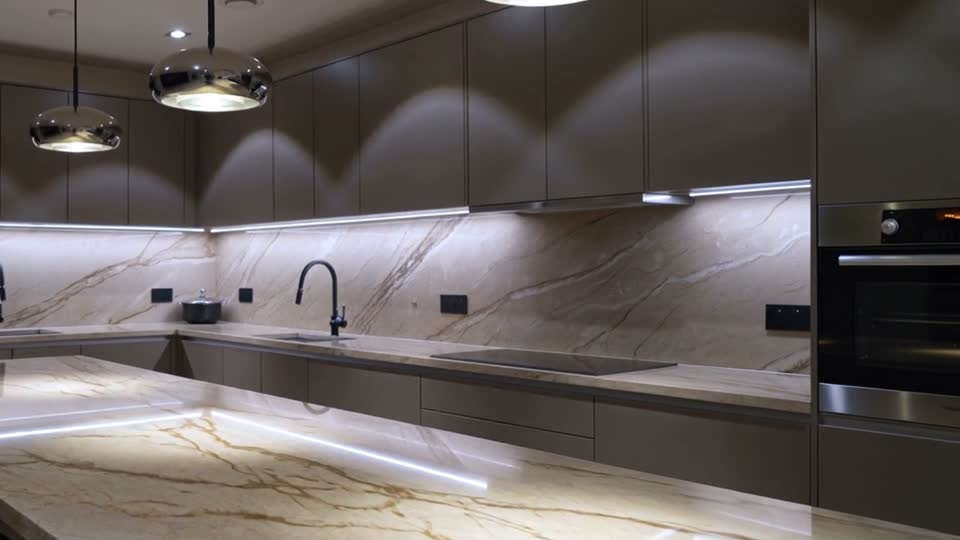
A basement development is several small electrical jobs in one space. A typical scope lists:
- General receptacles and lighting for each room, often with pot lights set before the ceiling is boarded (see the lighting cost guide).
- A bathroom: exhaust fan, lighting, and ground-fault protected receptacles.
- Bedrooms with smoke alarms tied into the rest of the house.
- A wet bar, or for a suite a full kitchen with range, fridge and counter circuits.
- Laundry, a mechanical room, and data or TV cabling.
- Heat, if the rooms will not be served by the existing furnace.
Floor area is a weak measure of that scope. Seventy square metres of open rec room is a handful of circuits; the same area with a bedroom, a bathroom and a kitchen is a small house. Price the room list, not the square metres.
What these numbers are and are not
The permit totals below are arithmetic on the City's published 2026 formula, not City figures. ENMAX's $3,168 is its investment toward new load, credited against the utility's cost, not a price for any upgrade. Wages are what electricians earn, not what they bill. No official source publishes a price for wiring a basement.
CCT 02The separate electrical permit and its cost
The City of Calgary requires a separate electrical permit for all electrical installations and renovations in a basement development1, in addition to the building permit for the development itself.
An owner who lives in the home can take out a homeowner permit for $116.502. Rental properties are not eligible3, so a suite built to be rented out raises an eligibility question worth putting to the City before you plan to do the work yourself. A contractor's permit is $112 plus $9.79 per $1,000 of construction value2, plus a 4% Safety Codes Council fee with a $4.50 minimum and a $560 maximum2. Construction value is labour plus material2.
| Job value (labour + material) | Processing fee | Base fee | Safety Codes Council fee | Total |
|---|---|---|---|---|
| $10,000 | $112.00 | $97.90 | $4.50 (minimum) | $214.40 |
| $15,000 | $112.00 | $146.85 | $5.87 | $264.72 |
| $25,000 | $112.00 | $244.75 | $9.79 | $366.54 |
The arithmetic for the last row: 25 × $9.79 = $244.75, and 4% of that is $9.79. $112 + $244.75 + $9.79 = $366.54. The table applies the 4% to the base fee; if the City also levies it on the processing fee, a total rises by at most $4.48. The permit fees guide has the full schedule.
Two permit rules matter on a basement that runs long. Trade and homeowner permits expire 330 days after they are issued4, and an extension costs a $112 processing fee plus 10% of the permit fee, with a $112 minimum and an $8,852 maximum2. Work started before the permit is issued is charged double2.
CCT 03Panel space, service size and the suite load calculation
The largest swing in a basement budget is whether the existing panel and service can carry the new rooms. For a secondary suite, the City asks for a secondary suite electrical load calculation sheet, and if the service has to be increased from 60, 100 or 200 A, the contractor contacts ENMAX3. The calculation follows the code's single-dwelling method, in which every load over 1,500 W is counted at its nameplate rating5: a range, a dryer, electric heat, a hot tub or an EV charger each count in full.
Calgary's housing stock makes this a common question. In the 2021 census, 133,035 occupied dwellings in the city were built between 1961 and 1980, the largest single construction period6. Older homes are more likely to have small services or full panels, although the census records nothing about service size. Try the home load calculator for a first read, and see 100 A vs 200 A service.
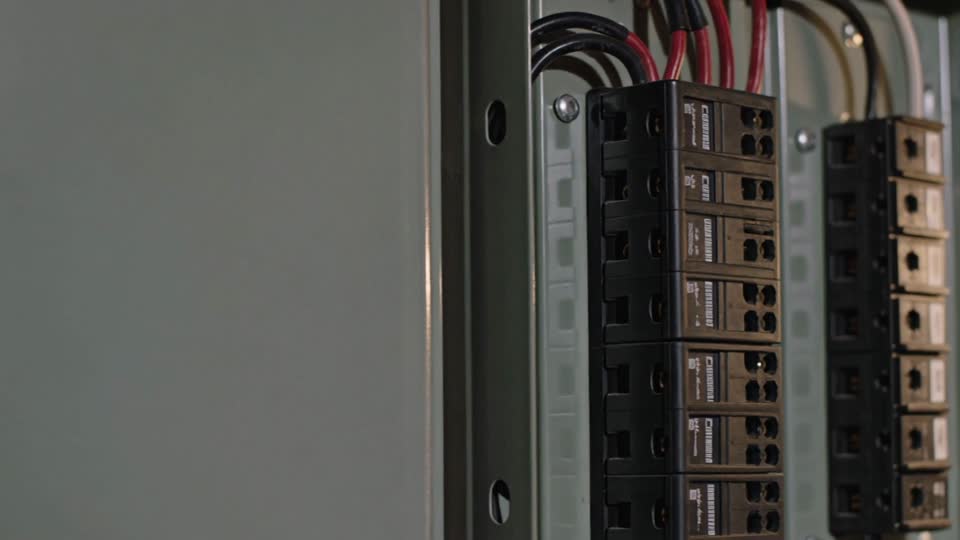
If an upgrade is needed, ENMAX prices the utility side individually. For 2026 it invests $3,168 per residential service toward new load, and the customer pays the actual connection cost above that7. A customer-requested temporary disconnect is free8, and re-energizing afterwards costs $166 an hour8. The contractor's side, meaning the panel, meter base, mast and permit, is separate. The panel upgrade cost guide covers it.
CCT 04Heating: the decision that sets the load
How the basement is heated changes the electrical scope more than anything else in the room list. Extending the existing forced-air system adds almost no electrical load. Electric baseboards or a separate electric furnace for a suite add dedicated circuits, thermostats and a large block of load to the calculation above, and they are sized for Calgary's January design temperature of -30 °C9.
That is why two basements with the same floor plan can land on opposite sides of the service-upgrade question. Settle the heating plan with the builder and the electrician before either one prices the job, and make sure the load calculation reflects it.
A suite kitchen works the same way. An electric range is a nameplate load over 1,500 W, so it counts in full; a gas range does not add that load. Laundry shared with the main house avoids a second dryer circuit.
CCT 05Smoke alarms and the circuits the inspector checks
Hard-wired smoke alarms normally need a 120 V connection from a 15 A circuit10, and where a home has more than one, the Alberta building code requires them to be interconnected10. The Calgary Fire Department advises an alarm on every level, including the basement, and in or outside every sleeping area11.
The cost point is the interconnection. New basement alarms have to talk to the alarms upstairs, which can mean fishing a cable into finished walls on the main floor. Existing alarms more than ten years old are due for replacement anyway11, so replacing the set at the same time is often simpler than matching old units. The smoke and CO alarm guide covers the requirements.
Protective devices add cost per circuit too: ground-fault protection near water in bathrooms, wet bars and kitchens, and arc-fault protection on dwelling circuits where the code calls for it. The inspector checks both. The GFCI and AFCI guide explains where each applies.
CCT 06Labour and how electrical costs have moved
Basement wiring is labour-heavy: layout, drilling studs and joists, pulling cable, setting boxes, then returning after drywall to install devices. Job Bank puts the median electrician wage in the Calgary region at $40 an hour for 2023–202412. A contractor's billed rate is higher than a wage because it covers the vehicle, tools, insurance, supervision, permits and overhead. No public body publishes billing rates; the electrician rates guide explains how they are built.
For trend, Statistics Canada's electrical-trade price index for Calgary single-detached houses was 109.1 in the second quarter of 2026, against 108.9 a year earlier13. That is a 0.2% rise13. The index measures contractors' costs against a 2023 base of 100; it is not a price for your basement.
CCT 07Inspections, and what unpermitted wiring costs later
A permitted basement gets a rough-in inspection before insulation and drywall, and a final. In 2025, 15.6% of Calgary electrical inspections with a pass or fail result were marked "Not Acceptable" 14. A City re-inspection costs $327 including fees and GST2.
Skipping the permit is the expensive option. For wiring already concealed without a permit, the City will not issue a homeowner permit: the owner must hire a licensed electrical contractor, and drywall removal may be requested so the work can be seen3. That turns a permit fee into demolition, rewiring and refinishing, and it tends to surface at the worst time, during a sale or an insurance claim.
Homeowners pulled 1,727 of Calgary's electrical permits in 2025, against 29,515 contractor electrical permits14.
Safety
Basement wiring needs a permit in Calgary, and most electrical work in Alberta must be done by a certified electrician. A homeowner permit is limited to an owner-occupied home and excludes the main service, panel and meter base. Never work on energized equipment.
CCT 08The suite incentive, and building a budget without it
Calgary's Secondary Suite Incentive Program offers up to $10,000, but new applications have been placed on a waitlist since June 24, 2026, and the City says funding may not be available for those who apply after that date15. Build the budget without it.
For quotes you can compare, give each contractor the same package: a floor plan with the room list, the heating plan, the appliances and whether each is gas or electric, a photo of the panel label and main breaker, and a clear line on who pulls the permit and books the inspections. Ask whether the price assumes the existing service is enough, and what the change is if the load calculation says otherwise. The basement and renovation wiring page walks through the work itself. To describe your project, request a quote and a person replies.
Questions people ask
How much does it cost to wire a basement?
No public body publishes a price for basement wiring, and the ranges online are individual contractors' figures. The electrical share depends on the room list, whether the existing panel and service can carry the new load, and how the space is heated. The public parts are the permit (for a contractor, $112 plus $9.79 per $1,000 of job value2, plus the Safety Codes Council fee), any ENMAX charges if the service must grow, and inspection fees if work fails.
How much does it cost to wire a basement per square foot?
There is no official per-square-foot or per-square-metre figure, and floor area is a poor predictor. A bedroom, a bathroom and a kitchen in one area cost far more to wire than the same area left open, and electric heat can trigger a service upgrade that has nothing to do with size. Ask for a price on a written room list instead.
Do I need an electrical permit for a basement in Calgary?
Yes. The City requires a separate electrical permit for all electrical work in a basement development, on top of the building permit. An eligible owner-occupant can take out a homeowner permit for $116.502; otherwise a contractor takes out a trade permit priced on the job value. Towns such as Airdrie, Cochrane and Okotoks issue their own permits under their own rules.
Is the Calgary secondary suite incentive still available?
As of the City's page read on September 25, 2026, new applications to the Secondary Suite Incentive Program go to a waitlist, a change that took effect June 24, 202615. The City says funding may not be available to people who apply after that date. Check the City's page before counting on it.
What happens if a basement was developed without a permit?
The City will not issue a homeowner permit for wiring already hidden behind drywall. The owner has to hire a licensed electrical contractor, and the City may ask for drywall to be removed so the wiring can be inspected. Budget for opening walls, correcting what is found and refinishing.
Sources
- Home renovations and basementsCity of Calgary · retrieved 2026-09-25
- 2026 Building & Trade Permit Fee Schedule (R2026-02)The City of Calgary · 2026 fee schedule, revision R2026-02; retrieved 2026-09-25
- Homeowner electrical and plumbing permitsCity of Calgary · retrieved 2026-09-25
- Secondary suite permit costs and timelinesCity of Calgary · retrieved 2026-09-25
- STANDATA bulletin 24-ECB-008 Circuit loading and demand factorsAlberta Municipal Affairs · April 2025
- Census Profile, 2021 Census of Population - Calgary, City (CY) [Census subdivision], AlbertaStatistics Canada · 2021 Census (May 11, 2021); profile table released 2023-11-15
- ENMAX Power Corporation Distribution Tariff, Terms and Conditions Investment Level ScheduleENMAX Power Corporation · Effective January 1, 2026 (applies January 1 to December 31, 2026)
- ENMAX Power Corporation Distribution Tariff, Terms and Conditions Fee ScheduleENMAX Power Corporation · Effective January 1, 2026
- National Building Code - 2023 Alberta Edition, Volume 1, Division B, Appendix C, Table C-2 Climatic Design Data for Selected Locations in AlbertaAlberta Municipal Affairs / National Research Council of Canada · 2023 Alberta Edition, second printing incl. revisions and errata released April 2026
- STANDATA bulletin 24-ECB-032 Fire alarm systems, smoke alarms, carbon monoxide alarms, and fire pumpsAlberta Municipal Affairs · April 2025
- Smoke alarmsCity of Calgary (Calgary Fire Department) · retrieved 2026-09-25
- Electrician in Alberta | Wages - Job Bank (NOC 72200)Employment and Social Development Canada (Job Bank) · Reference period 2023-2024 (Labour Force Survey); wages updated 2025-11-19
- Table 18-10-0289-01 Building construction price indexes, by type of building and divisionStatistics Canada · Q2 2026 (April-June 2026); released 2026-07-24
- Electrical Permits and Inspections (dataset vxgy-id5s)The City of Calgary, Open Government Licence – City of Calgary · queried 2026-09-25
- Secondary Suite Incentive ProgramCity of Calgary · retrieved 2026-09-25
Related
-
 E-301
Electrician rates in Calgary
What Calgary electricians earn, what goes into a billed hourly rate, and how jobs are priced: hourly, flat-rate or by contract.
E-301
Electrician rates in Calgary
What Calgary electricians earn, what goes into a billed hourly rate, and how jobs are priced: hourly, flat-rate or by contract.
-
 E-302
Electrical permit fees in Calgary
The City of Calgary’s published electrical permit fees for homeowners and contractors, and the safety codes fee on top.
E-302
Electrical permit fees in Calgary
The City of Calgary’s published electrical permit fees for homeowners and contractors, and the safety codes fee on top.
-
E-303
Panel & service upgrade cost
What drives the cost of a new panel or a 100 A to 200 A service upgrade in Calgary: permits, utility work, the meter base and the mast.