Cost guide · Drawing E-310
Commercial electrical cost in Calgary
Commercial electrical work is priced from drawings, not rules of thumb. No public body publishes a cost per square metre for Calgary, but the permit formula, the utility tariff, the trade’s cost index and public bid averages are all on the record.
Property managers and facility leads usually want one number: cost per square foot. It is the most searched commercial cost question, and no official source answers it for Calgary. This guide explains why, then sets out the public inputs an estimator actually uses: how the trade's costs are moving, what the City and ENMAX charge, what the labour data says, and how to write a tender that produces comparable prices.
CCT 01Why there is no official cost per square foot
A cost per square foot (or per square metre) averages away everything that drives a commercial electrical price. Two fit-outs of the same area can differ widely depending on:
- Occupancy and density: an open office, a restaurant kitchen and a clinic need very different power, data and equipment feeders.
- What the base building provides: spare capacity in the distribution, a usable tenant panel, existing fire alarm devices.
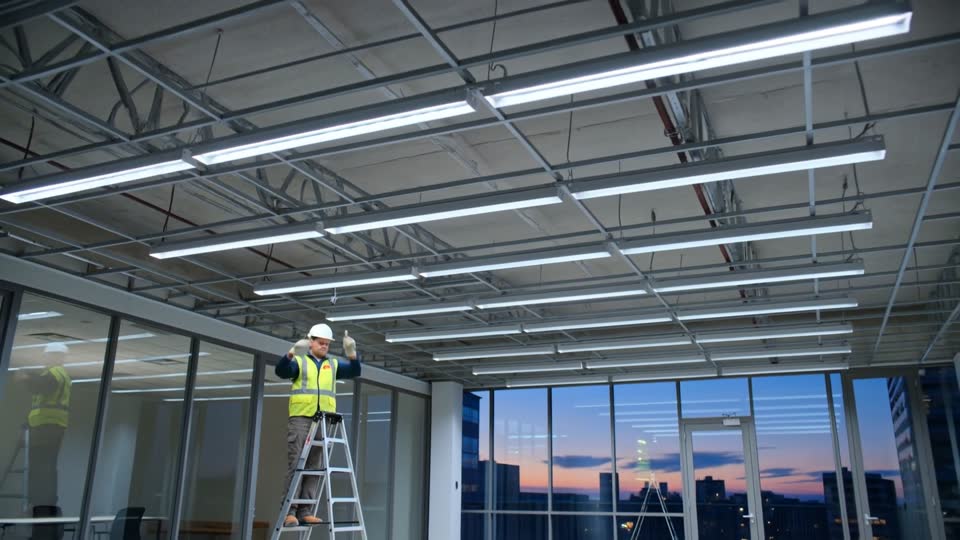
- Lighting and controls: Alberta has had the National Energy Code for Buildings 2020 in force since May 1, 20241, at Tier 1 as the minimum level for buildings outside Part 91, and its lighting and controls requirements shape fixture counts and control design.
- Life safety: fire alarm, emergency lighting and exit signage.
- Schedule and access: night work, occupied floors and shutdown windows.
A per-area figure from another city, another building type or another year carries none of that. Use it as a sanity check at most.
What these numbers are and are not
The StatCan index measures what it costs contractors to build model buildings, against a 2023 base; it is never a dollar price. Permit totals are arithmetic on the City's 2026 formula. ENMAX amounts are its 2026 regulated tariff. Wages are not billing rates. The highway bid averages are public prices for provincial road work, not building work. None is a quote.
CCT 02How Calgary electrical construction costs have moved
Statistics Canada's building construction price index tracks the electrical trade separately. For Calgary non-residential buildings it stood at 111.3 in the second quarter of 20262, against 110.2 a year earlier2: a rise of 1.0%2. Across the 15-city national composite, the same non-residential electrical series rose 1.8%, from 108.4 to 110.42.
Calgary's electrical trade has also risen more slowly than the building as a whole. The Calgary non-residential composite for all divisions went from 107.7 to 111.9 over the same year, up 3.9%2. Nationally, Statistics Canada reported non-residential building costs up 3.5% and residential up 2.3% year over year3.
| Series | Q2 2025 | Q2 2026 | Change |
|---|---|---|---|
| Calgary, electrical division | 110.2 | 111.3 | +1.0% |
| 15-city composite, electrical division | 108.4 | 110.4 | +1.8% |
| Calgary, all divisions | 107.7 | 111.9 | +3.9% |
How to use it: an index of 111.3 on a 2023 base of 100 means Calgary non-residential electrical costs were 11.3% above their 2023 average in Q2 2026. If a budget was set in 2023 terms, that is the escalation this series implies for the electrical trade's costs. It says nothing about any one bid.
CCT 03Permits, plans review and the fee arithmetic
Calgary requires separate electrical permits for base building work and for each tenant space4. Plans and drawings are required for new construction or service upgrades of 600 A and higher, and for all high-voltage installations4. Additional plans review is billed at $119 an hour on every permit type except residential5, so incomplete drawings cost money as well as time.
The trade permit is $1125 plus $9.79 per $1,000 of construction value5, plus a 4% Safety Codes Council fee with a $4.50 minimum and a $560 maximum5. On large jobs the cap matters.
| Contract value (labour + material) | Processing fee | Base fee | Safety Codes Council fee | Total |
|---|---|---|---|---|
| $100,000 | $112.00 | $979.00 | $39.16 | $1,130.16 |
| $500,000 | $112.00 | $4,895.00 | $195.80 | $5,202.80 |
| $2,000,000 | $112.00 | $19,580.00 | $560.00 (maximum) | $20,252.00 |
For the last row: 2,000 × $9.79 = $19,580; 4% would be $783.20, so the $560 cap applies; $112 + $19,580 + $560 = $20,252. The table applies the 4% to the base fee; if the City also levies it on the processing fee, an uncapped total rises by $4.48. The permit fees guide has the full schedule.
Other fees that show up on commercial jobs: an annual electrical permit for facilities with a full-time journeyman or contractor maintenance costs $162.245; a weekend or statutory holiday inspection is $189 an hour with a $756 minimum5; a re-inspection is $3275; and starting before the permit is issued doubles the fee5. Fire alarm work needs both a building and an electrical permit4, engineer-stamped drawings where the building requires professional involvement6, and verification to CAN/ULC-S5377.
CCT 04ENMAX: investment, contributions and metering
Inside Calgary, the utility side is priced by ENMAX Power's 2026 tariff. For small commercial (D200) new load, ENMAX invests $14,675 per meter8. Medium and large customers (D300/D310) may instead take $367 per kVA of minimum contract demand on a 15-year agreement, $245 on 10 years or $122 on 5 years8. Anything above ENMAX's investment is a customer contribution, calculated by formula from removal, salvage, installation and other costs9, and ENMAX itemizes its estimate when the cost exceeds $25,0009.
Services over 200 A need a current-transformer (CT) metering request and checklist10. Meter upgrades are billed at $128 an hour single phase or $258 an hour multi phase, plus materials11, and work the customer needs outside weekday hours is $352 an hour11.
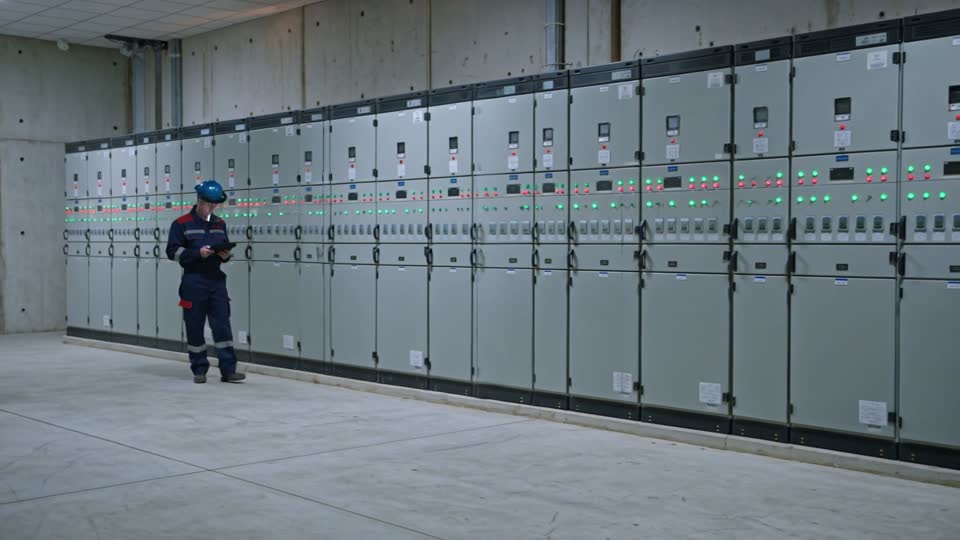
Capacity is the schedule risk. ENMAX does not confirm electrical capacity when it reviews a circulated development permit, so infill projects should confirm it early4. The ENMAX service connections guide and the power distribution and switchgear page cover the sequence.
CCT 05Labour: wages, the shortage and the market
Job Bank puts the median wage for electricians (NOC 72200) in the Calgary region at $40 an hour12 and for industrial electricians (NOC 72201) at $4413, for 2023–2024. Those are employee wages. A contractor's charge-out rate adds supervision, vehicles, tools, insurance, workers' compensation, overhead and margin, and no public body publishes charge-out rates. The electrician rates guide explains the build-up.
Job Bank also found a labour shortage for Calgary-region electricians over 2023–202514. Demand is rising: non-residential building permit applications to the City from January to July 2026 carried an estimated value of $2,188,893,959, up 79% on the same period of 202515. A busy market can mean fewer bidders per tender, which is a reason to issue clean drawings and a realistic schedule.
Only a master electrician can obtain an electrical permit in Alberta16, so the contractor who signs the permit carries the responsibility for the installation.
CCT 06Public bid prices: what Alberta’s highway averages show
The only official electrical unit prices in Alberta come from public works. Alberta Transportation and Economic Corridors publishes unit price averages for provincial highway contracts: each is the average of the three lowest bids, weighted by quantity, for tenders from May 1, 2025 to June 24, 2026. For example, item U105, secondary cable supply and install, averaged $40.22 a metre across 16 contracts17; item S405, pushed underground conduit, averaged $149.03 a metre across 11 contracts17; and item U135, a distribution enclosure, averaged $20,462.64 a unit across 7 contracts17.
Read them for what they are: public bid prices for highway lighting and power, at highway quantities, with open trenches and road-crew logistics. They are not building electrical prices, and small private jobs cost more per unit. Their value is as a model. Asking bidders for unit prices on a building tender (per device, per metre of feeder, per fixture) gives you the same kind of evidence for adds and deletes. The province's workbook is intended for department staff and consultants, so consult it at the source rather than relying on copies.
CCT 07How to scope a commercial electrical tender
Comparable bids come from a complete package. Before tendering, assemble:
- Drawings and specifications, stamped where the project requires it, including a single-line diagram and panel schedules. At 600 A and above the City requires drawings anyway.
- The scope split: what the landlord's base building provides and what the tenant pays for, taken from the lease or work letter.
- Utility responsibilities: who applies to ENMAX, who pays the customer contribution, and the metering arrangement.
- Allowances for owner-selected items such as feature fixtures, stated as a dollar figure every bidder carries.
- Unit prices for adds and deletes, and alternates priced separately.
- Schedule and access: working hours, occupied areas, shutdown windows and how many are included.
- Permits, inspections and re-inspections: who pulls, who pays, who books.
- Fire alarm verification, commissioning, as-built drawings and O&M manuals.
- A schedule of values for progress billing, and the warranty terms.
Bids that exclude different items are not comparable, however close the totals look. The tenant improvements page walks through a Calgary fit-out, and commercial new construction covers base building work.
Safety
Commercial electrical work in Alberta needs a permit and certified electricians, and only a master electrician can take out the permit. Shutdowns of switchgear and services must be planned with the utility and the facility. Never work on energized equipment.
CCT 08What City permit data says about commercial work
From 2023 to 2025, 9,114 electrical permits issued by the City of Calgary were at non-residential properties, against 82,036 at residential properties, where the permit address matches the assessment roll. Over the same years the City issued 1,212 fire alarm permits and 687 annual facility permits 18. One permit can cover a whole building, and an annual permit covers many jobs at one facility, so these are permit counts, not job counts.
Programs that once helped fund commercial upgrades are limited: the City's Commercial Clean Energy Improvement Program intake is paused19. For more of the City's permit data, see the Calgary electrical data page. To describe a commercial project, request a quote and a person replies.
Questions people ask
What is the commercial electrical cost per square foot?
No official source publishes one for Calgary, and a single per-area figure hides the drivers that matter: occupancy, what the base building provides, lighting and controls, fire alarm scope and the schedule. Price from drawings. To escalate an older budget, use Statistics Canada's Calgary non-residential electrical index, which stood at 111.3 in Q2 2026 on a 2023 base of 1002.
How much is a commercial electrical permit in Calgary?
How much does a commercial electrician cost per hour?
No public body publishes commercial charge-out rates. Job Bank's median wage is $40 an hour for electricians12 and $44 for industrial electricians in the Calgary region13, but a billed rate adds supervision, vehicles, tools, insurance and overhead, and after-hours work carries premiums. Ask bidders for their rates for extra work in the tender so they are fixed before the job starts.
How much is an electrical inspection on a commercial shop?
City inspections are covered by the permit fee. Extra City charges apply when an inspection fails ($327 for a re-inspection5) or is needed on a weekend or holiday ($189 an hour, $756 minimum5). A private inspection, infrared scan or maintenance assessment is priced by the contractor; see maintenance and thermography.
What does an office tenant improvement cost in Calgary?
There is no official figure. The electrical share depends on the layout, the power and data density, the lighting and controls, what the base building already provides, and whether work happens after hours. A minor tenant improvement building permit can be issued within 21 calendar days if the application is complete20, and the electrical permit for the tenant space is separate.
Sources
- Notice: New Alberta codes editions (NBC(AE) 2023, NFC(AE) 2023, NECB 2020)Alberta Municipal Affairs · April 2024
- Table 18-10-0289-01 Building construction price indexes, by type of building and divisionStatistics Canada · Q2 2026 (April-June 2026); released 2026-07-24
- Building construction price indexes, second quarter 2026 (The Daily)Statistics Canada · Q2 2026; The Daily, 2026-07-24
- Electrical permits for contractorsCity of Calgary · retrieved 2026-09-25
- 2026 Building & Trade Permit Fee Schedule (R2026-02)The City of Calgary · 2026 fee schedule, revision R2026-02; retrieved 2026-09-25
- Complete Building Permit Application Requirement List - Commercial: Fire Alarm (repair/upgrading)City of Calgary · retrieved 2026-09-25
- STANDATA interpretation 23-BCI-011/24-ECI-009/23-FCI-006 Existing fire alarm systemsAlberta Municipal Affairs · March 2025
- ENMAX Power Corporation Distribution Tariff, Terms and Conditions Investment Level ScheduleENMAX Power Corporation · Effective January 1, 2026 (applies January 1 to December 31, 2026)
- ENMAX Power Corporation Distribution Tariff, Customer Terms and ConditionsENMAX Power Corporation · Effective January 1, 2026
- Get the power flowingENMAX Power Corporation · retrieved 2026-09-25
- ENMAX Power Corporation Distribution Tariff, Terms and Conditions Fee ScheduleENMAX Power Corporation · Effective January 1, 2026
- Electrician in Alberta | Wages - Job Bank (NOC 72200)Employment and Social Development Canada (Job Bank) · Reference period 2023-2024 (Labour Force Survey); wages updated 2025-11-19
- Industrial Electrician in Alberta | Wages - Job Bank (NOC 72201)Employment and Social Development Canada (Job Bank) · Reference period 2023-2024 (Labour Force Survey); wages updated 2025-11-19
- Electrician in the Calgary Region | Job prospects - Job BankEmployment and Social Development Canada (Job Bank) · Outlook 2025-2027, updated 2025-12-10; recent trends updated 2026-07-28; page modified 2026-08-07
- Building Permit Application Statement, For the Period 2026/07/01 - 2026/07/31City of Calgary (Planning & Development, Building Regulations Division) · 2026 year to date, January to July; extracted 2026-08-05
- About Master ElectriciansSafety Codes Council · retrieved 2026-09-25
- Unit Price Averages Reports (2026 UPA sheet)Alberta Transportation and Economic Corridors · Tenders May 1, 2025 to June 24, 2026; workbook updated 2026-06-24
- Electrical Permits and Inspections (dataset vxgy-id5s)The City of Calgary, Open Government Licence – City of Calgary · queried 2026-09-25
- Commercial Clean Energy Improvement ProgramCity of Calgary · Page read 2026-09-25
- Building Permit Process Guideline and Common QuestionsCity of Calgary · retrieved 2026-09-25
Related
-
E-301
Electrician rates in Calgary
What Calgary electricians earn, what goes into a billed hourly rate, and how jobs are priced: hourly, flat-rate or by contract.
-
 E-302
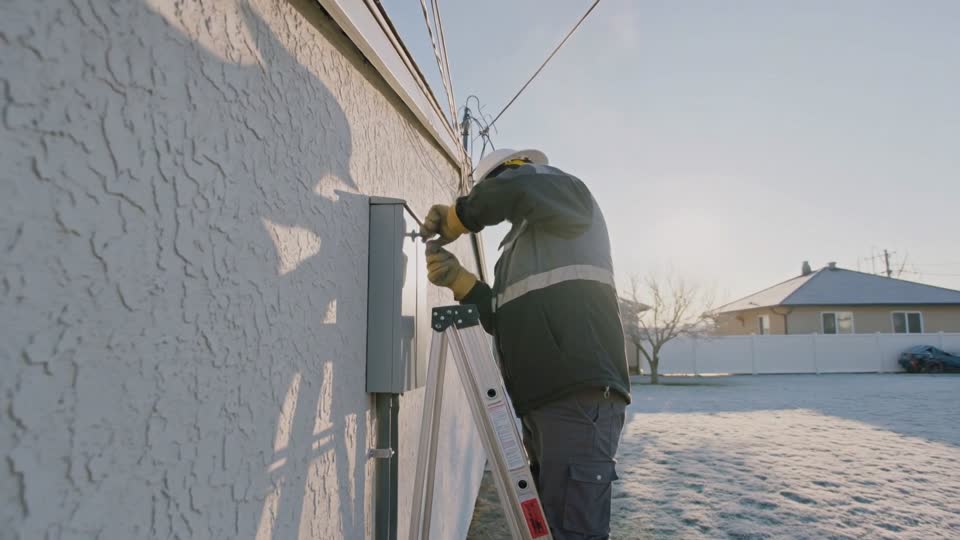
Electrical permit fees in Calgary
The City of Calgary’s published electrical permit fees for homeowners and contractors, and the safety codes fee on top.
E-302
Electrical permit fees in Calgary
The City of Calgary’s published electrical permit fees for homeowners and contractors, and the safety codes fee on top.
-
 E-303
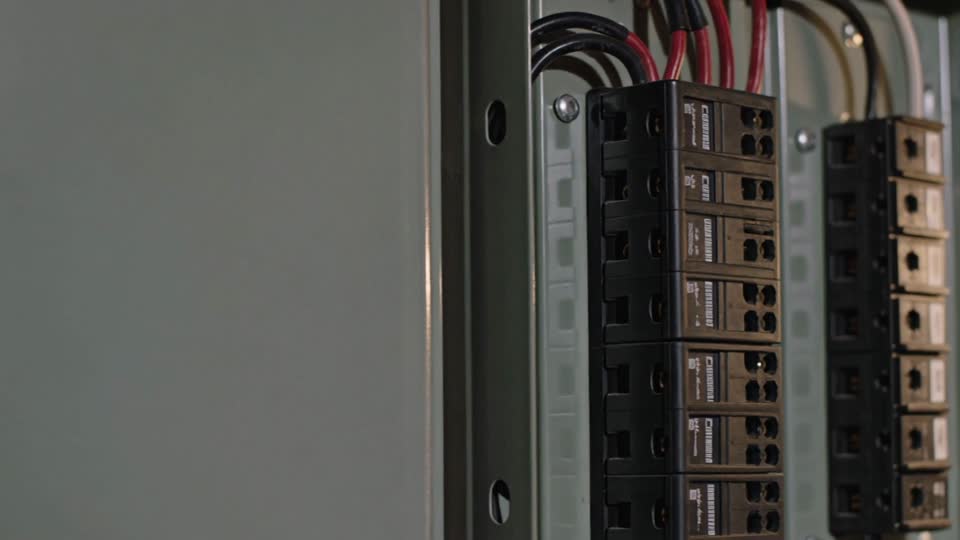
Panel & service upgrade cost
What drives the cost of a new panel or a 100 A to 200 A service upgrade in Calgary: permits, utility work, the meter base and the mast.
E-303
Panel & service upgrade cost
What drives the cost of a new panel or a 100 A to 200 A service upgrade in Calgary: permits, utility work, the meter base and the mast.