Guide · Drawing E-419
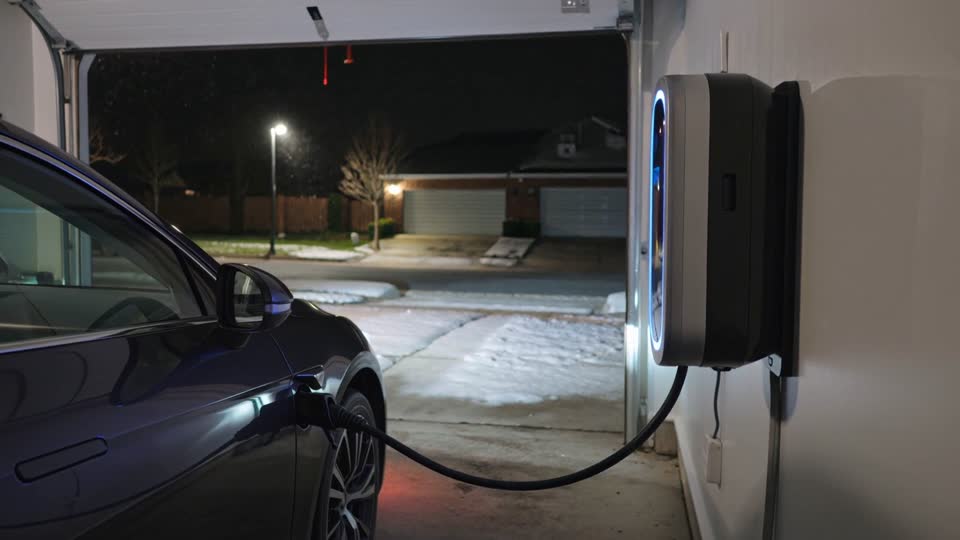
EV charging in a Calgary condo
In a condo, the charger is the easy part. The wiring crosses common property, the power comes from a building service shared with every other owner, and someone has to decide who pays for each kilowatt-hour. This guide walks an owner or resident through each of those questions.
This page is for the person who owns or rents a condo and wants a charger at their stall. The board's side is covered on the sister site. Nothing here is legal advice: your bylaws, your title and your board's decisions govern, and a condo lawyer can read them for you.
CCT 01Why you cannot just plug in
In a detached house, a charger involves you, an electrician and the City. In a condo, three more things sit in the way.
- Common property. Even if your stall is titled to you, the conduit and cable from the electrical room to the stall usually run through walls, ceilings and slabs the corporation controls. Drilling, trenching or mounting anything there needs the corporation's permission.
- The building's capacity. A parkade's panels, feeders and transformer were sized for lights, fans, doors and a few block heaters, not for a row of cars drawing current for hours. An NRCan-commissioned guide calls available electrical capacity the primary electrical challenge in multi-unit buildings, because transformers, panels and feeders may have little spare room once other loads are counted 1.
- Whose meter pays. Parkade receptacles are normally fed from the common account, which every owner pays through condo fees. A charger on that account means neighbours subsidize your driving unless the building has a way to measure and bill it.
The form of your building matters. The 2021 Census counted 81,870 occupied Calgary dwellings in apartment buildings under five storeys 2 and 40,700 in buildings of five or more storeys 2. Townhouse condos are different again: some units have their own meter and panel, which makes a charger closer to a house job. Rowhouses on a shared gang-meter service need a Row Housing Electrification Authorization form signed by the condo board or homeowner association with the permit application 3.
If you have a garage on your own service, the home EV charging guide covers Level 1 versus Level 2, charging speed and winter.
CCT 02What Alberta’s Condominium Property Act says, and does not
Start with what is missing. The office consolidation of Alberta's Condominium Property Act, current as of May 14, 2026, contains no provision specific to electric vehicle charging 4, and neither does the Condominium Property Regulation as consolidated to February 15, 2026 5. There is no statutory "right to charge" and no EV-specific approval test in either document. Your request is decided under the general rules below and your corporation's own bylaws.
The provisions that do apply:
- Bylaws govern the common property. Section 32(1) says the bylaws regulate the corporation and provide for the control, management and administration of the units, the corporation's property and the common property. Read yours for alteration and parking rules.
- Changing a bylaw takes a special resolution. Under section 32(3), any bylaw may be amended, repealed or replaced only by special resolution. The Act defines that as approval by at least 75% of the persons entitled to vote, representing at least 75% of the total unit factors, either at a properly convened meeting or in writing 4.
- The board can make rules, within limits. Section 32.1 lets the board make rules by resolution about administering the common property. The rules must be reasonable and consistent with the Act and bylaws, and must not restrict the uses of units.
- Exclusive use of common property. Section 50 lets a corporation grant an owner exclusive possession of an area of common property by bylaw, lease, licence or other instrument, and require the owner to maintain and repair it. That is one way a stall and its charger can be tied to one owner.
- Leasing or transferring common property needs a special resolution under section 49(1).
So is a special resolution needed? The Act does not answer that for chargers directly. If the existing bylaws already let the board approve alterations, a single installation may be a board decision. If the corporation wants a new EV bylaw, a different cost formula, or a lease of part of the common property, a special resolution is the route the Act sets out. Ask the board which path it is using, and get the answer in writing.
CCT 03What to ask the board before you buy anything
A written request with specific questions gets a clearer answer. These are the questions that decide the job:
- Is there an EV policy, bylaw or rule already? Many boards adopt one after the first request so every owner gets the same terms.
- Has anyone assessed the building's capacity? The NRCan-commissioned guide says a load assessment is needed to design a charging solution and is requested to secure the electrical permit. It put a typical assessment at around $1,000 in 2020 and recommended the corporation pay for it, since every future EV owner can use it 1.
- What is my stall, legally? A titled parking unit, part of your unit, or common property assigned to you. The answer changes who owns the circuit and what happens when you sell.
- Who owns what afterwards? The guide describes a common arrangement: the EV owner buys and owns the charger, and the corporation takes ownership of building infrastructure such as a new panel 1.
- How will electricity be measured and paid for? See the metering section below.
- Who hires the contractor? Some boards want one design for the whole parkade so later chargers fit.
- Insurance, maintenance and removal when you sell.
Keep the board's approval, any agreement and the permit; a buyer's lawyer will ask for them.
Board members and property managers
The corporation's side, including building-wide load assessments, EV-ready planning, bylaws and procurement, is covered in the condo board EV charging guide on the sister site, CalgaryCommercialElectrician.ca.
CCT 04EVEMS and load management
Load management is what makes most condo charging possible. Without it, the code arithmetic is unforgiving: in apartment-type buildings, EV supply equipment is taken at 100% when calculating individual suite feeders unless an energy management system is used 6. A charger whose current setting can be changed without an electrician must be counted at its maximum demand 7.
An EV energy management system (EVEMS) limits what the chargers draw so the total stays inside what the circuit, panel or service can carry. The NRCan-commissioned guide describes two broad approaches 1:
- Load sharing. Several chargers share one branch circuit under demand control. Static sharing splits capacity equally among the cars plugged in; dynamic sharing allocates it by each car's demand, which is more efficient but needs communication and often a service fee.
- Building-level load management. The system watches the whole building or feeder and throttles charging when other loads, such as ventilation or heating, peak.
The same guide calls a utility service upgrade the least preferable option, because it can be complex and expensive. In Calgary that conversation involves ENMAX Power, and services rated over 200 A use current-transformer metering with their own ENMAX forms 8. To see what a throttled charger still adds overnight, use the EV charging time calculator.
CCT 05Individual or shared chargers, and who pays for the power
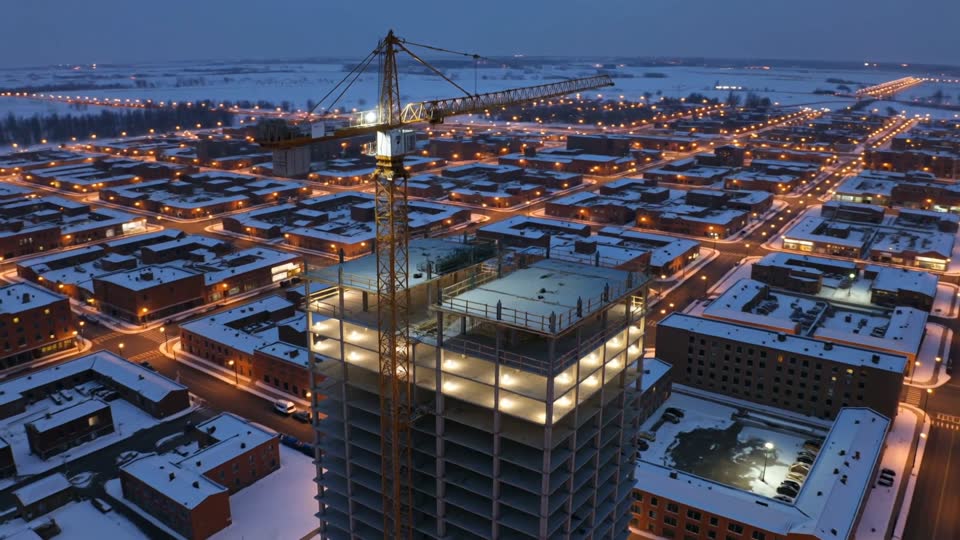
There are two ownership models. An individual charger belongs to one owner, sits at that owner's stall and is paid for by that owner. A shared charger belongs to the corporation and is used by several residents, often in visitor or common stalls. Many buildings end up with both. Either way, electricity has to be measured or estimated. The NRCan-commissioned guide sets out these metering options 1:
| Option | How it works | Trade-off |
|---|---|---|
| Existing common-area account | Chargers added to the account that feeds hallways and the parkade | No new meter, but EV use cannot be separated; a flat monthly fee is often charged |
| Separate EV meter | One new utility meter and account for all chargers | EV power is billed separately, but the board still splits it among users |
| Individual meter per stall | Each owner's charger on its own meter | Simplest billing, but costly and not compatible with load management |
| Metering in the charger or sub-metering | Networked chargers or a sub-metering company record each session | Per-user data; billing rules below apply |
Billing by the kilowatt-hour is regulated federally. Measurement Canada says flat-fee and time-based billing for EV charging are currently exempt from the Electricity and Gas Inspection Act, while billing by energy delivered relies on approved devices or its temporary dispensation program 9. Ask the charger vendor, in writing, how its billing method meets Measurement Canada's rules.
For a sense of scale, the Rate of Last Resort energy charge in the ENMAX Power area is 12.06¢ per kWh through December 31, 2026 10. It excludes delivery charges, so the building's all-in cost per kWh is higher. A fair fee is built on the all-in figure.
CCT 06The permit is a contractor permit
In Calgary an EV charger requires an electrical permit 3. In an apartment-style condo, a homeowner permit is not an option: the City says homeowners cannot pull homeowner permits for work in these buildings 11. EV charging wiring and EVEMS are also on the City's list of work homeowners may not do under a homeowner permit in any home 11. A master electrician, certified by the Safety Codes Council, pulls the permit as the contractor 12.
The 2026 contractor permit fee is $112 plus $9.79 for every $1,000 of construction value 13, plus a 4% Safety Codes Council fee 13. Construction value is labour plus material 13, so a parkade run with long conduit and core drilling carries a higher fee than a garage circuit. Starting before the permit is issued doubles the fee 13.
Safety
Electrical work in Alberta needs a permit. EV charger wiring in a Calgary condo needs a contractor permit, most other electrical work needs a certified electrician, and homeowner permits have limits. Never open a panel, tap a parkade receptacle circuit or work on energized equipment. Plugging a car into a block-heater outlet on the common account without the board's agreement can overload a circuit that was never designed for hours of continuous draw.
Condos in Airdrie, Cochrane, Chestermere, Okotoks and Rocky View County fall under their own permit authorities, not the City. The permits guide covers inspections, and the hiring guide explains how to check a master electrician's certification.
CCT 07Cost-sharing concepts and rebate status
No official source publishes a price for a condo stall charger in Calgary. It depends on the distance to the electrical room, spare capacity, core drilling, fire separations and how many stalls are done at once. Buildings divide the cost in three common ways:
- User pays. The requesting owner pays for the circuit, charger and permit under an agreement with the corporation. Simple at first, but each later owner may pay for another long cable run.
- Shared backbone, individual connection. The corporation funds a load assessment and a common distribution backbone with load management, then each owner pays to connect a stall. The NRCan-commissioned guide notes that fixed costs such as conduit do not shrink with load management, which is why planning once for many stalls usually costs less per stall 1.
- Corporation-owned shared chargers, paid from the budget or reserve and recovered through user fees.
How any cost reaches owners is limited by the Act. Contributions are levied in proportion to unit factors unless the bylaws provide another basis, subject to the regulations (section 39) 4. A plan to charge EV users differently usually needs bylaw support.
Rebates: as of September 2026 none were open to Calgary condo owners in the official sources reviewed. The City's ChargeYYC program offered multi-unit rebates of up to $6,000 per stall for EV-ready electrical work 14, but its initial intake closed on November 18, 2025, and the City says it anticipates reopening 14. The federal ZEVIP streams for charging owners are closed for applications 15. Check both before your board budgets around a rebate.
For what drives a quote, see the EV charger installation cost guide and EV charger installation. Building-wide projects are covered under commercial and multi-unit EV charging. To have your stall priced, request a quote and a person replies.
Questions people ask
Can my condo board refuse an EV charger in Alberta?
Alberta's Condominium Property Act, as consolidated to May 14, 2026, has no EV-specific provision, so there is no statutory right to a charger and no EV-specific test for a refusal 4. The decision falls under your bylaws and the board's general powers, and board rules must be reasonable. If refused, ask for the reasons in writing and whether a load-managed design would be approved. The Act now establishes a Condominium Dispute Resolution Tribunal for disputes under the Act; a condo lawyer can tell you whether your situation fits.
Do I need a special resolution to install an EV charger in my condo?
Not always. The Act requires a special resolution (75% of voters representing 75% of unit factors) to change bylaws or to lease or transfer common property. If your bylaws already let the board approve alterations, one installation may need only board approval. A new EV bylaw or cost formula needs a special resolution.
Can I install an EV charger in my condo parking stall myself?
No. In Calgary, homeowner permits are not available for apartment-style condos, and EV charging wiring is excluded from homeowner permits in any case. The wiring needs a contractor permit pulled by a master electrician, plus the corporation's approval to work on common property. See EV charger installation for what the job involves.
How do condos charge residents for EV electricity?
The usual options are a flat monthly fee on the common account, a separate EV meter split among users, an individual meter per stall, or chargers that record each session. Measurement Canada currently exempts flat-fee and time-based billing, while billing per kWh has to meet its device rules 9.
Is there an EV charger rebate for Calgary condos?
Not an open one in the sources reviewed as of September 2026. Calgary's ChargeYYC multi-unit program closed its initial intake on November 18, 2025 14, and the federal ZEVIP streams are closed. The City says it anticipates reopening ChargeYYC, so check before planning around it.
Sources
- Guide to Electric Vehicle Charging in Multi-Unit Residential Buildings (Pollution Probe and The Delphi Group, commissioned by NRCan)Natural Resources Canada · 2020
- Census Profile, 2021 Census of Population - Calgary, City (CY) [Census subdivision], AlbertaStatistics Canada · 2021 Census (May 11, 2021); profile table released 2023-11-15
- Electrical permits for contractorsCity of Calgary · retrieved 2026-09-25
- Condominium Property Act, RSA 2000, c C-22 (office consolidation current as of May 14, 2026)Alberta King’s Printer · current as of 2026-05-14
- Condominium Property Regulation, Alta Reg 168/2000 (office consolidation current as of February 15, 2026)Alberta King’s Printer · current as of 2026-02-15
- STANDATA bulletin 24-ECB-008 Circuit loading and demand factorsAlberta Municipal Affairs · April 2025
- STANDATA interpretation 24-ECI-086 Electric vehicle charging systemsAlberta Municipal Affairs · April 2025
- Get the power flowingENMAX Power Corporation · retrieved 2026-09-25
- Electric vehicle charging stationsMeasurement Canada · modified 2022-10-30
- Utilities Consumer Advocate: Default ratesGovernment of Alberta (Utilities Consumer Advocate) · Fixed 2025-01-01 to 2026-12-31; page read 2026-09-25
- Homeowner electrical and plumbing permitsCity of Calgary · retrieved 2026-09-25
- About Master ElectriciansSafety Codes Council · retrieved 2026-09-25
- 2026 Building & Trade Permit Fee Schedule (R2026-02)The City of Calgary · 2026 fee schedule, revision R2026-02; retrieved 2026-09-25
- ChargeYYCThe City of Calgary · Phase 2 intake closed 2025-11-18; page retrieved 2026-09-25
- Zero Emission Vehicle Infrastructure ProgramNatural Resources Canada · Page modified 2026-03-20; read 2026-09-25
Related
-
 E-401
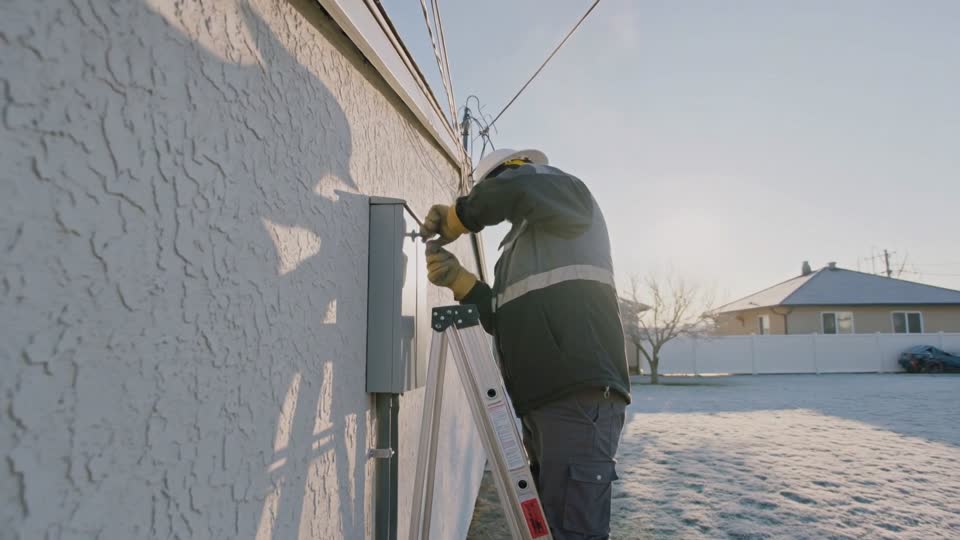
Electrical permits in Calgary
When you need an electrical permit in Calgary, homeowner versus contractor permits, inspections and what happens without one.
E-401
Electrical permits in Calgary
When you need an electrical permit in Calgary, homeowner versus contractor permits, inspections and what happens without one.
-
E-402
Hiring an electrician
Certification, master electricians, permits, insurance, quotes and contracts: what to check before anyone opens your panel.
-
 E-403
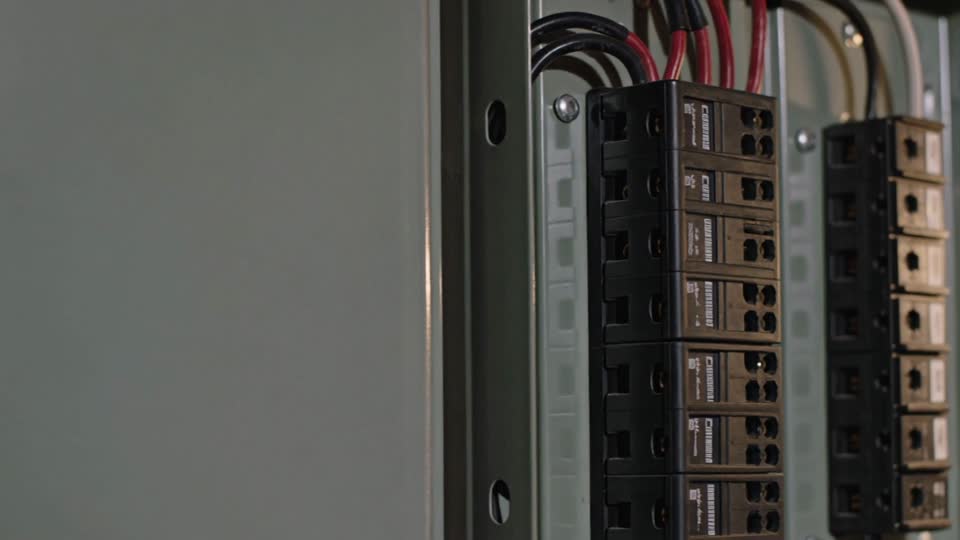
The electrical code in Alberta
Which edition of the Canadian Electrical Code applies in Alberta, how Alberta amends it, and where STANDATA bulletins fit.
E-403
The electrical code in Alberta
Which edition of the Canadian Electrical Code applies in Alberta, how Alberta amends it, and where STANDATA bulletins fit.