Cost guide · Drawing E-304
EV charger installation cost in Calgary
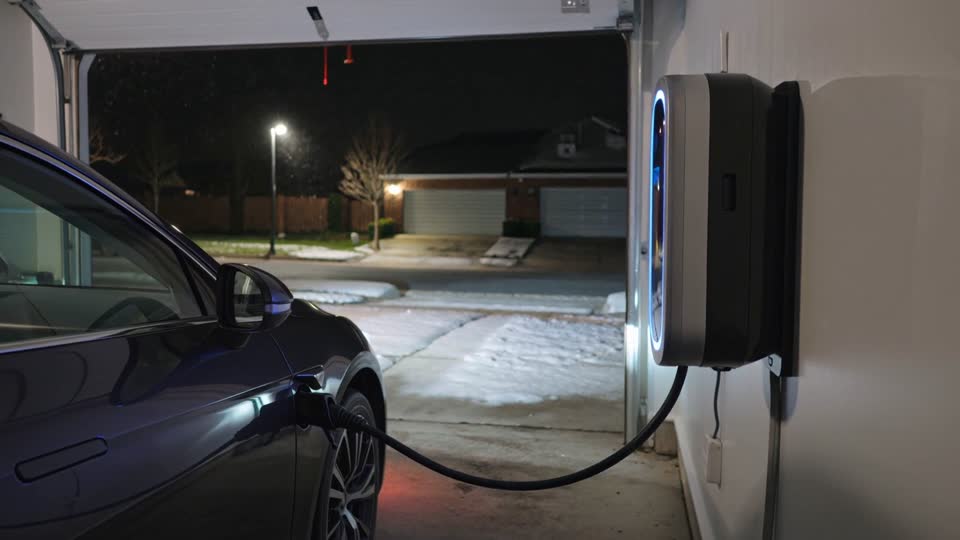
Natural Resources Canada lists what a home charger installation includes, but it publishes no dollar range. Neither does the City or the province. This page sets out the parts of the price, the official figures that do exist, and which rebates are open.
A Level 2 home charger is a large appliance on its own dedicated circuit. What it costs to install depends far less on the charger than on the house: how much capacity is left in the panel, how far the garage is, and what the cable has to pass through. Those are the things a quote prices.
CCT 01Why no official price exists for a home install
NRCan's guidance on home charger installation lists the cost factors: the charging unit, the labour, and any electrical work the home needs. It says rebates of up to 50% of the installation cost are available in some provinces.1 It gives no dollar range. Neither the City of Calgary nor the Government of Alberta publishes one either.
The ranges on installer websites are those companies' prices for their typical jobs. They may or may not match yours. A detached garage across the yard from the panel and a charger mounted next to the panel in an attached garage are different jobs, even with the same charger.
What these numbers are, and are not
The dollar figures on this page are program caps, national planning estimates for public charging, City permit arithmetic, and ENMAX tariff charges. None is the price of a home charger install in Calgary. A price for your garage has to come from a contractor who has seen the panel and the route.
CCT 02The parts of a home charger price
| Part | Published figure | What changes it |
|---|---|---|
| Charger | None | Its amperage, whether it is hardwired or plugged in, and whether it has load management built in |
| Circuit: breaker, cable, receptacle or disconnect | None | Amperage, run length, and whether walls are finished |
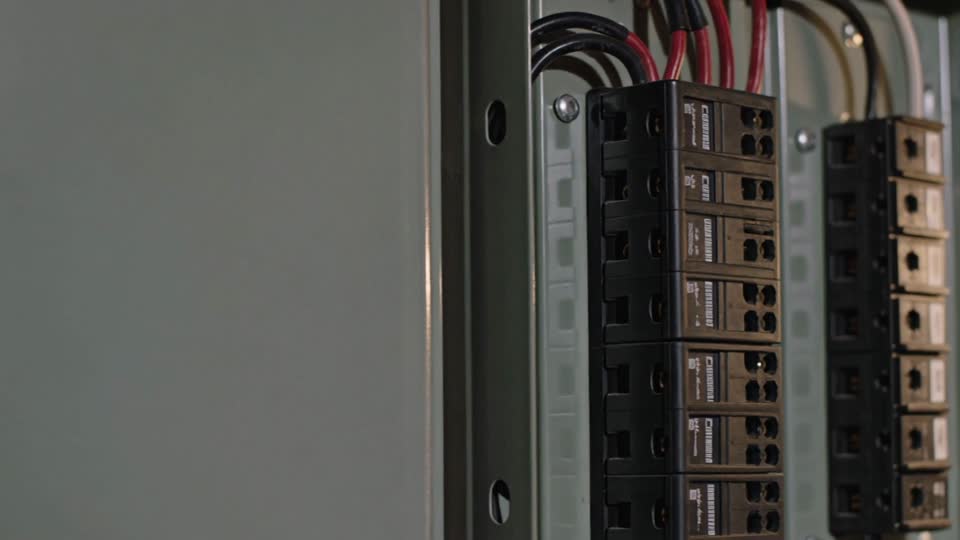
| Panel capacity and space | None | The load calculation, open breaker spaces, and whether a subpanel or EVEMS is needed |
| City trade permit (always a contractor permit) | $112 + $9.79 per $1,000 of job value + 4% levy2 | The declared job value, including a charger you supply |
| ENMAX work, only if the service is upgraded | Disconnect free; re-energize $166.00 per hour3 | Whether the existing service can carry the charger |
| Trenching, locates and repairs | None | A detached garage, the route, and drywall or stucco repair |
The permit line is small. On a hypothetical $5,000 job value, the published formula gives $165.45: $112 + (5 × $9.79 = $48.95) + the $4.50 minimum levy. The permit fees page shows the full arithmetic. The job value was chosen for the arithmetic and is not a typical price. Construction value includes customer-supplied material, so a charger you buy yourself still counts toward it.2
In Calgary, an EV charger needs an electrical permit.4 Homeowner permits do not cover EV-charging wiring or EV energy management systems, so the permit is always a contractor's.5
CCT 03The panel usually decides the price
The largest swing in cost is between three outcomes:
- The panel has room. There is spare capacity and a free space for a two-pole breaker, so the job is a circuit and a permit.
- The panel is short on capacity. A load manager (EVEMS) or a charger set to a lower current keeps the total within the service.
- The service is too small. The service has to be upgraded first, which adds ENMAX's charges and the whole cost stack described in the panel upgrade cost guide.
The load calculation decides which outcome applies. For a single dwelling, Rule 8-200 counts the nameplate rating of each load over 1,500 W.6 A charger whose current setting can be changed without an electrician is counted at its maximum demand, not at the lower setting you plan to use.7 A charger that is locked at a lower setting, or managed by an EVEMS, can fit where a full-power charger cannot.
Run your house through the load calculator before asking for quotes. Use the charging time calculator to see whether a smaller circuit still refills your car overnight. Many cars do not need the largest charger the panel can carry.
CCT 04Distance, route and the detached garage
After the panel, the route is the next biggest driver. Cable is priced by the metre, and a longer run may need a larger conductor to keep voltage drop in check. The voltage drop calculator shows how. An attached garage beside the panel is the simplest case. A route through a finished basement ceiling means opening and patching drywall.
A detached garage changes the job. It usually needs a feeder and a subpanel in the garage, and the feeder is usually buried. Before anyone digs:
- Homeowners are asked to request locates at least three full working days before starting.8
- Customer-owned lines, such as an existing house-to-garage feed, are not registered with Utility Safety Partners. They need a private locator.8
- Within 1 m of the locate marks, lines must be exposed by hand.8
Calgary's January design temperature is −30 °C.9 Trenching in frozen ground is slower and costs more, and some contractors schedule buried feeders for the warmer months. The locates guide has the details.
CCT 05Condos, rowhouses and parkades
Multi-unit buildings add rules and people who must approve:
- Apartment-style condos. Homeowner permits are not available, so a licensed contractor does the work.5 The board controls the parkade and the building's electrical room.
- Rowhouses on a shared service. Where rowhouses share a gang meter base, the permit application needs a Row Housing Electrification Authorization form signed by the condo board or homeowner association.4
- Suite feeders. In apartment-type buildings without an EVEMS, EV equipment is counted at 100% when calculating individual suite feeders.6 Load management is often what makes stall-by-stall charging possible.
The City's ChargeYYC program was built for these buildings:
- The EV Enabled Rebate covered 50% of the cost of making parking EV-ready, up to $6,000 per stall and $90,000 per property.10
- The charger rebate covered 50% of a Level 2 charger's purchase and installation, up to $1,000 per single-port or $2,000 per dual-port station, and $10,000 per property.10
- A road-map grant covered the lower of $4,000 or 50% of the cost of a building EV plan.10
Intake closed on November 18, 2025. The City says it anticipates reopening.10 These are caps. They say nothing about what a stall typically costs. See multi-unit EV charging.
CCT 06What public charging costs, and why it is a different job
The only official per-port cost figures in Canada are for public charging. A study commissioned by NRCan estimated public Level 2 charging at $15,000 per port for equipment and installation in 2025, falling to $10,000 by 2030, in 2022 dollars.11 On-street installations can easily exceed $20,000 per port.11 DC fast charging was estimated at $160,000 per port.11
Those figures include things a home install never needs: networked hardware, civil work, pedestals, payment systems and utility connections. They are useful for a condo board or business planning a parkade. They are not a guide to a garage.
Federal money for those projects is closed too. Under ZEVIP, NRCan's contribution was limited to 50% of total project costs, up to $2 million per project, and current intakes are closed.12
CCT 07How to compare charger quotes
Ask every contractor to quote the same things, then compare these lines:
- Circuit size and charger setting. Are they matched, and is the setting locked?
- Load calculation. Did they do one, and does the answer need an EVEMS or a service upgrade?
- Route and length. Is it surface-mounted or concealed, and how much patching is included?
- Charger. Is it supplied by the contractor or by you, and is it hardwired or plugged in?
- Permit. Is it included, with the job value declared?
- Exclusions. Trenching, locates, panel changes and ENMAX work.
Safety and the law
EV charger wiring in Calgary needs an electrical permit and a contractor. Homeowner permits exclude EV-charging wiring and EVEMS. A charger is a continuous load that runs for hours, often in a cold garage, so undersized or loose connections overheat. Never work on energized equipment.
For running costs, the Rate of Last Resort energy rate in ENMAX's area is 12.06 ¢/kWh through 2026. That excludes delivery charges.13 The running cost calculator works from your own all-in price per kWh.
Questions people ask
How much does it cost to install a Level 2 charger at home in Calgary?
No official range exists. NRCan lists the cost factors and notes rebates of up to 50% in some provinces, but publishes no dollar figure for home installs.1 The price turns on panel capacity, the distance to the charger, finished walls and whether a service upgrade is needed. The permit adds $112 plus $9.79 per $1,000 of job value, plus the levy.2
Is there an EV charger rebate in Alberta or Calgary?
Do I need a permit to install an EV charger in Calgary?
Is 100 amp service enough for an EV charger?
Often it is, with the right charger setting or load management, but only a load calculation can say. Chargers whose setting can be changed without an electrician count at their maximum demand.7 An EVEMS can let a charger share a 100 A service. Try the load calculator.
How much does it cost to install an EV charger in a condo?
No official figure exists. It depends on the parkade, the building’s capacity and the board’s rules. ChargeYYC capped its EV-ready rebate at $6,000 per stall, which shows the scale of work the City expected, but that is a cap and not a price.10 Rowhouses on a shared meter need a signed authorization form.4
Sources
- Electric vehicle charging - Charger installationNatural Resources Canada · Page modified 2026-07-22
- 2026 Building & Trade Permit Fee Schedule (R2026-02)The City of Calgary · 2026 fee schedule, revision R2026-02; retrieved 2026-09-25
- ENMAX Power Corporation Distribution Tariff, Terms and Conditions Fee ScheduleENMAX Power Corporation · Effective January 1, 2026
- Electrical permits for contractorsCity of Calgary · retrieved 2026-09-25
- Homeowner electrical and plumbing permitsThe City of Calgary · Page retrieved 2026-09-25
- STANDATA bulletin 24-ECB-008 Circuit loading and demand factorsAlberta Municipal Affairs · April 2025
- STANDATA interpretation 24-ECI-086 Electric vehicle charging systemsAlberta Municipal Affairs · April 2025
- Homeowner OverviewUtility Safety Partners · retrieved 2026-09-25
- National Building Code - 2023 Alberta Edition, Volume 1, Division B, Appendix C, Table C-2 Climatic Design Data for Selected Locations in AlbertaAlberta Municipal Affairs / National Research Council of Canada · 2023 Alberta Edition, second printing incl. revisions and errata released April 2026
- ChargeYYCThe City of Calgary · Phase 2 intake closed 2025-11-18; page retrieved 2026-09-25
- Electric Vehicle Charging Infrastructure for Canada (Dunsky Energy + Climate Advisors for NRCan)Natural Resources Canada · 2025 estimate in 2022 dollars; published February 2024; page modified 2025-01-08
- Zero Emission Vehicle Infrastructure ProgramNatural Resources Canada · Page modified 2026-03-20
- Utilities Consumer Advocate: Default ratesGovernment of Alberta (Utilities Consumer Advocate) · Fixed 2025-01-01 to 2026-12-31; page read 2026-09-25
Related
-
 E-301
Electrician rates in Calgary
What Calgary electricians earn, what goes into a billed hourly rate, and how jobs are priced: hourly, flat-rate or by contract.
E-301
Electrician rates in Calgary
What Calgary electricians earn, what goes into a billed hourly rate, and how jobs are priced: hourly, flat-rate or by contract.
-
 E-302
Electrical permit fees in Calgary
The City of Calgary’s published electrical permit fees for homeowners and contractors, and the safety codes fee on top.
E-302
Electrical permit fees in Calgary
The City of Calgary’s published electrical permit fees for homeowners and contractors, and the safety codes fee on top.
-
E-303
Panel & service upgrade cost
What drives the cost of a new panel or a 100 A to 200 A service upgrade in Calgary: permits, utility work, the meter base and the mast.